
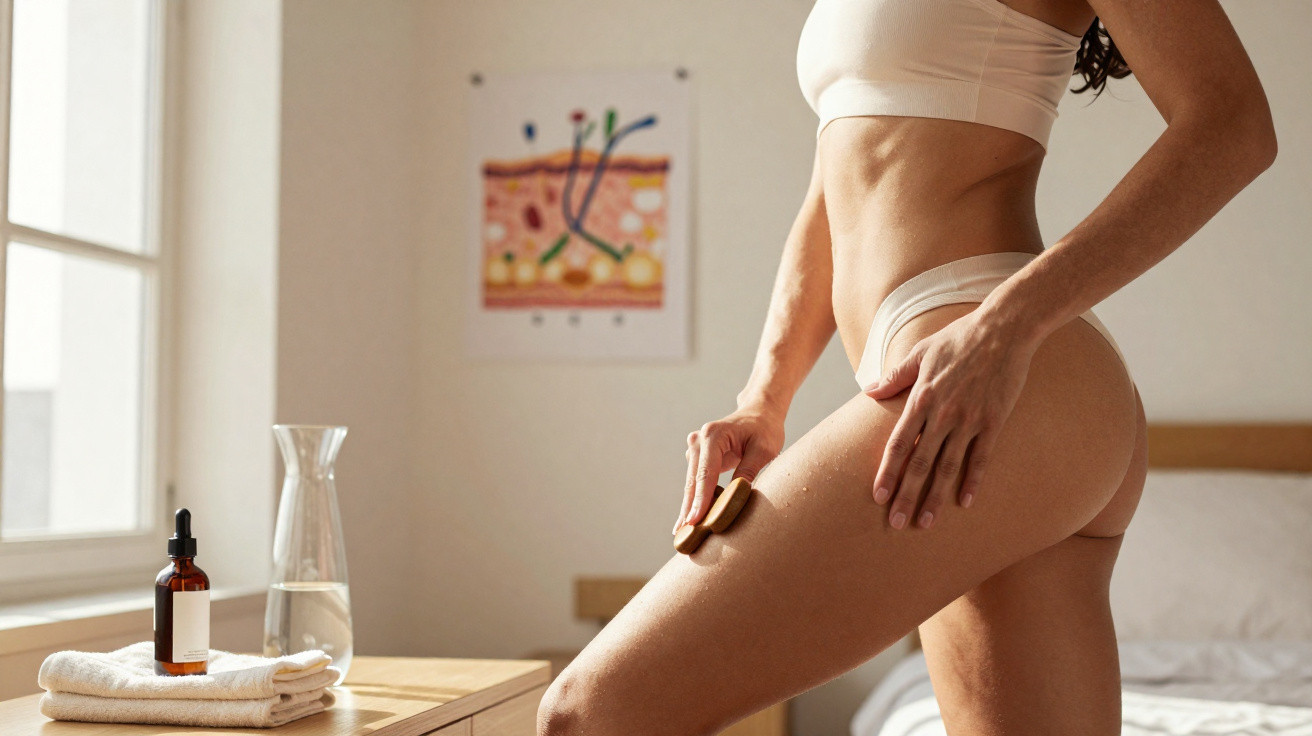
Glossy legs and smooth thighs fill social media feeds, with many posts crediting the results to an unusual-looking wellness gadget.
The promises are certainly appealing: firmer-looking skin, reduced puffiness and fewer dimples. Yet as this new tool becomes viral, doctors and consumers remain sharply divided over whether it is a useful aid for cellulite and water retention, or simply another costly massage stick.
What is this trending anti-cellulite wellness tool?
At the heart of the discussion is a hand-held massage device, commonly made of wood, metal or rigid plastic and designed with ridges, knobs or rollers. It is promoted as a way to “break up” cellulite, remove excess fluid and create smoother-looking skin, sometimes after only a few weeks of use at home.
Brands describe it as a type of self-administered sculpting massage. Online videos show people pulling or rolling the device with firm pressure across their thighs, hips, buttocks and stomach until the skin turns red. Some users recommend daily treatments lasting 10–20 minutes for each area.
Supporters are drawn to a straightforward promise: frequent, vigorous massage can improve circulation, move retained fluid and leave skin appearing firmer.
Influencers post before-and-after images showing visibly smoother body contours. Some also report an apparent “lifting” effect on the buttocks, along with less of the familiar “orange peel” appearance.
What do users say is happening to their bodies?
A search through TikTok or Instagram reveals thousands of personal accounts. Their experiences vary, although a number of common observations appear repeatedly:
- Less noticeable dimpling on the thighs and buttocks
- Legs feeling “lighter” by the end of the day
- A reduced sense of bloating around the hips and stomach
- Skin appearing slightly firmer, particularly on the outer thighs
- Bruising on occasion when too much pressure is applied
While some users describe seeing changes in as little as two weeks, others say it takes a month or longer of everyday use. A small number report that any results disappear quickly once they stop.
One of the most powerful reported effects is psychological: people may feel newly in control of an area of their body that has often left them feeling helpless.
However, the tool does not convince everyone. Many commenters report no difference other than temporary redness and aching muscles. To them, it is an over-promoted trend supported by clever marketing.
What science actually says about cellulite and water retention
To see why views differ so widely, it is useful to consider what happens beneath the skin.
Cellulite: not simply “fat”
Cellulite is related to the skin’s structure rather than weight alone. Fat cells are held in compartments divided by fibrous bands. As the bands pull downwards while fat pushes upwards, the skin’s surface takes on a dimpled appearance.
Women are more likely to develop cellulite because their connective tissue is structured differently from men’s. Hormones and genetics are also important factors, so even very slim people may have visible dimples.
Massage may boost blood flow in a localised area and temporarily alter the distribution of fluid and fat. However, existing research indicates that mechanical devices do not “break” or permanently rearrange the fibrous bands responsible for the dimpled effect.
Water retention: when fluid accumulates
Water retention means that excess fluid is held in body tissues, often becoming more obvious in the legs, ankles or around menstruation. Heat, salt consumption, spending long periods sitting or standing, and hormonal changes can all play a part.
A gentle massage that follows the body’s lymphatic routes may encourage fluid movement. This is the basis of lymphatic drainage methods performed by trained therapists.
The most evidence-backed advantage of these at-home tools is a temporary reduction in swelling or puffiness through better fluid movement, rather than a lasting alteration to cellulite structure.
Why experts are divided on the anti-cellulite tool trend
Dermatologists, physiotherapists and aesthetic doctors do not share one clear view on how valuable the device is. Nevertheless, certain themes arise repeatedly during consultations.
| Potential benefits | Key concerns |
|---|---|
| Better local circulation | Bruising caused by excessively forceful pressure |
| A short-term decrease in fluid retention | Insufficient robust clinical evidence |
| A soothing routine that promotes body awareness | Unrealistic claims about “erasing” cellulite |
| Potentially mild skin-firming from repeated stimulation | Using it on varicose veins or with medical conditions without professional advice |
Certain specialists consider these devices a harmless extra step in a body-care routine, as long as users recognise their limitations. Others are concerned that forceful marketing creates unattainable expectations and encourages people to adopt painful, unnecessary habits.
How these tools may make skin appear firmer and smoother
Although they are unlikely to deliver miraculous results, several processes may explain why some users think the device improves their skin.
Greater blood flow and lymphatic movement
A firm massage naturally increases blood flow to the treated area. This can make the skin appear pinker and fuller, temporarily reducing the visibility of dimples.
Using strokes towards the lymph nodes - such as moving from the knee towards the groin - may assist with shifting excess fluid. Legs may feel less heavy, and body measurements could even alter slightly for several hours.
A subtle effect on the skin’s surface
Ongoing friction can stimulate the skin’s outer layers. When used alongside an oil or cream, it may produce a softer, more supple-feeling surface.
Some theories propose that long-term, regular massage could support small changes in connective tissue. Research remains limited, though, and any result is likely to be modest and slow to emerge.
The most sensible expectation is better tone and texture, rather than a total remodelling of deep tissue structure.
How to use these tools more safely and realistically
For anyone considering trying one, several practical measures may help minimise both risk and disappointment.
Choose consistency rather than brutality
Brief, frequent sessions - for example, 10 minutes daily on each area - are usually a better option than rare, intense sessions that result in bruising. Pain does not demonstrate that the device is working; more often, it indicates that you are applying too much force.
Applying oil or lotion helps reduce friction and allows the tool to move more easily over the skin. Many people pair their massage with a firming cream, which may enhance hydration and the general feel of the skin, even where the device itself is responsible for most of the effect.
Areas to avoid and medical warning signs
Experts generally recommend avoiding firm pressure on:
- Varicose veins
- Areas affected by active skin infections or wounds
- Fresh bruises or injuries
- The abdomen during pregnancy, unless a midwife or doctor has approved it
Anyone with circulatory conditions, clotting disorders or lymphatic diseases should consult a healthcare professional before using a strong massage device.
Where this tool fits among other options
This gadget occupies a space between basic dry body brushing and professional aesthetic procedures. It costs less than treatments in a clinic, but it is also less targeted and has been studied far less extensively.
Many specialists say visible cellulite changes generally result from combining approaches, rather than relying on one device. These approaches can include:
- Moving regularly to support circulation and lymphatic flow
- Strength training, especially for the legs and glutes, to firm the muscles underneath
- Maintaining balanced salt consumption and hydration to help moderate fluid retention
- Having occasional professional massage or lymphatic drainage when affordable
In comparison with clinic-based devices using lasers, radiofrequency or focused ultrasound, a manual tool is considerably gentler and less precise. Its advantage is that it can be used every day at home, without appointments or recovery time.
Key concepts worth understanding before buying
Two expressions are widely used in the marketing of these devices and may be misleading.
“Detox”
Many brands say that their device “detoxes” the body. Medically, detoxification is handled by the liver and kidneys. A massage tool cannot remove toxins from the body in any special way.
It may, however, help support the natural movement of fluid through the lymphatic system. This can ease puffiness and make you feel less heavy, but that is not the same as removing toxins.
“Breaking up fat”
Neither human hands nor wooden rollers cut through fat cells. What may alter is the way fat, fluid and connective tissue sit within a particular area. This can create a smoother visual effect, particularly when increased blood flow leaves the skin slightly swollen.
When you read claims, it helps to translate “breaks up fat” into “temporarily changes how things sit under the skin”.
What a realistic scenario looks like
Consider someone who uses the device on their thighs for 10–15 minutes on most evenings, while also walking more, completing a couple of strengthening workouts each week and applying a basic body lotion.
After one month, they could notice skin that appears a little smoother, less heaviness in their legs and a minor reduction in circumference due to improved fluid balance and firmer muscles. Their cellulite will not disappear, although it may be less visible in particular lighting.
Should they stop using the device and become less active, fluid may accumulate again and some of the effect could fade. This illustrates the tool’s real position: it is a supporting actor, rather than the main character, in how bodies look and feel.





Comments
No comments yet. Be the first to comment!
Leave a Comment