
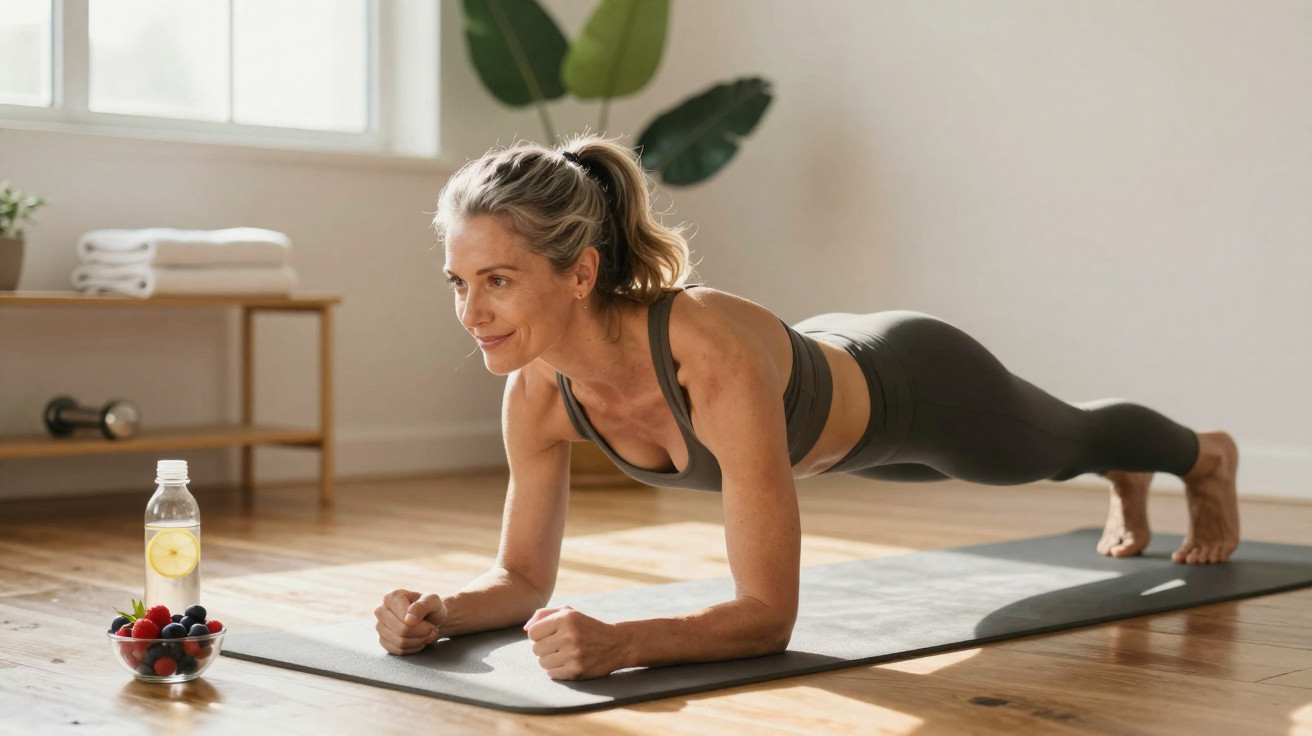
Keeping a firm tummy after 50 can often be difficult, particularly because of hormonal changes and the natural loss of muscle mass. Even so, physical activity specialists suggest that one simple daily habit can make a meaningful difference: adding a specific, properly performed exercise to your routine, alongside a few everyday adjustments that prioritise health, posture and mobility.
What is the best daily exercise for a firm tummy after 50?
Among the exercises most often recommended to make your tummy firm after 50, the plank stands out for being effective and safe when performed correctly. Unlike traditional sit-ups, which involve repeated flexion of the spine, the plank is an isometric exercise and may therefore be more suitable for people who already have some joint wear.
During a plank, the body is kept in a straight line from head to heels, supported on the forearms and toes. This position works several muscle groups at once: the abdominal muscles, lower back, glutes, shoulders and legs. It helps firm the abdominal area and improve support for the torso.
Watch the video on the YouTube channel Dr. Rodrigo Lopes – Physiotherapist for a safe home routine focused on stability, strength and postural health, recommended for older adults.
How should you do a plank correctly after 50?
For the plank to genuinely help maintain a firm tummy after 50, correct technique is essential. Poor form can create tension in the neck, shoulders or lower back, which is not advisable at any age, particularly for anyone with a history of pain.
The recommendation is to begin with short holds and increase them gradually, respecting your individual limits. Following a straightforward step-by-step approach makes it easier to include the exercise in your routine:
- Lie face down on an exercise mat or another comfortable surface.
- Place your forearms on the floor, keeping your elbows in line with your shoulders.
- Raise your body onto your toes, keeping it straight without allowing your hips to lift too high or drop down.
- Look towards the floor and keep your neck aligned with your spine, without forcing it upwards or downwards.
- Tighten your abdominal muscles and glutes, breathe steadily and hold the position for 10 to 20 seconds at first.
With practice, the hold can be extended to 30 to 40 seconds and, for some people, to 1 minute, in 2 to 3 sets a day. Being consistent is generally more important than holding each plank for the maximum possible time, making the habit easier to sustain.
Is one exercise a day enough to maintain a firm tummy after 50?
Doing a plank daily helps strengthen the core and improve tone in the abdominal area, but the visible result depends on several factors. Diet, sleep, overall physical activity levels and stress management all directly affect the accumulation of abdominal fat.
In practical terms, the plank works more on muscle firmness, whereas the amount of fat is influenced by everyday habits. For this reason, many professionals recommend combining the exercise with gentle aerobic activities to create a simple and effective routine:
- Daily exercise: a plank performed with proper technique.
- Complementary activity: walking, cycling or gentle dancing, 3 to 5 times a week.
- General care: attention to diet and hydration and, where necessary, medical or nutritional guidance.
For anyone who feels discomfort when supporting themselves on their toes, it is possible to begin the plank with the knees on the floor. This modification reduces the load on the lower back and shoulders, allowing a safe progression to the standard version if it feels comfortable.
Which daily habits help maintain a firm tummy after 50?
Alongside the daily practice of the plank, a few simple habits can further support the goal of maintaining a firm tummy after 50. Posture while sitting and walking directly affects the appearance of the abdomen, as a heavily hunched torso reduces the work done by the muscles in this area.
Hormonal variations that are common at this stage of life can encourage abdominal fat accumulation, making it useful to review test results and habits with healthcare professionals. Combining an accessible daily exercise with small routine changes and attention to overall health usually delivers consistent improvements in firmness, stability and independence in everyday activities.





Comments
No comments yet. Be the first to comment!
Leave a Comment