
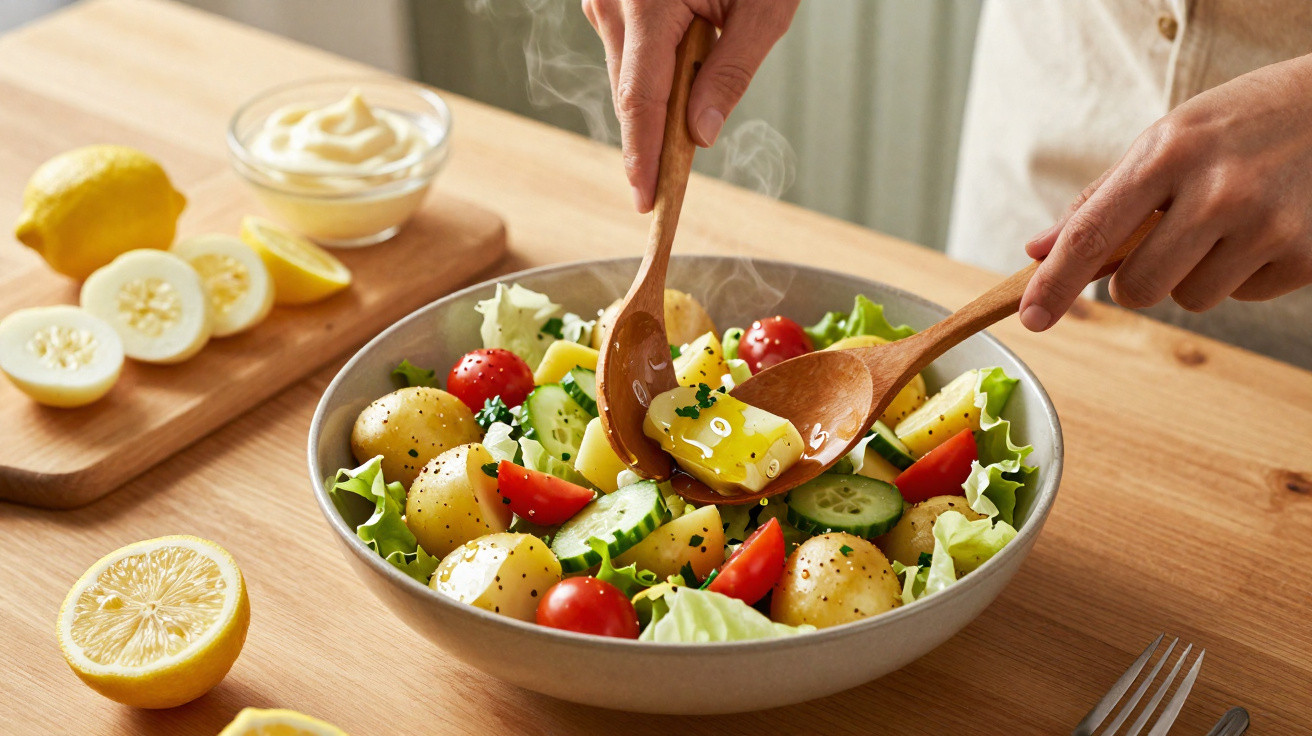
With the first warm days, the appetite for lighter meals returns. Salads appear on plates more often again, including as lunch at the office. People wanting to make a healthier choice often cut out bread and sweet treats, yet still rely on familiar accompaniments such as pasta or rice. This is precisely where it is worth considering another classic which, thanks to misplaced assumptions, appears far too rarely in the salad bowl.
Why the carbohydrate choice in a salad matters
A salad intended to keep you full needs three components: vegetables for bulk and vitamins, protein for muscles and satiety, and carbohydrates to provide energy. A mix of lettuce, cucumber and tomato may be low in calories, but it is unlikely to provide much staying power through the afternoon.
Many people address this by making pasta or rice salads. While that works, it can quickly put more energy on the plate than intended. On average, 100 grams of cooked pasta or rice contains around 100 to 120 kilocalories. That is not excessive in itself, but it adds up when large portions go into the bowl.
There is a far lighter carbohydrate that is also highly filling, yet it is used in salads much too infrequently.
This is where nutrition professionals' advice comes in: choosing the right starchy food can save calories without reducing either volume or satiety.
The surprising calorie winner: the humble potato
Potatoes are rarely top of mind when people think of light meals. Their reputation is that they are “fattening”, “too heavy” and “only a side dish”. The facts say otherwise. When cooked in water or steamed, the tuber reveals its lighter side.
Nutrition advisers point out that 100 grams of boiled potatoes contains only about 80 kilocalories – considerably less than the same quantity of pasta or rice. At the same time, the starch and fibre help to fill the stomach well.
Potatoes provide fewer calories than rice or pasta but are more filling – making them an ideal component of a wholesome salad meal.
That makes the tuber especially appealing to people wishing to maintain or lose weight without having to eat small portions. More volume and bite in a salad, but less energy: that is exactly what many people want from their lunch.
Why potatoes are so filling
The distinctive feeling of fullness after a potato dish has several causes. First, the starch binds a large amount of water in the stomach. The quantity in the abdomen feels substantial, and the brain registers: “Enough eaten.” Secondly, some of the starch is digested only slowly or not completely at all.
In particular, when potatoes are allowed to cool after cooking, they develop what is known as resistant starch. This behaves similarly to fibre in the gut. It lowers the amount of calories obtained while also feeding beneficial gut bacteria.
- Water content: potatoes are made up of around 80 per cent water.
- Fibre: especially in the skin, it supports digestion.
- Resistant starch: forms during cooling and counts only partly as usable energy.
The result is longer-lasting fullness, fewer cravings and a still-moderate calorie intake. This can make a real difference to the familiar “office salad phenomenon” – feeling hungry again shortly after 3 pm.
Vitamins, minerals and other nutrients in potatoes
Anyone who sees potatoes merely as filling food misses their nutrient mix. The tuber contains plenty of vitamin C, which may surprise many people. Some is lost during cooking, but potatoes can still contribute to vitamin C intake afterwards.
They also provide B vitamins, which are involved in nerve function and energy metabolism, as well as minerals such as potassium, which plays a role in blood pressure. The skin additionally contains antioxidants and other plant compounds.
| Nutrient | Function in the body |
|---|---|
| Vitamin C | Supports the immune system and connective tissue |
| B vitamins | Important for nerves and energy production |
| Potassium | Helps regulate blood pressure |
| Fibre | Promotes regular digestion |
Choosing young, waxy varieties and cooking them gently preserves a good proportion of these nutrients. Cooking them with their skins on retains even more.
Even healthier when chilled: why potato salad has an advantage
It becomes particularly interesting when potatoes cool after being cooked. Studies show that some of their starch then converts into resistant starch. This reaches the large intestine almost undigested, where it serves as food for the gut flora.
Cooled potatoes provide fewer usable calories while also supporting a diverse gut flora.
This is exactly what makes cold potato dishes so appealing. A well-made potato salad is therefore not just a traditional barbecue-side-dish cliché; it can form part of a gut-friendly lunch – provided the dressing is suitable.
How to make potatoes into a light, everyday salad
Preparation is crucial. The potato itself is not the issue; it is what is added around it. Frying potatoes in oil, deep-frying them in plenty of fat or covering them in rich mayonnaise quickly raises the calorie total.
Gentle preparation as the foundation
Simple methods work best for light salads:
- Cook potatoes in their skins in water or steam them.
- Cook them until just tender so that they do not break apart in the salad.
- Allow them to cool completely after cooking, ideally in the fridge.
- Only then slice or dice them and combine them with the remaining ingredients.
Using this base, almost any classic pasta-salad or rice-salad idea can be adapted with potatoes – but with fewer calories and often greater satiety.
Light dressing ideas instead of a mayonnaise bomb
The greatest calorie trap is often not the main ingredient but the dressing. Swapping mayonnaise for options based on yoghurt, quark or simply oil and vinegar can save a substantial amount of energy.
A simple, lighter mixture could include:
- plain yoghurt or Skyr as a base
- one tablespoon of rapeseed or olive oil for fat-soluble vitamins
- vinegar or lemon juice for freshness
- mustard, herbs, pepper and salt for flavour
Add plenty of colourful vegetables – such as peppers, rocket, radishes or cucumber – plus a protein source such as pulses, eggs, feta, chicken breast or salmon, and you have a complete lunch that keeps you full for a long time.
Who can benefit most from potato salad
Replacing pasta or rice with potatoes is particularly suitable for people who:
- want to lose weight or maintain a stable weight,
- want to remain full for longer at the office without feeling “stuffed”,
- wish to support their gut health deliberately,
- enjoy preparing fresh food themselves.
Athletes can benefit too: potatoes provide readily available carbohydrates without placing excessive strain on the stomach. Combined with protein sources, they support recovery and muscle building – particularly when the salad is served after training.
Everyday tips and potential pitfalls
Anyone short of time in the morning can cook the potatoes the previous evening and chill them overnight. This creates more resistant starch, and the salad can be assembled in just a few minutes the following day. Keeping a larger batch of cooked potatoes in the fridge makes planning even easier.
One potential issue is portion size. Although potatoes are lighter than rice or pasta, quantities should not become unlimited. As a main meal, a useful guide is roughly one clenched-fist-sized portion of potatoes, with slightly more or less depending on energy needs.
People prone to bloating or with a sensitive gut should increase the amount of raw onion in the salad carefully. The combination of fibre, resistant starch and highly seasoned ingredients can initially cause some digestive discomfort, although this usually settles quickly.
The facts make one thing clear: the classic potato is not inherently “fattening”. Boiled and cooled potatoes in particular outperform rice and pasta as a light, filling base for mixed salads – while also supplying nutrients that many people can use in everyday life.






Comments
No comments yet. Be the first to comment!
Leave a Comment