
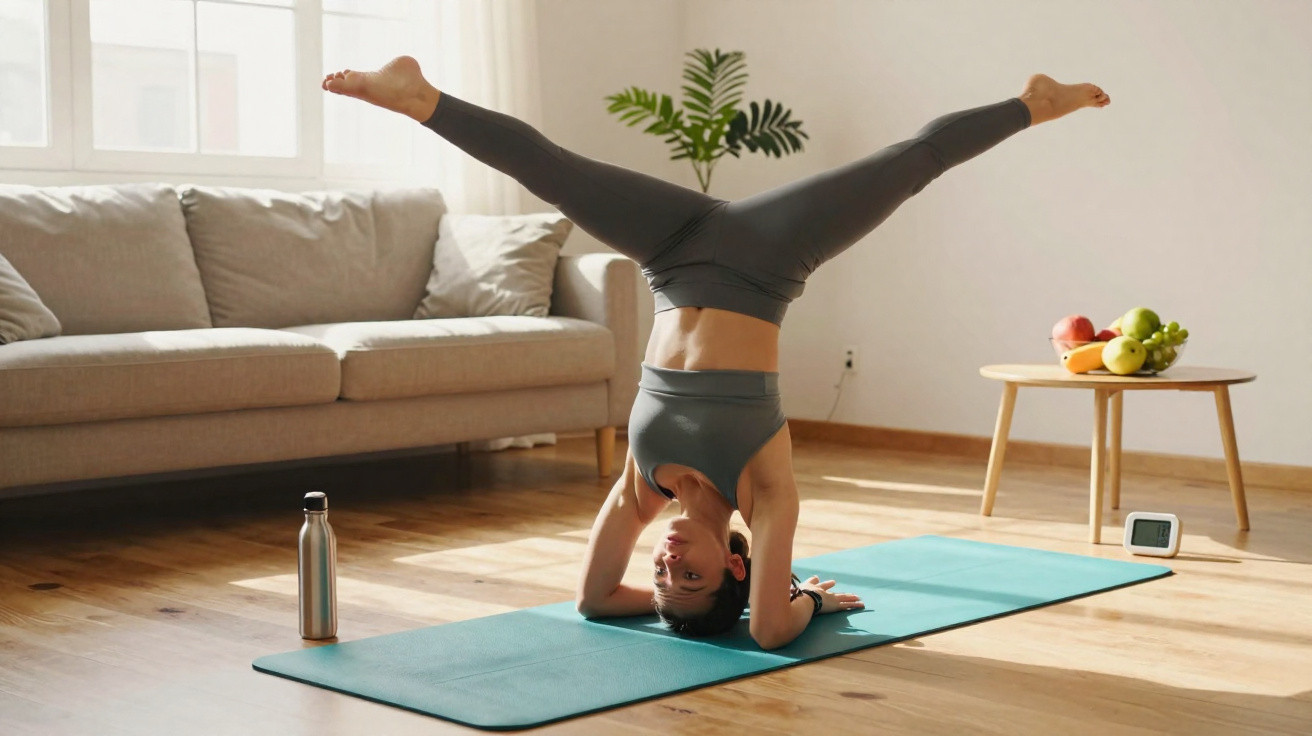
Many people work hard at traditional sit-ups and crunches yet see very little progress around their stomach. One particular bodyweight move is now attracting attention: the V-up. It is said to help shape visible abdominal muscles while targeting stubborn fat around the midsection – provided it is performed correctly and forms part of a well-planned overall approach.
Why belly fat is so stubborn
Fat around the stomach and waist is widely considered particularly resistant. There is more behind it than simply “not exercising enough”.
- Hormones (for example, cortisol caused by stress and changes during the menopause)
- Genetic predisposition
- A consistently high-calorie diet rich in highly processed foods
- Insufficient sleep and recovery
- Too little everyday movement
Visceral fat in particular, which sits between the organs, is sensitive to stress, lack of sleep and poor eating habits. For that reason, no single “miracle move” can ever be enough. However, V-ups can be a valuable component when diet, daily habits and training are reasonably well aligned.
Anyone aiming to reduce belly fat needs a combination of sensible nutrition, regular strength training and exercises that activate several muscles at once – this is where V-ups show their strength.
What makes V-ups different from traditional crunches
With a crunch, usually only the upper back lifts slightly from the floor. Many people rely mainly on their neck or momentum rather than engaging their whole midsection. The V-up goes much further, recruiting several muscle groups at the same time.
Areas actively trained during a V-up:
- Rectus abdominis (the well-known “six-pack”)
- Oblique abdominal muscles
- Deep transverse abdominal muscle (an important stabiliser)
- Hip flexors
- Core and supporting muscles running alongside the spine
Because numerous muscles are working together, a V-up demands more energy than a small crunch movement and raises the heart rate more noticeably. This combination of strength work and a mild cardio effect supports greater calorie expenditure while improving everyday body tension.
How to perform a V-up correctly
Starting position
Lie on your back, ideally on an exercise mat. Extend your legs and arms fully, with your palms facing one another. Press your lower back gently into the mat and lightly brace your abdominal muscles.
The upward movement
- Breathe in and prepare tension through your core.
- As you breathe out, lift your legs and upper body from the floor simultaneously.
- Aim your fingertips towards your toes so that, viewed from the side, your body creates a “V” shape.
- Keep the movement controlled, with no jerking or swinging from the arms.
The downward movement
- Breathe in as you slowly lower your arms and legs again.
- Keep your legs and shoulder blades hovering just above the floor rather than placing them down completely.
- Feel your abdominal muscles remain under continuous tension.
The most important rule is this: work through a smaller, controlled range rather than forcing yourself upwards. This places the load where it belongs – through the centre of your body, rather than your lower back or neck.
Training volume: how to start sensibly
Many coaches suggest the following for beginners:
- 2 sets of 12 repetitions, with 45–60 seconds of rest between them.
Once you feel more confident, you can progress to:
- 3 sets of 15 repetitions or
- 3 sets of 45 seconds, completing as many clean repetitions as possible.
Quality and control are what matter. One slowly performed set of ten clean repetitions delivers far more than 30 frantic half-reps.
Other bodyweight exercises that shape the stomach effectively
Plank: a solid foundation
The forearm support position, usually called a plank, is among the most effective core exercises. It especially targets the deep transverse abdominal muscle, which acts like an internal belt.
How to do it:
- Support yourself on your forearms and toes.
- Keep your body in one straight line from heels to head.
- Do not let your hips drop, but do not push them too high either.
- Brace your abdominal muscles and keep your gaze slightly forwards towards the floor.
Variations such as the side plank or moving between forearms and hands raise the intensity and place additional emphasis on the oblique abdominal muscles.
Mountain Climbers: abs and heart rate together
This exercise combines abdominal work with a clear cardio effect.
- Begin in a standard press-up position.
- Dynamically draw one knee at a time towards your chest.
- Keep your hips as steady as possible and your core braced.
The faster you move, the greater the endurance element becomes – ideal for boosting calorie expenditure while challenging the core at the same time.
Reverse crunches: focus on the lower abdominal area
For many people, the lower stomach is a problem area. Reverse crunches can target this region directly.
- Lie on your back with your arms by your sides.
- Lift your legs, keeping your knees at roughly a right angle.
- Draw your knees towards your chest by lifting your pelvis slightly.
- Roll back down one vertebra at a time without arching your lower back.
When performed one after another in a short circuit – V-ups, plank, Mountain Climbers and reverse crunches – they create a compact abdominal workout that can have a strong effect in 10–15 minutes.
How diet and everyday habits enhance the effects of V-ups
No training routine can permanently compensate for a consistently excessive calorie intake. V-ups and other abdominal exercises shape and tighten the area, but the results only become visible when changes are made to what is on your plate as well.
- Plenty of vegetables, protein and healthy fats
- As few highly processed products as possible
- Enough water instead of sugary drinks
- Regular meals to help prevent cravings
Small-seeming habits also matter, including daily steps, taking the stairs rather than the lift, and short movement breaks at work. They help keep metabolism active throughout the day – an important foundation for abdominal training to have any effect at all.
Who should be cautious with V-ups
Effective though the V-up may be, it places considerable demands on the core and can be problematic with certain conditions. People with:
- Acute or chronic back problems
- A history of slipped discs
- A pronounced tendency towards abdominal-wall or inguinal hernias
should only include the exercise after consulting an appropriate professional, or choose gentler alternatives such as half V-ups with bent knees or static holding exercises like the plank.
Practical examples of a short home abdominal workout
If time is limited, you can plan a mini-workout that needs no equipment and can be done in the living room. One possible format is:
| Exercise | Duration / repetitions |
|---|---|
| V-ups | 12–15 repetitions |
| Plank | Hold for 30–45 seconds |
| Mountain Climbers | Briskly for 30 seconds |
| Reverse crunches | 12–15 repetitions |
You can complete this block two to three times in succession, depending on your fitness level. For many people, two to three sessions per week are already enough to notice greater core tension after a few weeks.
Why focusing on the core pays off in the long term
A toned stomach does not merely look good: it also stabilises the spine, reduces strain on the hip and knee joints, and improves posture. V-ups and other core exercises make everyday movements easier, from carrying boxes to sitting at a desk for long periods.
Anyone who sensibly combines V-ups with full-body strength training, some endurance work and a reasonably balanced diet is working towards more than a flatter stomach; they are building a more resilient body overall. That is the real strength of this unassuming floor exercise.





Comments
No comments yet. Be the first to comment!
Leave a Comment