
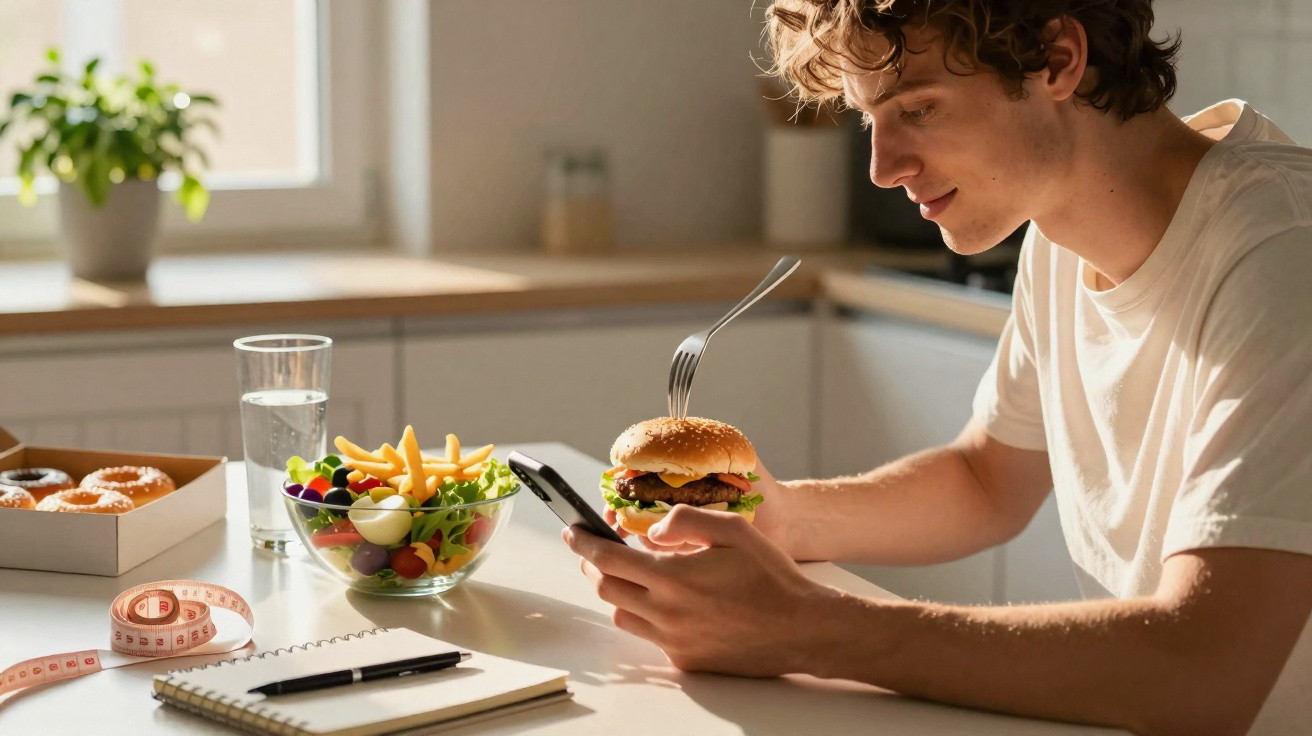
Scrolling through social media can feel rather like repeatedly passing a bakery display. Iced cakes, flowing chocolate and sizzling fast food appear on an endless cycle.
That sounds like the perfect recipe for temptation. Yet new research indicates that the reality is more nuanced. For many people, particularly those attempting to diet, viewing food online could actually help them consume less.
Research led by the University of Bristol, with researchers from the University at Buffalo, found that pictures of food may serve as a form of mental replacement. Rather than encouraging people to indulge, such images could lessen genuine cravings.
Screens replace real eating
Food-related material fills online spaces. People are continually exposed to photographs of meals and desserts, whether through social media posts or food blogs. This pattern sits alongside increasing attention on dieting and weight management.
The researchers examined the relationship between these two influences. In several experiments, participants looked through food content before being given the opportunity to eat real food.
They wanted to establish whether seeing food would make people eat more or less in practice.
The results revealed an unexpected trend. Looking at food does not inevitably result in eating it. At times, visual exposure can stand in for consumption.
Dieters seek unhealthy food
A major finding was that people seeking to limit their food intake do not necessarily stay away from tempting material. Instead, they deliberately look for it.
Although this may appear contradictory, psychology provides a reason. Attempts to push thoughts about food aside often cause those thoughts to come back more forcefully. This is called the rebound effect.
Consequently, dieters focus more closely on high-calorie food, especially items they are attempting to avoid. During the experiments, they clicked more frequently and spent longer watching videos of indulgent food than they did viewing healthier choices.
“The dieters clearly embraced this form of ‘digital foraging’, spending more time looking at the indulgent dessert,” noted Dr. Esther Kang, first author of the study.
“Furthermore, contrary to what might be expected, when given the chance to really have some chocolate they exercised much more self-control than the non-dieters.”
Images satisfy food cravings
The most notable result emerged once the screen was switched off. When real food was offered later, participants who had spent longer looking at indulgent content went on to eat less.
This outcome is associated with an idea known as cross-modal satiation. It describes how stimulation through one sense, such as sight, may lower desire through another, such as taste.
“We refer to this process as ‘cross-modal satiation’. People can partially satisfy their desire to eat by consuming food visually rather than physically,” noted study co-author Dr. Arun Lakshmanan.
“This helps explain why engaging with food content on social media does not always translate into increased consumption.”
Put simply, the brain may regard seeing food as a partial eating experience. This can reduce the impulse to consume the food itself.
How the brain responds to food images
The research also aligns with earlier work into the brain’s reaction to images of food. Visual signals can activate reward systems and prompt cravings. However, when restraint goals are involved, identical signals may produce a different result.
Rather than heightening hunger, repeated viewing may create familiarity or even a modest sense of satisfaction.
Some research suggests that repeatedly imagining eating a food can reduce the amount people subsequently eat.
This may explain why dieters behaved differently from non-dieters in the experiments. Their aims influenced their reactions to the same pictures.
“It may sound counterintuitive, but our findings show that people, particularly those trying to control their diet, can use visual food content as a self-regulation tool. Engaging with food imagery may help satisfy cravings without actual consumption,” said Dr. Kang.
“In today’s digital environment, where food content is highly accessible, this type of visual engagement may offer a simple and non-invasive way to support dietary goals.”
Using visuals to control cravings
Dieting is common, with millions of people seeking to control what they eat. The weight-loss industry reflects that demand, although the study indicates that ordinary online behaviour could also have an effect.
Rather than avoiding food content altogether, people may be able to use it in a measured manner. Looking at indulgent dishes could provide a simple way to control cravings.
“Weight loss is a huge business. Our study results suggest there may be a vast array of free online material which could assist people who are trying to resist their unhealthy cravings and steer clear of such treats,” said Dr. Kang.
“While we’re of course not claiming imagery could wholly replace the desire to eat chocolate or other indulgent foods, they could perhaps help people who are watching their calorie intake to reduce or avoid overindulgence.”
The approach is not a substitute for healthy eating or lasting habits. Nevertheless, it reframes our understanding of digital temptation. In a world packed with food on screens, simply looking may sometimes be sufficient.






Comments
No comments yet. Be the first to comment!
Leave a Comment