
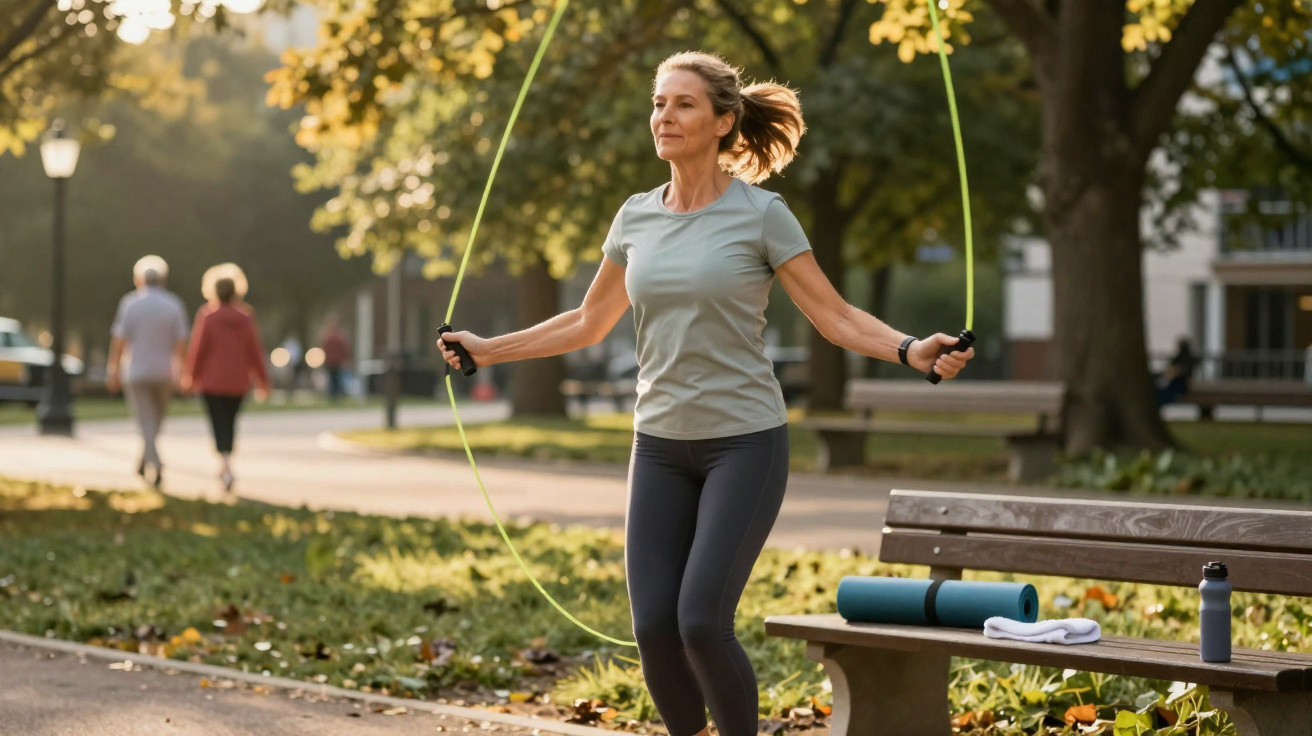
Rather than spending hours working up a sweat in the gym, more and more trainers are turning to compact workouts that take little time and require no expensive equipment. At the centre is a childhood classic that is now considered a genuine insider tip for tackling flabby arms and creating a firmer upper body.
Why flabby upper arms are so common after 50
As we get older, the body naturally loses muscle unless we use it deliberately. At the same time, many people gain a higher proportion of body fat. This combination can create the familiar ‘wobbling’ sensation in the upper arms when waving or lifting something.
The encouraging news is that this process can be slowed down and, to some extent, even reversed. Regularly challenging the muscles encourages the body to build new muscle mass and draw on fat stores. Exercises are particularly useful when they:
- work the upper-arm and shoulder muscles specifically;
- get the circulation going at the same time;
- burn plenty of calories in a short period.
This is where a classic exercise that many people have not touched since school comes in: skipping.
Just 15 minutes of skipping a day can noticeably firm the arms, shoulders and upper body – even after your 50th birthday.
Skipping: why this ‘children’s activity’ is so effective for the arms
When people think of skipping, their legs are often the first thing that comes to mind. Yet the whole upper body is involved, and more intensely than many expect. To keep the rope turning smoothly, the arms, shoulders and upper back must stay active throughout.
These muscles in particular are challenged:
- Biceps: help to bend the elbow and stabilise the arms.
- Triceps: firm the back of the upper arms, an area that can become soft for many people.
- Deltoids: shape the shoulders and give the upper body more definition.
Skipping is also high-intensity cardiovascular exercise. The body can burn many calories in a short time, which may reduce overall body-fat levels, including on the arms. Regular skipping therefore works on both definition and fat loss.
The 15-minute circuit workout for firmer arms after 50
US fitness trainer Amanda Kloots has relied on skipping for years and speaks enthusiastically about how it has changed her arms and abdominal muscles. Her experience can be used to create a compact circuit that fits easily into everyday life.
First circuit: activate the arms and core
This block pairs skipping with an intensive core move known as plank jacks. Move into a plank position, either on your forearms or in a high press-up position, then jump your feet apart and back together alternately – similar to jumping jacks, but horizontally.
- 60 seconds of skipping
- 30 plank jacks
- 60 seconds of skipping
- 30 plank jacks
- 60 seconds of skipping
Many people can clearly feel their arms, shoulders and abdominal muscles after this first round alone.
Second circuit: variations for greater muscle stimulation
The second section alternates between different jump styles. These variations work the leg muscles in different ways, raise the heart rate and require the upper body to stabilise the movement afresh each time.
- 8 standard rope jumps
- 8 rope jumps with the feet opening out to the sides and closing again – three rounds
- 8 standard rope jumps
- 8 rope jumps with knees lifted – three rounds
- 8 rope jumps with knees lifted
- 8 jump lunges (4 on each side) – three rounds
The jump lunges also challenge the glutes, thighs and core muscles. The upper body maintains balance, while the arms stabilise either the rope or the body, depending on the variation.
Third circuit: short, fast and intense
The final block is about speed. Raise the pace in very short intervals to challenge the cardiovascular system and muscles one more time to the maximum.
- 15 seconds of skipping at a normal pace
- 15 seconds of skipping at a noticeably faster pace
Repeat this alternation several times until you reach almost 15 minutes of training. At the beginning, two rounds may be enough, depending on your fitness level.
How beginners over 50 can start skipping safely
Anyone who has not exercised for many years or has joint concerns should begin carefully. A sensible introduction lowers the risk of injury and makes it easier to stick with the routine over the long term.
The right way to begin, step by step
- Warm up: Do 5–10 minutes of gentle movement, such as walking on the spot, light squats, shoulder circles and ankle rotations.
- Adjust the rope length: Stand on the centre of the rope; if the handles reach roughly armpit height, the length is right.
- Choose a forgiving surface: A firm carpet, a thick exercise mat or parquet flooring provides more cushioning than concrete.
- Wear cushioned shoes: Good running-shoe insoles are particularly worthwhile if your knees are sensitive.
To start with, 1–2 minutes in intervals is sufficient – for example, skip for 30 seconds, then rest for 30 seconds. The aim is not to go all out immediately, but to allow the body to adapt to the new movements.
What to consider for your joints and heart
Skipping is intense. Anyone with cardiovascular conditions, severe osteoarthritis, serious back problems or osteoporosis should seek medical advice beforehand. If pain occurs in the knees, hips or ankles, reducing jump height can often help. The rope only needs a few centimetres of clearance from the floor.
The best skipping technique: small, light jumps, an upright upper body, elbows close to the body, eyes looking forwards.
How often should you skip to see results?
Consistency matters more than perfection. Three to five sessions a week of 10–15 minutes each can already deliver visible changes. After four to six weeks, many people notice that their arms look firmer, their circulation has improved and everyday movements feel easier.
If you wish, combine skipping with light strength training, such as:
- wall press-ups or knee press-ups;
- triceps dips on a sturdy bench;
- rowing movements using water bottles or light dumbbells.
This combination significantly increases the effect on the arms and shoulders.
Practical tips for greater motivation and safety
For many people, getting started feels easier with a small ritual: a set time, dedicated workout clothes and perhaps a playlist lasting exactly 15 minutes. Keeping the skipping rope somewhere visible also provides a more frequent reminder to use it.
A brief log can help too. Record the date, duration and how you felt after each workout. This makes progress visible, even if the scales barely change. Firmer arms and a more stable core often show up first in the mirror and in how your body feels – not in numbers.
If you are unsure whether your technique is correct, briefly watch yourself in a mirror or record a video on your smartphone. Even small adjustments to your posture and arm movement can make skipping more effective and enjoyable.




Comments
No comments yet. Be the first to comment!
Leave a Comment