
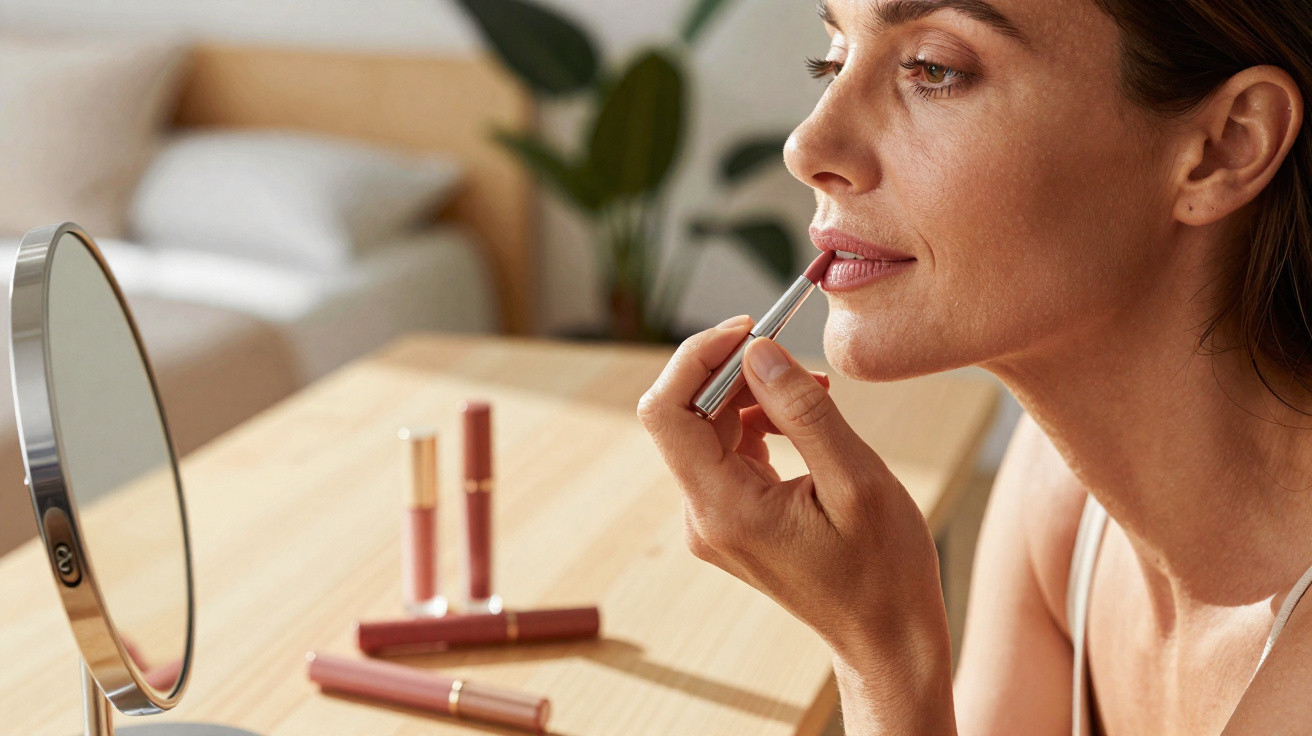
Lip liner has become a valuable part of beauty routines, helping to shape, define and keep lipstick in place. For people aged 40 and over, this product is increasingly used to restore lip definition, soften visible signs of ageing and create more balanced facial proportions, delivering a neater finish without requiring major changes to everyday make-up.
What are the main benefits of lip liner?
One of its most widely recognised advantages is its ability to restore definition around the lips. Over time, the natural lip line can become less distinct, while fine lines may appear around the mouth, making lipstick more likely to bleed.
Lip liner reinforces this boundary, forming a “frame” that brings back the original shape and enables subtle symmetry adjustments. It can also slightly reduce the apparent space between the nose and mouth and soften the appearance of vertical lines above the lips, creating greater visual balance across the face.
How can you use lip liner for a natural result?
Many people avoid lip liner because they are concerned that the outline will look overly pronounced. A natural effect, however, comes down to selecting the right shade and texture, as well as applying it correctly. Colours close to the natural lip shade or the lipstick itself generally work best.
A few straightforward techniques can help create a subtle, long-lasting everyday finish, particularly for anyone seeking convenience without compromising on a polished appearance:
- Choose the right shade: colours that resemble the lips’ natural pigmentation will work with a range of lipsticks.
- Use light strokes: create small connected strokes rather than drawing one continuous line.
- Blend the outline: soften the line with a brush or fingertip to prevent harsh edges.
- Lightly fill in the lips: applying the pencil through the centre of the lips improves wear and evens out the colour.
How does lip liner help after the age of 40?
From the age of 40 onwards, lip liner can serve a particularly useful purpose by compensating for the natural loss of volume and definition. It helps to “rebuild” edges that have become less visible, enhancing the lips’ original shape without changing it completely.
At this stage, creamier formulas are often more comfortable on dry lips, while long-wear options provide better resistance to heat, humidity and more emollient lipsticks. Techniques such as the “blurred lip” effect, where pencil is applied around the edges and gently drawn inwards, produce a soft gradient often seen in professional and occasion make-up looks.
What should you consider when choosing the best lip liner?
When selecting a lip liner, it is worth considering its texture, finish and how comfortable it feels on the lips, especially if the area tends to feel tight easily. Many brands produce pencils designed to match their lipsticks, making everyday shade matching simpler.
In general, creamier formulas are easier to blend, whereas drier ones usually offer longer wear and hold back liquid or very creamy lipsticks more effectively. The format also affects application: retractable pencils do not require sharpening, while traditional pencils can be sharpened to a finer point for precise outlining. By choosing pink-toned nudes, light browns or shades close to the lipstick, lip liner becomes more than a product for elaborate make-up looks, fitting easily into simple routines while adding definition and preventing smudging for different age groups.





Comments
No comments yet. Be the first to comment!
Leave a Comment