
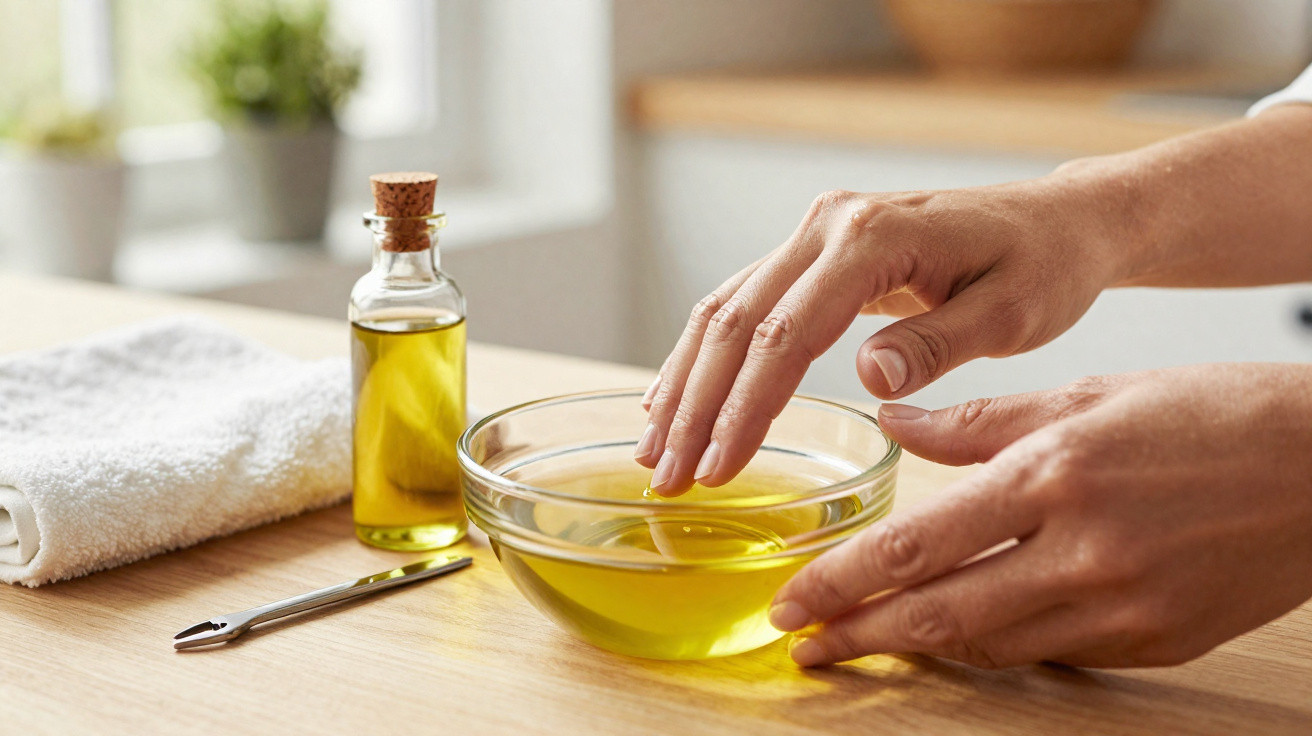
For anyone dealing with dry cuticles and nails that break easily, a warm olive oil soak can be a straightforward way to boost moisture and improve the appearance of the hands.
Why does warm olive oil help cuticles?
Olive oil contains fatty acids and vitamin E, which are known to create a protective layer that limits water loss from the skin. Used warm, it also feels more pleasant to apply.
This treatment helps to soften cuticles and may reduce the rough appearance caused by dryness. The effects are generally more noticeable when it is done regularly.
How to make a warm olive oil soak at home
This treatment is easy to carry out and takes only a few minutes. Heat the olive oil only until it is slightly warm, as higher temperatures may cause discomfort or burns.
Before starting, follow these steps to use the method correctly:
- Warm around 30 ml of olive oil until lukewarm.
- Pour the oil into a small bowl.
- Soak your fingertips for 5 to 10 minutes.
- Massage the nails and cuticles for about one minute.
- Blot away only the excess with a tissue or soft towel, without washing your hands straight away.
Can stopping cuticle removal make a difference?
Cuticles act as a natural barrier against dirt, fungi and bacteria. Removing them frequently can make the area more sensitive and increase the likelihood of small injuries.
Rather than cutting away all the skin, it is worth keeping the area consistently moisturised and gently pushing back the cuticles only when needed. This can help them look less noticeable and healthier.
Which habits help make nails stronger?
A warm olive oil soak provides moisture, but its benefits are greater when it forms part of a complete care routine. Minor day-to-day adjustments can help prevent ongoing dryness.
Wearing gloves while cleaning, applying moisturising cream after washing your hands, avoiding harsh products and maintaining a balanced diet can all support stronger nails over time.
When does dryness need attention?
In many cases, brittle nails are simply linked to frequent exposure to water, detergents or changes in the weather. However, persistent symptoms may point to other conditions.
If there is pain, a marked change in nail colour or cracks that do not improve despite moisturising, seek advice from a dermatologist. They can identify the cause and recommend the most suitable treatment.




Comments
No comments yet. Be the first to comment!
Leave a Comment