
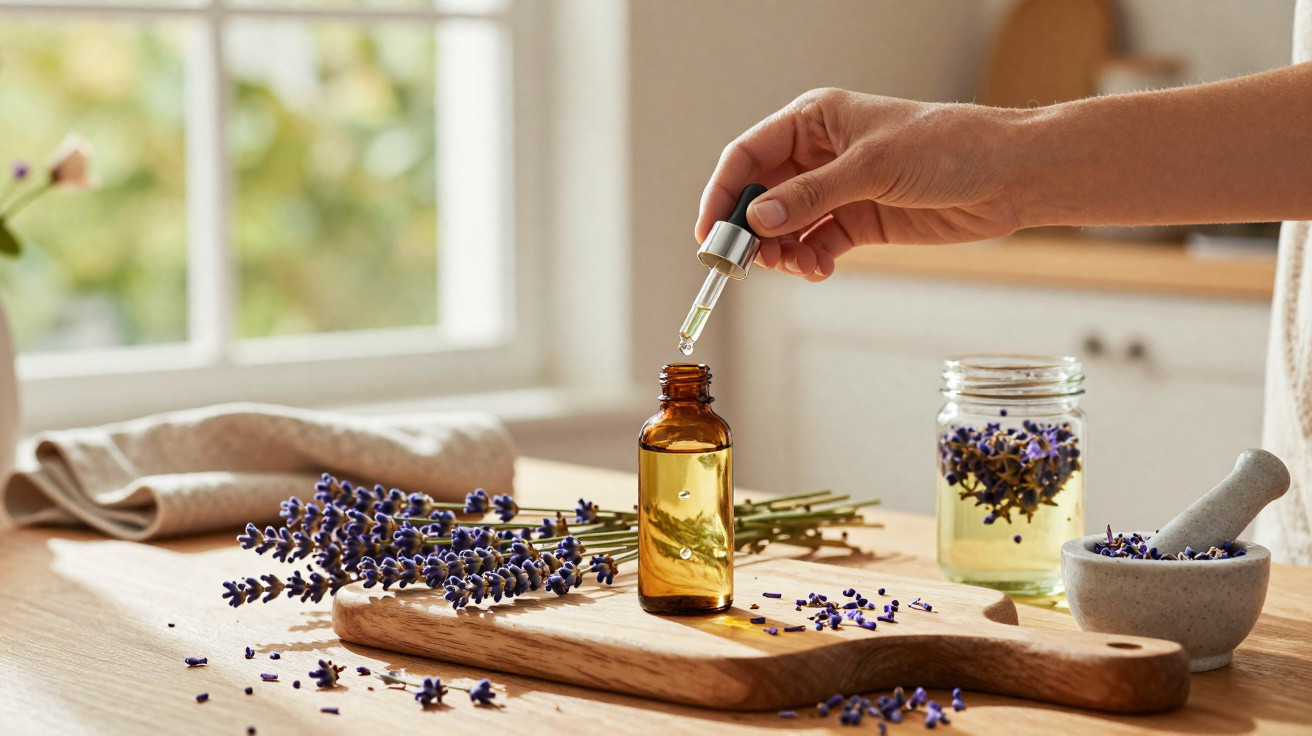
Lavender has an easily recognisable fragrance, but its flowers can also be used to make a homemade oil for massage and skin and hair care. The key point is that a home preparation is not the same as an essential oil: it is an infused lavender oil, which is gentler and easier to make.
What is homemade lavender oil?
Lavender oil is available in two very different forms. Essential oil is produced through distillation and has a high concentration of aromatic compounds. An oleate, on the other hand, can be made at home by leaving dried flowers in contact with a vegetable oil for a set period.
During this process, some of the compounds in the plant transfer into the chosen carrier oil, such as extra-virgin olive oil, sweet almond oil, jojoba oil or rosehip oil. As it is less concentrated than an essential oil, the oleate is commonly used for massage and in handmade cosmetic preparations.
What benefits can lavender offer?
Alongside its distinctive scent, lavender contains antioxidant compounds and substances studied for their potential soothing and antimicrobial effects. In cosmetic routines, this helps explain the interest in the ingredient for products aimed at sensitive skin and scalp care.
It is important, however, to distinguish possibilities from promises. Evidence remains limited for claims such as speeding up hair growth or rejuvenating the skin. Results may vary according to the concentration, formulation, application method and each person’s individual characteristics.
How to make lavender oil at home
Preparation begins with one essential detail: the flowers must be completely dry. Any moisture can affect how well the oil keeps. Once this is done, use a clean, dry glass container and select a good-quality vegetable oil as the infusion base.
1. Prepare the flowers
Allow the lavender to dry fully in a well-ventilated place, away from direct sunlight.
2. Cover with oil
Place the flowers in a clean jar and cover them completely with olive oil, almond oil, jojoba oil or another suitable vegetable oil.
3. Leave to infuse
Keep the container sealed for around one month, shaking it occasionally to encourage contact between the flowers and oil.
4. Strain and protect
Filter the mixture and store the finished oil in a dark bottle, away from direct light and heat sources.
Those wishing to speed up the process can use a bain-marie over a low heat, taking care to avoid excessive warming. Whichever method is chosen, good hygiene, no water in the container and correct storage are important measures for preserving the homemade preparation.
Watch the video shared by the YouTube channel Hair Oils, which demonstrates how to make homemade lavender oil.
What precautions help prevent irritation during use?
Natural does not mean free from reactions. Even infused oil can cause redness, itching or stinging in more sensitive people. Before applying it over a larger area, test it on a small patch of skin and monitor the response before continuing.
Extra care is needed with lavender essential oils, which are far more concentrated and generally need to be diluted before touching the skin. Pregnant women, young children and people with dermatological conditions should seek professional advice before using preparations of this kind.
How can lavender oil be used in a routine?
The oleate can be applied in small amounts to skin that is still slightly damp after bathing, used for massage or added to handmade preparations such as balms. For hair, it can form part of occasional care, provided you monitor how the hair responds and avoid using too much, which may leave the area feeling weighed down.
If you plan to try it, start with a small amount and see how your skin or hair reacts. Prepare it properly, store it carefully and stop using it if any irritation occurs. Natural ingredients can enhance a routine, but they must be used thoughtfully and should never replace treatment recommended by a professional.



Comments
No comments yet. Be the first to comment!
Leave a Comment