
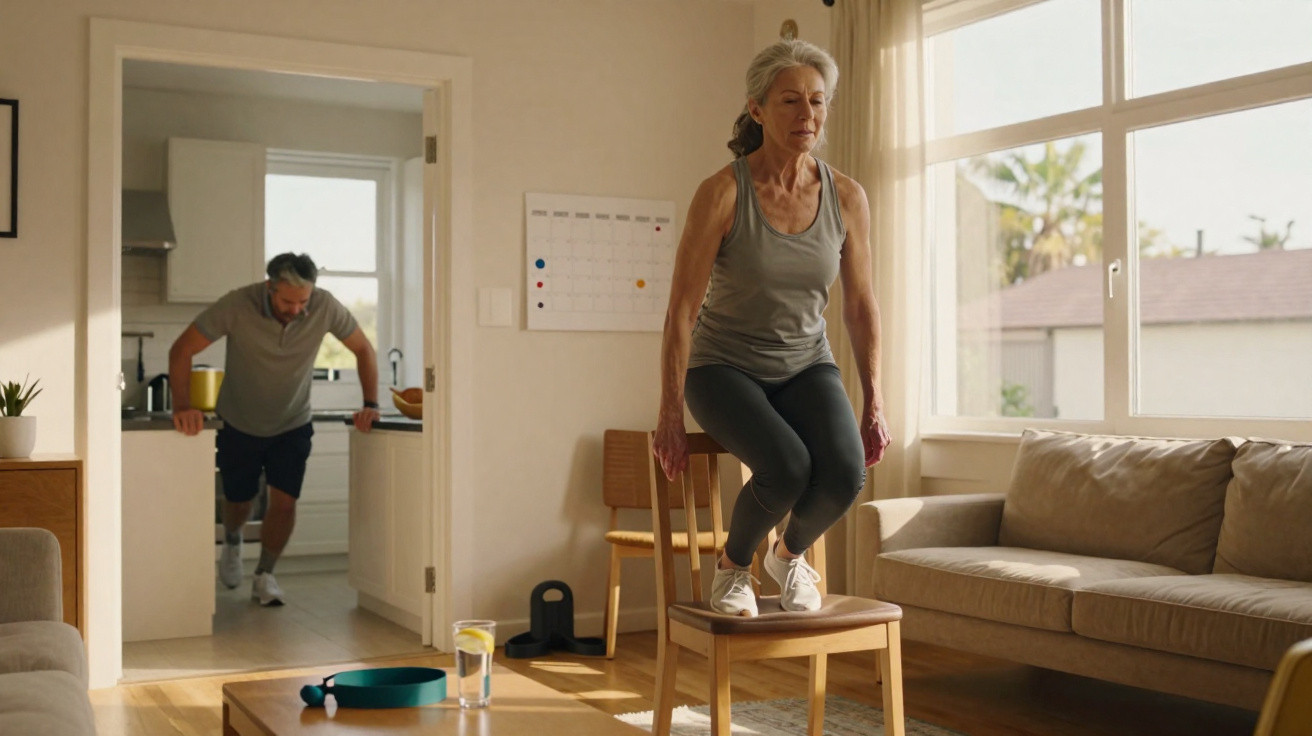
Maintaining independence in later life calls for practical strategies that extend beyond simply going for daily walks. The human body needs stimuli that maintain lean mass and support functional mobility in everyday tasks, ensuring longevity with complete movement safety at home.
Why does walking alone not provide all the strength required?
Many people over sixty believe that walking alone meets every biological need of the body. Although aerobic exercise benefits the cardiovascular system, it does not adequately build the muscular power needed to stabilise joints and prevent dangerous falls.
As people grow older, the natural loss of muscle fibres speeds up unless regular resistance work is performed. Targeted mechanical stimulation of the lower limbs supports postural stability and maintains the ability to carry out basic efforts with complete daily independence.
How can you strengthen your legs at home after 50?
Simple bodyweight exercises activate deep muscle fibres, but one particular technique makes all the difference… Read more
How does the chair squat strengthen the lower limbs?
The action of sitting down and standing up using a sturdy chair mirrors a basic movement performed repeatedly throughout the day. This exercise works the quadriceps and glutes in a controlled way, building physical endurance and restoring the firmness needed to walk steadily.
With your feet positioned shoulder-width apart and your abdomen engaged as you rise, you activate essential joint structures. This conditioning helps to avoid early fatigue and preserves the autonomy required to climb stairs or carry shopping without excessive discomfort.
Below is a video from the National Institute on Aging YouTube channel that explores the points discussed in this topic in more detail:
How do kitchen worktop press-ups protect the torso and arms?
Training the upper body is essential for maintaining correct posture and preventing strain on the spine. Incline press-ups performed against the kitchen worktop provide secure support, developing strength in the arms and giving the exerciser’s torso greater stability.
This exercise adapts the traditional bodyweight movement by using a comfortable incline, which reduces impact on the joints. Practising it regularly engages the chest and triceps, building the support needed to push heavy doors and lift objects without any postural risk.
Support guide
Step-by-step incline press-up
Tips for performing the movement steadily:
- Place both hands firmly on the kitchen worktop, keeping your body aligned.
- Slowly bend your elbows until your chest moves closer to the stable surface.
- Push against the worktop to straighten your arms, then return to the starting position while controlling the pace.
Which habits complement resistance training at home?
Combining aerobic activity with muscle-strengthening work creates a solid foundation for physical health in later life. While walking stimulates the cardiorespiratory system, functional movements help prevent sarcopenia and significantly improve the body’s dynamic balance.
Taking brief rest intervals and maintaining consistent fluid intake support fibre recovery after exercise. The key to steady progress lies in regular stimulation, ensuring gradual vitality and encouraging overall wellbeing in any home environment.
Simple practices that enhance daily physical strengthening:
- Take moderate walks to complement aerobic fitness.
- Allow suitable rest periods between exercise sets.
- Prioritise an upright posture and continuous breathing during every repetition.
What is the ideal frequency for maintaining the results achieved?
Experts recommend carrying out these strengthening sessions at least twice a week on alternate days. This schedule allows the muscles to recover properly, building continuous neuromuscular adaptation and producing noticeable gains in agility for simple tasks.
Respecting your own limits and adjusting the pace according to personal progress makes the practice enjoyable and safe. By incorporating these movements into your weekly routine, you strengthen your body, protect physical mobility and achieve an active life with autonomy.

Comments
No comments yet. Be the first to comment!
Leave a Comment