
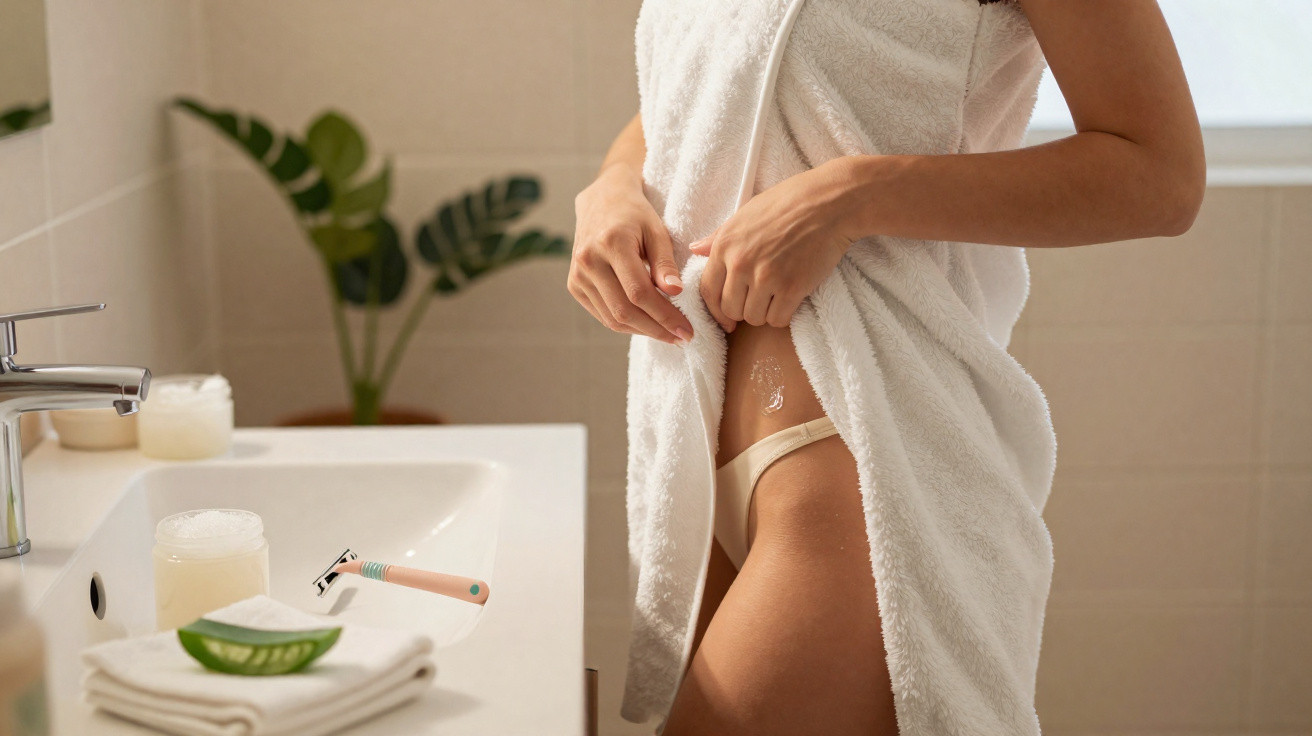
A small, painful bump in the groin can make something as simple as getting dressed a constant source of discomfort. Ingrown hairs are common after hair removal and do not mean that you have poor hygiene or have neglected your skin. In most cases, they result from a combination of a close cut, inflammation, friction and skin that is still recovering.
Why do hairs become ingrown after hair removal?
A hair becomes ingrown when it grows back into the skin or becomes trapped beneath its surface, triggering an inflammatory response called pseudofolliculitis. This can happen after using a razor, wax, tweezers or other methods that remove or cut the hair, particularly if the hairs are coarse, curly or grow in different directions.
In the groin, heat, moisture and continual contact with clothing increase friction in an area that has already become sensitive. As a result, redness, itching and small raised bumps may develop even when hair removal has been carried out carefully. Avoid squeezing bumps or trying to remove the hair with objects, as this can worsen inflammation and cause marks.
Care should begin immediately after hair removal
During the first few hours, the skin needs a gentle approach rather than a series of products. Washing the external area carefully, patting it dry without rubbing and applying a fragrance-free moisturiser may help protect the skin barrier. Products containing fragrance, alcohol or multiple active ingredients can sting and intensify irritation that is only just beginning.
It is also worth choosing light, looser clothing for the first 24 hours. Tight trousers, rough fabrics and underwear that presses against the groin create friction over recently treated follicles. This straightforward step reduces heat and discomfort, allowing the skin time to recover before returning to your usual routine.
Exfoliation needs to happen at the right time
Exfoliating straight after hair removal may lead to stinging, tiny skin injuries and further inflammation. It is best to wait around two to three days, provided there are no wounds or severe irritation. Exfoliation should be gentle, without excessive pressure, and does not need to be done every day to be effective.
A preventative routine can be simple and comfortable. The key is to watch how your skin responds and stop any step that causes pain or persistent stinging:
- Wait two or three days before exfoliating
- Use gentle movements and avoid scrubbing hard
- Keep the external area clean and thoroughly dry
- Apply fragrance-free moisturiser after care
- Avoid picking at bumps or pulling out trapped hairs
Watch the video shared by the YouTube channel Dra. Marina Hayashida, which offers tips on preventing folliculitis and marks after hair removal.
Hair removal technique also affects ingrown hairs
When using a razor, going over the same area several times or shaving against the direction of hair growth can cut the hair too close and make it more likely to grow back into the skin. Using a clean razor, short strokes and as few passes as possible generally reduces irritation. Skin does not have to be completely smooth for hair removal to have been done properly.
If these episodes happen often, it may help to leave longer gaps between hair-removal sessions or discuss another method with a dermatologist. Bumps containing pus, severe pain, localised warmth, steadily worsening symptoms or persistent marks should be assessed by a professional. These signs may point to more significant inflammation or folliculitis that should not be treated with home remedies alone.
A gentle routine can change how skin responds
Preventing ingrown hairs does not require hiding the problem or subjecting the groin to harsh care. It means respecting the skin's recovery time, reducing friction and choosing mild products. Start with the simplest combination: loose clothing for the first 24 hours, fragrance-free moisturising and gentle exfoliation only after two or three days.
Pay attention to your skin after your next hair-removal session and let go of the idea that stinging means a product is working. The sooner you replace pressure and excess with consistency and gentleness, the lower the chance of turning a common discomfort into repeated inflammation. Your comfort deserves care now, without shame, guilt or painful improvised solutions.





Comments
No comments yet. Be the first to comment!
Leave a Comment