
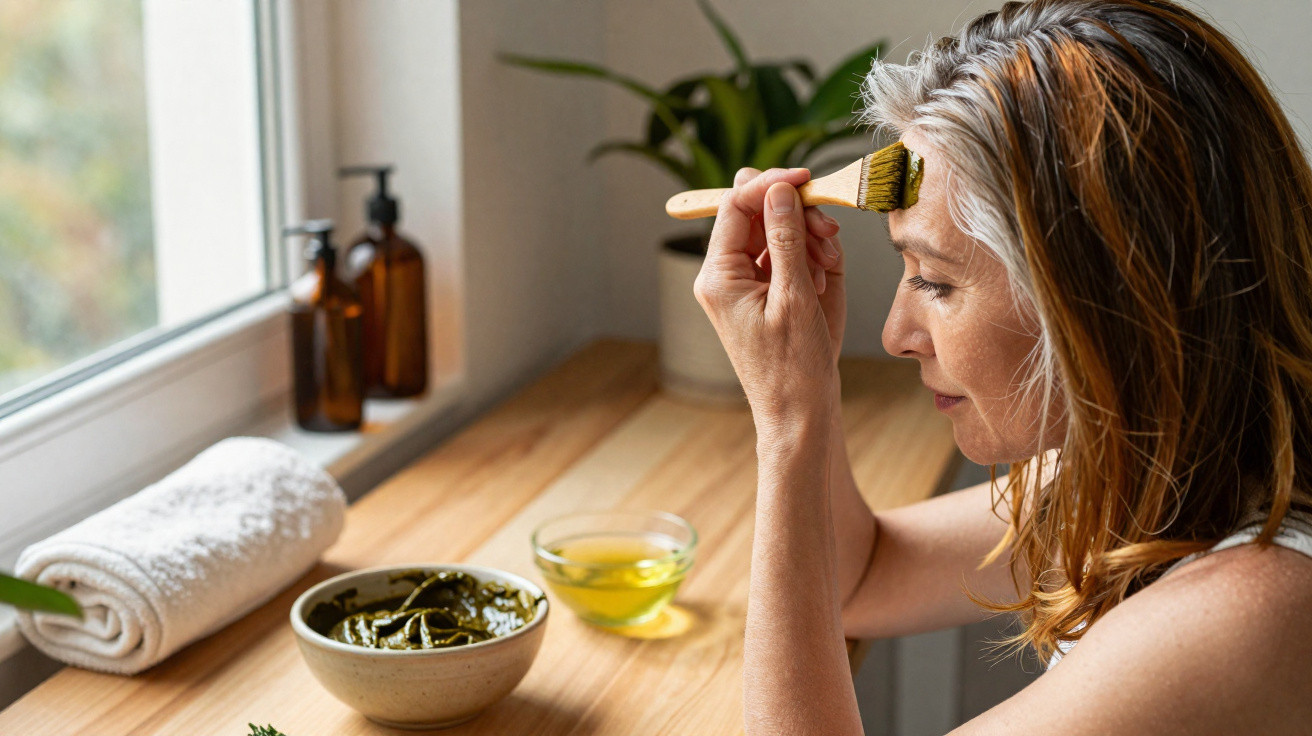
Henna for covering white hair has attracted people seeking gentler alternatives to conventional hair dyes. Obtained from a plant that has been used for centuries across numerous cultures, it coats each strand, causes minimal change to its internal structure and therefore delivers results influenced by the natural colour, chemical history and purity of the chosen product.
How does henna cover white hair?
Henna releases a pigment that attaches chiefly to the outer surface of the hair fibre, bonding particularly well to sections without melanin. On white strands, the shade may range from coppery to brown depending on the formula, processing time and any blends with other dye plants, such as indigofera, which is used to create a darker result.
As well as adding colour, henna often makes hair feel fuller and more voluminous because it forms a fine coating around every strand. This effect is not permanent: both colour and shine fade progressively with washing, so regular reapplication is needed to retain the preferred shade.
Which factors affect whether henna works on every hair type?
The hair's starting condition has a major effect on the final appearance of the colour, particularly where there is a high proportion of white hair. On naturally dark hair with only a few grey strands, coverage is generally subtler, producing highlights that blend with the original shade and reduce the contrast.
A history of chemical treatments, including straightening, permanent colouring or recent bleaching, can change how the plant pigment reacts. For this reason, a strand test is always recommended to check for possible shade differences, prevent unwanted surprises and establish whether the hair fibre is strong enough for the product.
What care improves colour evenness and longevity?
The purity of the henna is one of the most important factors in the outcome, since blended versions may include other dyes, metallic salts and additives. Proper preparation of the paste also matters: using the right proportions of powder and liquid, along with allowing sufficient resting time, encourages pigment release and more even coverage.
A few straightforward measures can help achieve a more consistent and appealing effect over the following weeks, especially on hair with a large amount of white hair or differing textures across the head. The following practical steps can be included in the application routine:
- Wash beforehand with a mild shampoo to remove residue and excess oil.
- Prepare the paste according to the manufacturer's instructions, observing the required resting time.
- Section the hair into fine strands, giving priority to areas with the greatest concentration of white hair.
- Saturate each section thoroughly, rather than allowing product to build up only on the outer surface.
- Follow the recommended processing time and use gentler shampoos for the first few washes.
When does henna require greater care for covering white hair?
Some hair and scalp types need additional consideration before henna is adopted as the main method for covering white hair. Where the percentage of grey hair is high, for instance, repeated applications may be required to build more complete colour coverage and, in some cases, blends with other herbs may be needed to adjust the shade.
People with a history of allergies, recent chemical treatments or very dry hair should seek professional guidance before starting to use it. A specialist experienced in plant-based colouring can recommend safe intervals between procedures, suggest hydrating treatments to prevent stiffness and help select purer products that suit the aim of covering white hair safely and predictably.





Comments
No comments yet. Be the first to comment!
Leave a Comment