
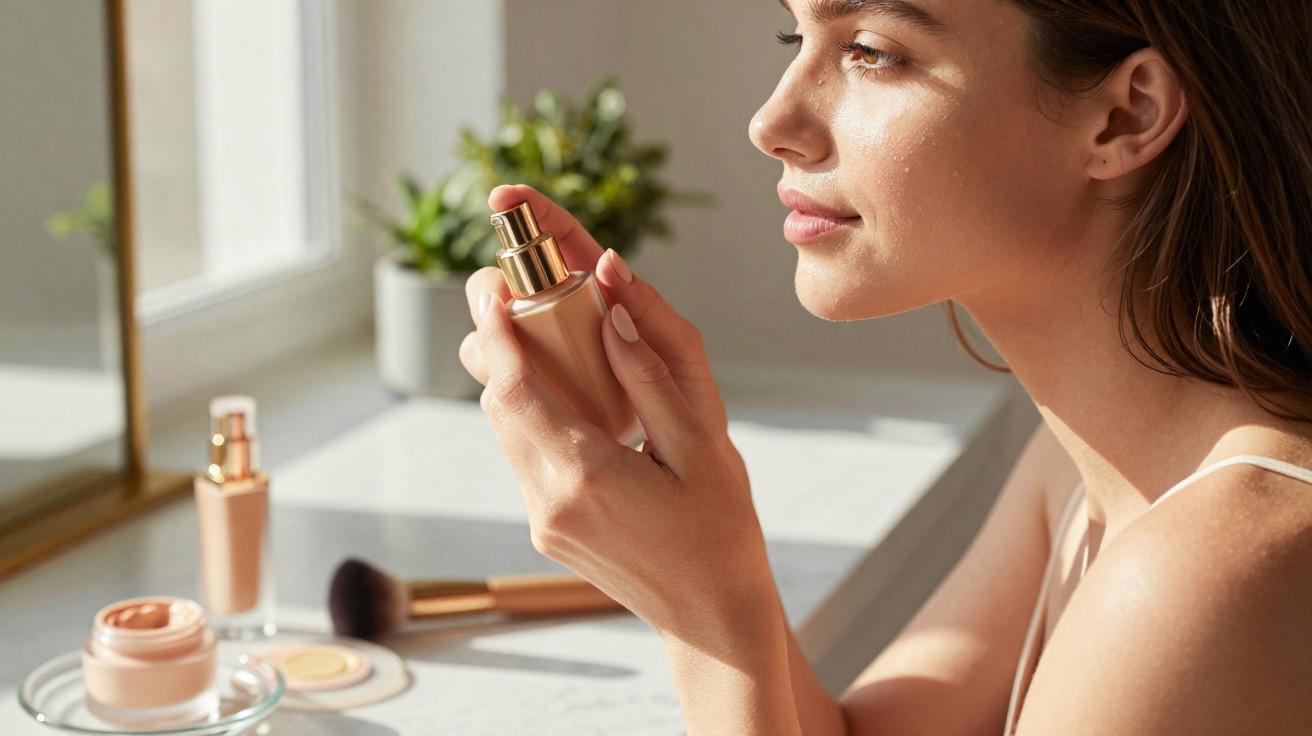
A foundation that looked ideal in its packaging can settle into lines, cling to dry patches and leave the face looking overloaded. Before giving up on the product, try a straightforward adjustment for everyday make-up: blend a very small amount of moisturiser into only the portion of foundation you intend to use at that time.
How can you mix moisturiser into foundation without overdoing it?
Dispense only the amount of foundation needed for that application onto your hand or a mixing palette. Next to it, add one very small drop of the facial moisturiser you already use regularly. Blend them together until the texture is even, then apply the product to your face.
The key is to use very little moisturiser at first, as the aim is not to completely change the formula. Even a tiny amount can make foundation more fluid and easier to spread. Adding too much may significantly reduce the coverage and create a finish that differs from what you expected.
How does this affect the make-up finish?
Adding a little moisturiser generally makes foundation feel lighter and more comfortable to apply, particularly when the skin has dry areas. The blend may also lessen the feeling of product building up in places where make-up usually highlights flaking or fine lines.
This adjustment mainly changes the texture and coverage. Before using it over the entire face, check how the blend performs, as every formula combination can behave differently:
- Start with a minimal amount of moisturiser to retain coverage more effectively.
- Mix only the portion of foundation you will use at that moment.
- Apply a thin layer first, adding more product only where needed.
- Check that both formulas remain smooth and uniform before continuing with application.
Which moisturiser works best when mixed with foundation?
Ideally, choose a facial moisturiser that already feels comfortable on your skin and suits your usual routine. Lightweight textures are often easier to combine without changing the foundation too much, although the result depends on the formulas involved. For that reason, testing a small amount is safer than preparing a large batch.
There is also no need to add oil or several products at once. If the foundation simply feels too dry for the finish you want, a small amount of moisturiser may be enough. The more ingredients you introduce, the more likely the texture is to separate or lose performance.
Watch the video shared by the YouTube channel Patricia Vidal, which offers tips on thinning foundation and stopping it from cracking.
Why does this tip not apply to sunscreen?
This adjustment should only be used with standard make-up. Sunscreens and products whose protection relies on their original formula should not be diluted with moisturiser, foundation or other cosmetics. Mixing these products can alter the amount applied and affect the even distribution required to provide the stated protection.
If you wear sunscreen before make-up, apply the correct amount separately and allow it to settle on the skin. Then make the blend only with the foundation you will apply over it. This allows you to adjust the make-up finish without deliberately interfering with the formula of the protective product.
When is it worth trying this trick before replacing your foundation?
If the shade still works and the main issue is a dry-looking finish, this small adjustment can give your foundation a new purpose. It is especially useful on days when your skin feels drier than usual and you want less rigid coverage without having to buy another product straight away.
The next time your foundation emphasises your skin too much, try adjusting only the amount you are about to use and see the difference. One small drop may be enough to rescue the application. Test it before abandoning the product and find out whether a simple change gives you the more comfortable finish you were looking for.






Comments
No comments yet. Be the first to comment!
Leave a Comment