
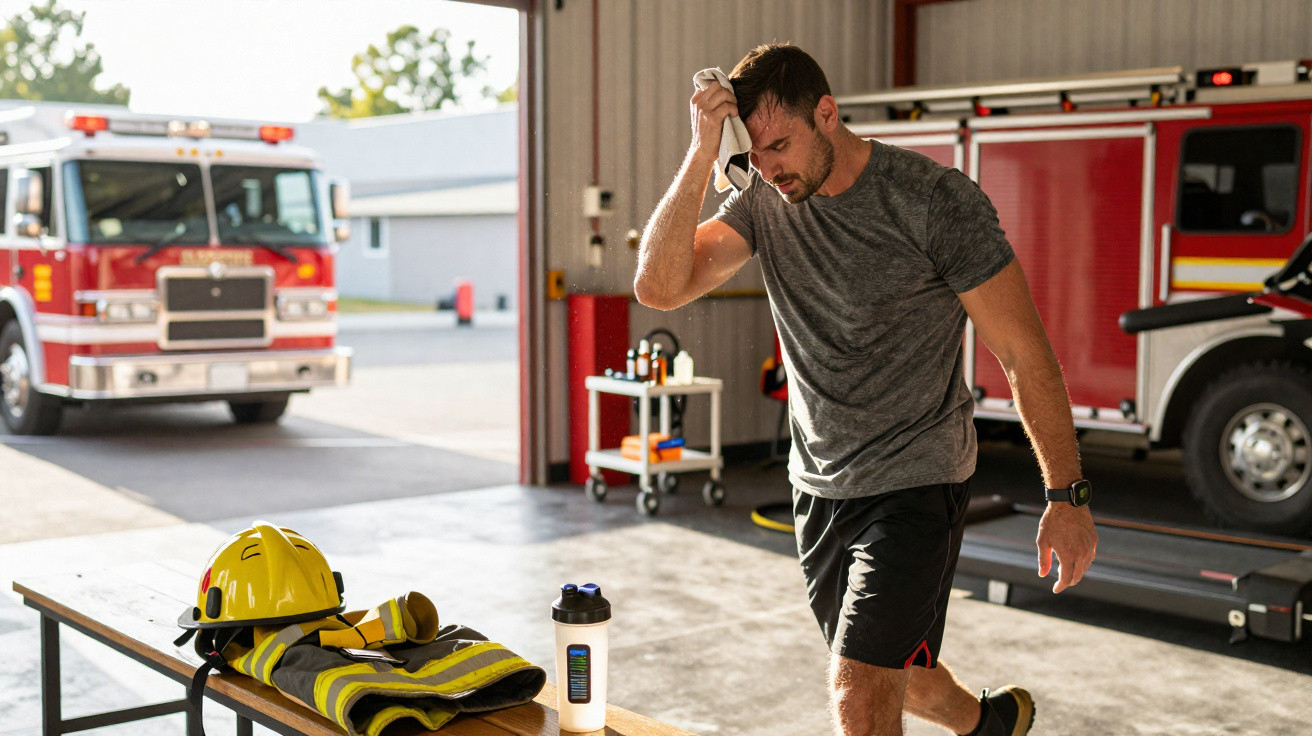
For people devoted to extreme workouts, there may be an unwelcome finding: very vigorous exercise could briefly reduce the efficiency of the immune system.
That is, at least, what the available evidence indicates. A 2023 analysis examining more than 4,700 fluid molecules collected after exercise from firefighters found that people whose jobs demand intensive fitness training – including emergency responders and athletes – could be more vulnerable to certain illnesses.
"People who are very fit might be more prone to viral respiratory infection immediately after vigorous exercise," said Pacific Northwest National Laboratory (PNNL) biomedical scientist Ernesto Nakayasu. "Having less inflammatory activity to fight off an infection could be one cause."
Watch the video below for an overview of the study’s results:
Vigorous exercise and immune-system responses
There is compelling evidence that, over the longer term, moderate physical activity benefits the immune system in healthy people. However, the immune system’s immediate response after strenuous exercise remains disputed.
Little robust evidence backs the suggestion that intense exercise raises the likelihood of opportunistic infections. Some earlier research has, however, recorded self-reported upper respiratory tract infections among athletes after demanding activity when compared with control groups. It remains unclear whether those findings show correlation or causation.
To investigate, Nakayasu and his colleagues analysed blood plasma, urine and saliva from 11 firefighters, both before and after 45 minutes of demanding exercise. The participants carried up to 20 kilograms of equipment across hilly ground.
"We wanted to take an in-depth look at what's happening in the body and see if we're able to detect danger from exhaustion in its earliest stages," explained PNNL bioanalytical chemist Kristin Burnum-Johnson. "Perhaps we can reduce the risk of strenuous exercise for first responders, athletes, and members of the military."
What the firefighter samples revealed
Exercise undoubtedly offers considerable health benefits, from improving mood to supporting immune defences. Yet, as seen in earlier studies, this research identified potential evidence of immune suppression in the firefighters after their exertion.
Alongside the anticipated physical shifts that help the body meet exercise’s greater demands for fluid, energy and oxygen, the researchers observed lower levels of molecules involved in inflammation. Levels of opiorphin, which dilates peripheral blood vessels, also rose.
The ultimate implications of these changes for short-term immune-system function are not yet known, although the researchers proposed several possibilities.
"[Opiorphin] may increase blood flow to muscles during the exercise regimen to improve the delivery of oxygen and nutrients," the team writes in their paper.
"We postulate that the decrease in inflammatory molecules we observed in the saliva after exercise might represent an adaptive mechanism to improve gas exchange in response to higher cellular oxygen demand."
Participants also experienced changes to their oral microbiome. The scientists believe these could be linked to the rise in antimicrobial peptides detected in the firefighters’ mouths following intensive activity. These peptides may potentially compensate for immune suppression, though this interpretation is contested.
"However, this increase in antimicrobial peptides had no effect on inhibiting E. coli growth," Nakayasu and colleagues elaborate, "suggesting a limited capacity of antimicrobial peptides within the oral cavity to protect against host infections."
Limits of the exercise study
Other researchers contend that some observed changes may reflect not immune suppression, but instead a "heightened state of immune surveillance and immune regulation".
Comparing results within each participant helped limit the effect of the study’s small sample. Nevertheless, firefighters face distinctive pollutant exposures during fires, and these may also alter their immune responses.
The researchers also stressed that the study included only healthy, active men. Further work involving a wider population will therefore be necessary to verify the findings.
Even so, when considered alongside previous research, "there is evidence supporting a relationship between physical demands and a higher incidence of respiratory infections," Nakayasu and the team conclude.
The research appeared in Military Medical Research.
An earlier version of this article was published in November 2023.






Comments
No comments yet. Be the first to comment!
Leave a Comment