
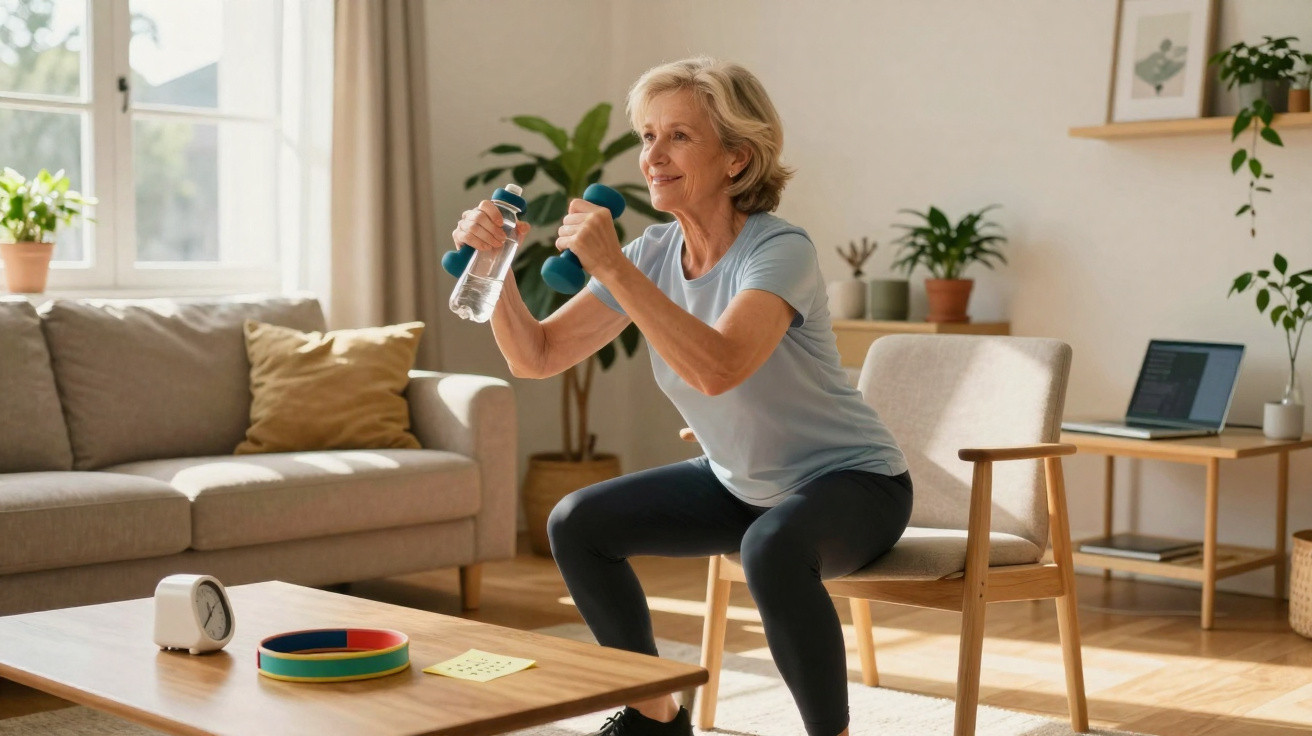
The evidence is unequivocal: resistance training plays an essential part in healthy ageing.
Whether you lift weights or use your own bodyweight for movements such as lunges, squats and push-ups, this type of exercise can support independent living for longer. It can strengthen bones, lower the likelihood of conditions including diabetes, and could even benefit sleep and mental wellbeing.
Yet gyms are not for everyone. You may feel that you are not a "gym person" – and never will be – or think you are too old to begin. Going to the gym can cost money and take up time, while some people say they feel uncomfortable or unwelcome there.
Fortunately, you do not need a gym membership or plenty of spare time to gain the health benefits offered by resistance training.
Instead, consider trying "exercise snacking".
What does exercise snacking involve?
Exercise snacking means completing several brief bursts of activity during the day, potentially lasting as little as 20 seconds and usually requiring little or no equipment. Leaving several hours between each bout is perfectly fine.
Suitable simple bodyweight movements include:
- chair sit-to-stands (squats)
- lunges
- box step-ups
- calf raises
- push-ups.
This form of exercise snacking can build muscle mass and strength while improving physical function.
If necessary, use a nearby object to steady yourself. Performing these movements regularly can improve balance as well, which in turn lowers the chance of falls and fractures.
Ready to progress your resistance training?
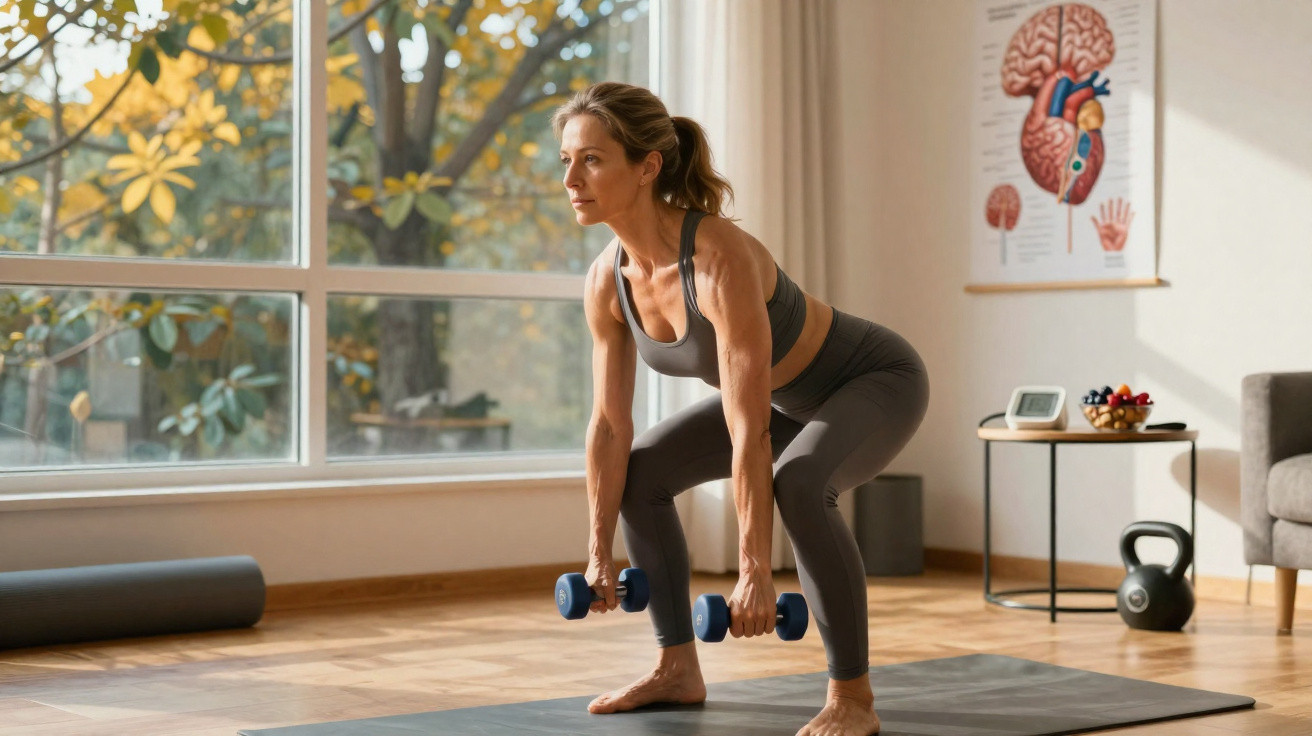
Excellent. Alongside the five exercises already listed, you can use resistance bands or dumbbells for them and add some of these movements:
- seated rows
- chest and shoulder presses
- bicep curls
- knee extensions
- leg curls.
When working with resistance bands, grip them firmly and ensure they are securely fastened to something that cannot move.
Exercise snacking is particularly effective when linked to something you already do repeatedly each day. For example, you might:
- add several squats whenever you rise from a chair or bed
- perform lunges during a television advert break
- fit in a few half squats while the kettle boils
- complete a couple of elevated push-ups – supporting yourself with your hands on a chair or bench as you do the push-up – before eating lunch
- slip in a few calf raises while brushing your teeth.
What is the evidence for exercise snacking?
In one study, older adults with no previous resistance-training experience completed exercise snacks at home twice a day for four weeks.
Every session comprised five straightforward bodyweight exercises: chair sit-to-stand, seated knee extension, standing knee bends, marching on the spot and standing calf raises.
Participants performed each movement continuously for one minute, resting for one minute between exercises.
These brief, uncomplicated sessions lasted only nine minutes, yet after four weeks they improved participants' ability to rise from a chair by 31% compared with a control group that did not exercise. Leg power and thigh muscle size also increased.
Research involving one of us, Jackson Fyfe, has likewise found that older adults considered "exercise snacking" practical and enjoyable when they did it at home once, twice or three times daily for four weeks.
For people unable or unwilling to lift heavier weights at a gym, exercise snacking may offer a more sustainable way to enhance muscle health.
Small amounts can deliver substantial benefits
Other research shows that the more someone exercises, the more likely they are to continue exercising later on.
Extremely short resistance-training sessions using heavier weights may also be more enjoyable than conventional programmes in which people attempt many, many sets.
Brief but frequent activity bouts can also interrupt sedentary behaviour, which generally means spending excessive time sitting.
Sitting too much raises the risk of chronic illnesses such as diabetes, while exercise snacking can help maintain stable blood sugar levels.
Longer-term research is certainly required. However, the available evidence indicates that exercise snacking genuinely helps.
Why is this important?
With age, the muscles used for walking and standing lose mass and strength. Ordinary daily activities may then become difficult.
This can lead to disability, hospitalisation, chronic illness, and greater dependence on community support and residential care.
Maintaining muscle mass and strength can help you to:
- lessen joint pain
- continue doing activities you enjoy
- remain independent in your own home
- postpone or potentially avoid the need for costly health care or residential care.
Is walking a lot enough?
Although walking can maintain some lower-body muscle mass, it does not protect the muscles in your upper body.
If rising from a chair is difficult, or if you become breathless after walking only short distances, resistance training is the most effective way to restore some lost function and independence.
This is especially significant for women, because older women typically have less muscle mass and strength than older men.
If you have osteoporosis – which is more prevalent among older women than men – doing resistance exercise snacks at home can increase balance, strength and bone mineral density. Together, these improvements reduce the likelihood of falls and fractures.
Heavy weights and expensive equipment are not necessary to benefit from resistance training.
Will you begin exercise snacking today?
Justin Keogh, Associate Dean of Research, Faculty of Health Sciences and Medicine, Bond University, and Jackson Fyfe, Senior Lecturer, Strength and Conditioning Sciences, Deakin University
This article is republished from The Conversation under a Creative Commons licence. Read the original article.





Comments
No comments yet. Be the first to comment!
Leave a Comment