
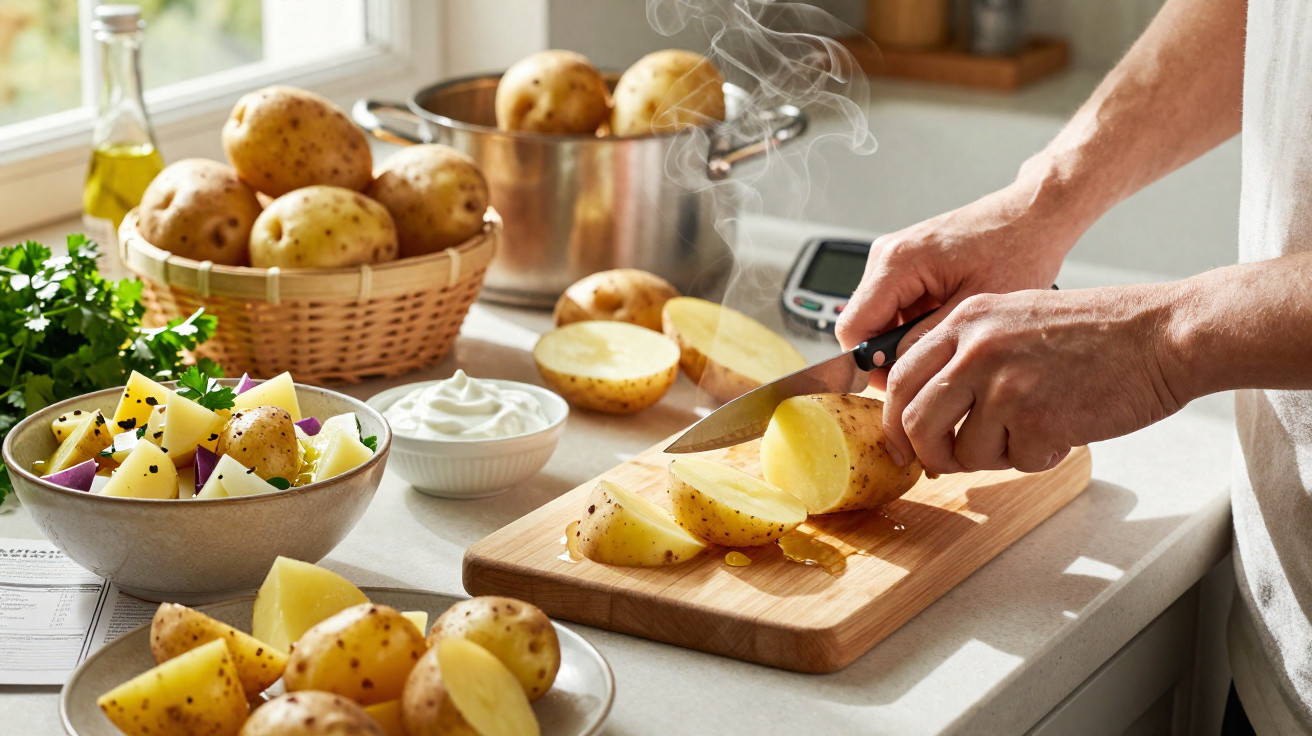
Potatoes have an image problem. Chips, crisps and rich cream sauces have given this tuber a reputation as a calorie bomb. Yet the bare figures and nutritional values paint a different picture: potatoes are more of a lean, filling food than a diet destroyer – and offer several health benefits that many people do not realise.
How many calories do potatoes really contain?
Boiled potatoes provide around 75 kilocalories per 100 grams. That is far less than many people assume, and lower than many common filling side dishes.
| Food (cooked) | Calories per 100 g |
|---|---|
| Potatoes | approx. 75 kcal |
| Pasta | approx. 140 kcal |
| Rice | approx. 130 kcal |
Potatoes themselves are low in calories, low in fat and high in water – it is usually the fat, coating and rich sauces around them that cause weight gain.
The key difference therefore lies in how they are prepared. When potatoes are boiled, steamed or baked in the oven, they remain a light accompaniment. Their calorie content only rises sharply when they are deep-fried or cooked in a pan with plenty of oil.
What nutrients does the potato contain?
Potatoes are made up of around 80 per cent water. However, the remainder is impressive: complex carbohydrates, vitamins, minerals and fibre make this tuber far more nutritionally interesting than its reputation suggests.
Complex carbohydrates instead of a sugar trap
The starch in potatoes is classed as a complex carbohydrate. It is digested more slowly than simple sugar, helping to provide a steadier supply of energy. For this reason, many people find potato dishes pleasantly filling without immediately slipping into a “food coma”.
Particularly when compared with white bread or heavily sweetened snacks, potatoes offer a considerably more stable blood sugar response – provided they are not eaten as chips with ketchup and mayonnaise.
Vitamins: more than simply filling
Potatoes provide, among other nutrients:
- Vitamin C: supports the immune system and acts as an antioxidant.
- B vitamins: important for the nervous system, energy metabolism and concentration.
- Potassium: a mineral that counterbalances sodium and may have a positive effect on blood pressure.
- Fibre: supports digestion and keeps you full for longer.
Many people primarily associate vitamin C with citrus fruit. In fact, potatoes can also make a meaningful contribution to intake – especially when they are gently cooked.
Resistant starch: what happens when potatoes cool down?
Things become particularly interesting once boiled potatoes have cooled. Part of their starch then changes into what is known as resistant starch. In the body, it acts like fibre, as it is barely broken down in the small intestine.
Cooled potatoes – for example in potato salad – provide resistant starch, which feeds the gut microbiome and can slow the rise in blood sugar.
Resistant starch has two major effects:
- It serves as food for beneficial gut bacteria and may strengthen the gut microbiome.
- It causes blood sugar to rise more slowly after a meal.
In other words, anyone who cooks potatoes in advance, allows them to cool and eats them later gains an additional fibre effect – without greatly changing the taste. This can be a practical tip, particularly for people monitoring their blood sugar.
Potatoes and weight loss: filling without many calories
For anyone looking to lose weight or maintain it, potatoes offer several advantages:
- a high water content, meaning relatively few calories per gram
- good satiety from their volume and starch
- plenty of nutrients compared with highly processed convenience foods
A plate of boiled potatoes with some vegetables and a protein source such as fish, chicken or egg often contains fewer calories than a plate of pasta with cream sauce – while still keeping you full for a long time.
Who might find potatoes problematic?
Although the overall picture is positive, not everyone tolerates large amounts of potatoes equally well.
Sensitive digestion and irritable bowel syndrome
People with irritable bowel syndrome or sensitive digestion occasionally report discomfort after eating large portions of potatoes. The main reason is the starch, which can cause bloating in some people.
Eating smaller portions, cooking potatoes thoroughly and avoiding excessive seasoning may help. Many people affected tolerate cooled potatoes in the form of salad or fried potatoes better than large amounts of mashed potato.
Potatoes for people with diabetes
With diabetes, the combination of foods on the plate plays a crucial role, as potatoes contain carbohydrates and can raise blood sugar. They are particularly problematic when eaten on their own or with sugary sauces.
For people with diabetes, potatoes in moderate amounts and combined with protein, vegetables and healthy fats are generally more suitable than chips and crisps.
Combining potatoes with foods high in protein (fish, meat, pulses, eggs) and fat (nuts, olive oil, rapeseed oil, avocado) can flatten the rise in blood sugar. The body absorbs the carbohydrates more slowly, and less insulin is required.
Preparation determines whether potatoes are healthy or calorie-rich
In everyday cooking, preparation method is the main factor deciding whether potatoes become a light, filling food or a genuine calorie trap.
Healthy ways to prepare potatoes
- Boiling or steaming with the skin on: This retains many vitamins while keeping the fat content low.
- Baked potatoes: With little oil and plenty of vegetables, they make a nutrient-rich meal.
- Potato salad: Best made with cooled potatoes, a vinegar-and-oil dressing and fresh herbs rather than heavy mayonnaise.
Eating the skin automatically increases the fibre content. To do so, wash it thoroughly and remove only green or badly damaged areas.
When potatoes become a calorie trap
Deep-fried or very fatty versions are especially problematic:
- Chips: They absorb plenty of oil during frying and can quickly exceed 300 kcal per 100 g.
- Crisps: As well as lots of fat, they often contain salt and flavourings – genuine high-calorie snacks.
- Potato gratin with plenty of cream and cheese: Significantly more energy-dense than boiled potatoes with vegetables.
The tuber itself remains largely the same; the added fat supplies most of the calories. By using less seasoning and sauce, it is easy to turn potatoes into a much lighter meal.
Practical tips for everyday meals
Anyone wanting to include potatoes regularly in their diet can use a few straightforward strategies:
- cook extra potatoes straight away and eat them as potato salad the following day
- pair potatoes with protein-rich foods such as quark, fish or eggs
- choose yoghurt, herb quark or a light oil-and-vinegar dressing instead of a heavy cream sauce
- save ready-made crisps and frozen chips for special occasions rather than using them as a standard side dish
A useful point for many home cooks is that potatoes go well with fibre-rich vegetables such as broccoli, beans or carrots. This combination keeps a meal filling for longer while also delivering a broad range of nutrients.
How potatoes fit into a modern diet
Potatoes can be sensibly included in many eating patterns, from Mediterranean cooking to flexible low-carb approaches. Viewing them as a whole food rather than a “worthless side dish” naturally leads to more balanced meal planning.
Simple potato dishes also usually compare favourably with industrially processed convenience foods: the ingredient list stays short, salt content can be controlled and hidden sugar is avoided. This makes it clear that the tuber is not the enemy of staying slim, but rather an underestimated ally – as long as it is not swimming in fat.





Comments
No comments yet. Be the first to comment!
Leave a Comment