
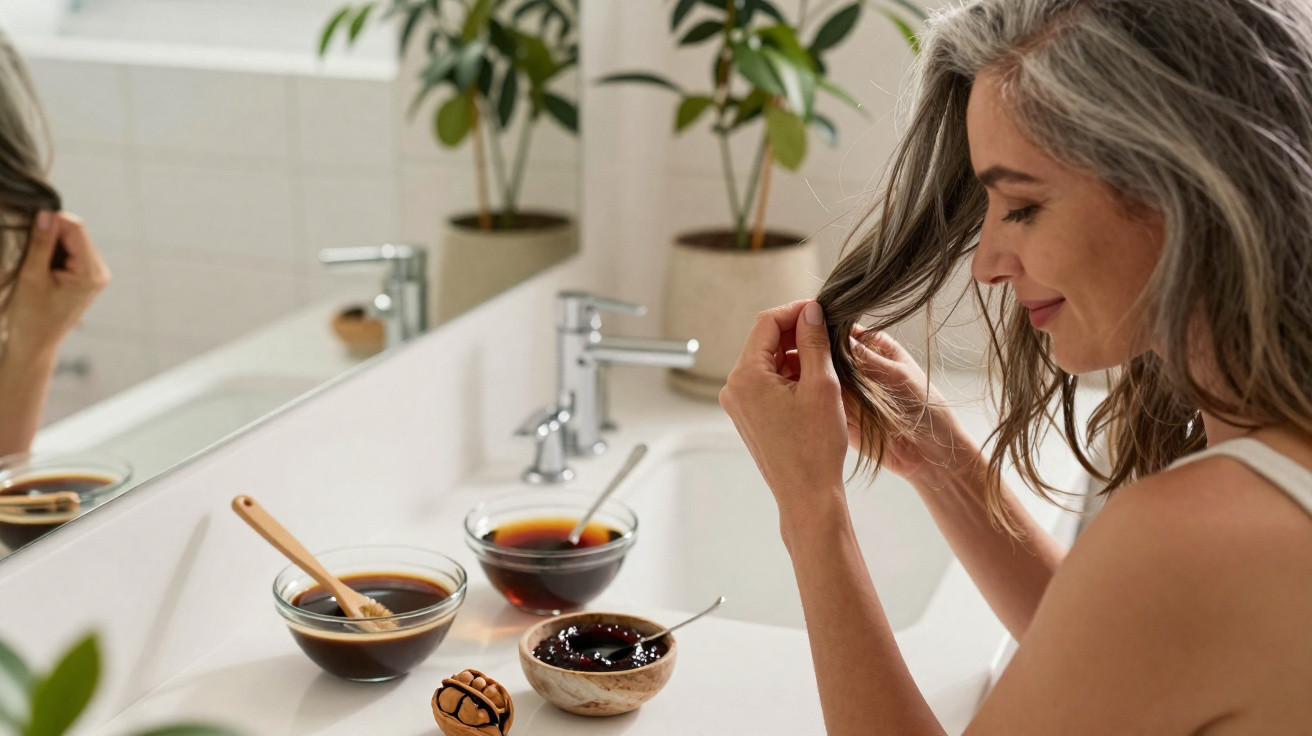
A strong coffee rinse may darken a few strands for an afternoon, while henna can shift the shade for weeks. Between these two ends of the scale, mixtures made with black tea, walnut husk and oils claim to soften the contrast of grey hair. There can be an effect, although it varies according to the natural colour, porosity and ingredient used.
What do homemade mixtures actually do?
Grey strands develop as hair follicles produce less melanin. Home remedies cannot restart those cells or restore the original colour permanently. In most instances, they simply leave pigments on the hair’s surface, producing a subtle camouflage that gradually fades with washing.
The outcome is generally more noticeable on brown, red or dark-blonde hair with only a small number of grey strands. On completely white hair, the colour change may be uneven or barely visible. It is therefore more realistic to expect discreet highlights rather than the even coverage provided by an oxidative dye.
Which ingredients can darken hair?
Strong coffee and black tea contain dark compounds that can temporarily cling to the cuticle, particularly on porous hair. Coconut oil does not add colour, but it helps lubricate the hair and may limit protein loss during washing, making it feel smoother and more manageable.
Walnut husk contains juglone, a brown pigment that can stain hair, skin, clothing and household surfaces. Pure henna, made from Lawsonia inermis, binds to keratin and produces a longer-lasting result, usually in copper tones. None of these choices will deliver identical results on every type of hair.
How can you try four options safely?
Before using any mixture, carry out a test on a small strand as well as a skin patch test, following the directions for the product concerned. Do not use these remedies on an irritated scalp, wear gloves, and stop immediately if you experience burning, itching or redness. The most typical outcomes are as follows:
- Strong coffee may leave very faint brown highlights until the next washes.
- Black tea can temporarily lessen the contrast of grey strands on darker base colours.
- Walnut husk may create brown stains, but it carries a greater risk of irritation and mess.
- Pure henna gives more persistent copper highlights and requires planning before any future chemical treatments.
There is no need to leave a homemade remedy on for hours in an attempt to deepen the effect. Longer exposure raises the likelihood of dryness and irritation without ensuring better coverage. Avoid combining several ingredients at once too, as this makes it harder to establish what caused a possible reaction.
Watch the video shared by the YouTube channel Fazendo em Casa, which offers tips on darkening and disguising grey hair.
Why does henna require particular care?
Henna works differently from coffee and tea because its pigment attaches more firmly to the hair shaft. On light hair, the copper shade can be vivid; on dark bases, it is mainly visible in the light. Since it is difficult to remove, a strand test is essential before applying it to all of the hair.
Check the ingredient list carefully and avoid products marketed as “black henna” if they contain unidentified substances or para-phenylenediamine at an unsuitable concentration. Formulas blended with metallic salts can also react unpredictably with bleaching and straightening treatments. Anyone with previous chemical treatments should speak to a hairdresser.
Are homemade remedies worth using instead of hair dye?
These mixtures may suit people who only want to reduce the contrast created by a few grey hairs and are happy to reapply them regularly. They are not a replacement for hair dye when the aim is full coverage, predictable colour or a dramatic change. Nor do they prevent new grey strands from appearing.
If greying starts very early or develops quickly, a medical assessment may investigate factors such as heredity, thyroid changes and nutritional deficiencies, including vitamin B12. Pay attention to your hair before concealing the sign, test any product now, and choose an option that protects both your confidence and the health of your scalp.





Comments
No comments yet. Be the first to comment!
Leave a Comment