
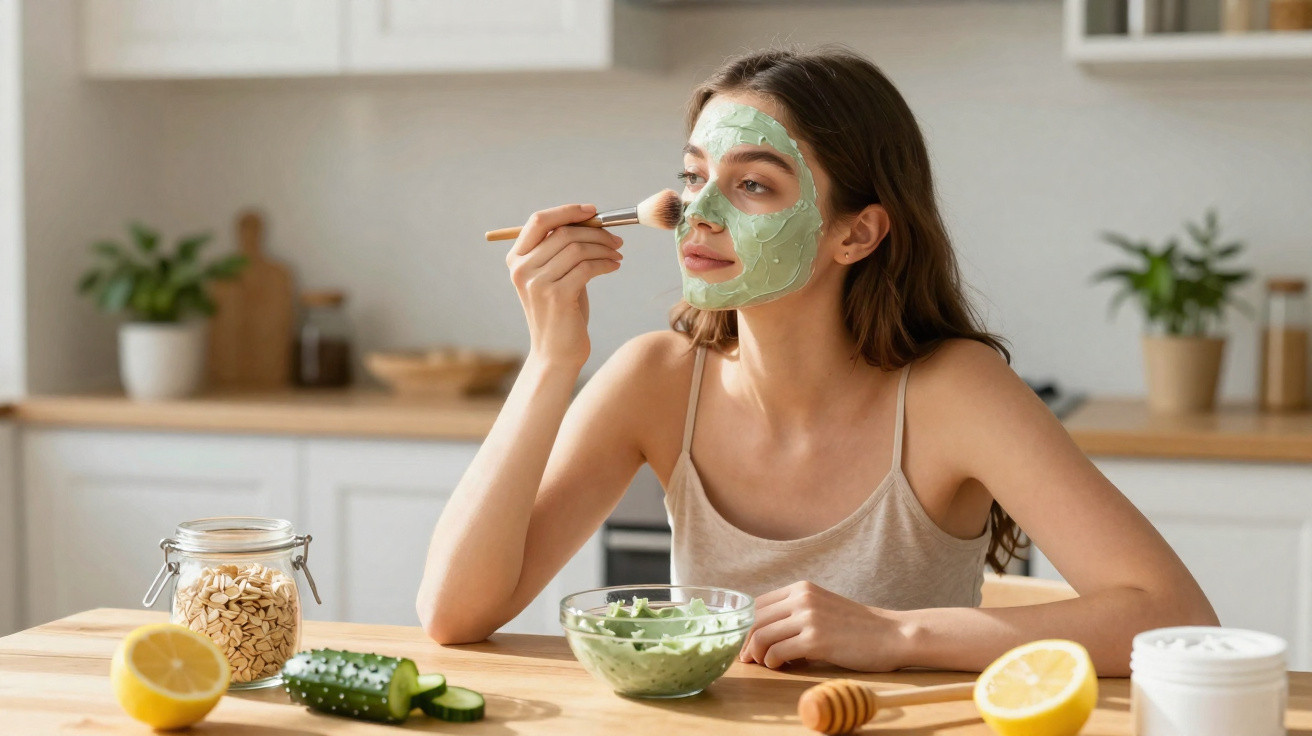
Soft skin does not necessarily require a shelf packed with expensive cosmetics. Straightforward ingredients may provide a temporary feeling of moisture and freshness, yet the label “natural” does not mean risk-free. With homemade face masks, choosing the recipe carefully and applying it properly are what matter most.
Do homemade face masks actually work?
Face masks made at home can temporarily make the skin feel softer and ease the sensation of dryness, especially if they use mild ingredients and are removed without rubbing. Their results are generally superficial and short-lived, so they work best alongside a basic routine of cleansing, moisturising and sun protection.
They are not a replacement for products formulated to address acne, blemishes, rosacea or dermatitis. Commercial cosmetics undergo stability, preservation and safety testing that a mixture prepared in the kitchen does not receive. Where a skin condition is present, relying on homemade recipes may delay diagnosis and aggravate irritation.
Which simple options use fewer ingredients?
One gentle option is to combine very finely ground oats with a small amount of water until it becomes a creamy paste. It can be left on the face for a few minutes, then removed gently. Honey is also included in moisturising recipes, although anyone allergic to it or unsure about their sensitivity should avoid it.
Recipes containing cocoa, molasses, turmeric, yoghurt or plant oils can create different sensations depending on the skin. However, the more ingredients a blend contains, the harder it becomes to identify what caused a reaction. For the first use, choose a simple, freshly made preparation and use clean utensils.
How can you apply a homemade face mask more safely?
Before applying it, the face should be clean, dry and free from cuts or sores. Keep the mixture away from the eyes, nostrils and lips. Do not use a mask immediately after exfoliating, hair removal or intense sun exposure either, as the skin barrier may be sensitised and could respond with stinging or redness.
A few basic precautions can reduce the likelihood of discomfort during the process:
- Patch-test a small area: Apply a little to the forearm and watch for any reaction.
- Make only what you need: Do not keep leftover mixtures that contain no preservatives.
- Limit the time to a few minutes: Allowing it to dry for too long does not improve the benefits.
- Rinse gently: Use cool or lukewarm water and avoid rubbing the skin.
- Complete the routine: Apply moisturiser and, during the day, sunscreen.
Watch the video shared by the YouTube channel Ana Lídia Lopes, which shows how to make 5 face masks for skin care.
Which ingredients need particular care?
Lemon, bicarbonate of soda, vinegar, alcohol, toothpaste and essential oils should not be treated as beauty shortcuts. They may disrupt the skin’s balance and lead to burns, marks or contact dermatitis. The American Academy of Dermatology also warns that fragrances and essential oils can trigger irritation or allergies.
Coconut oil may make the surface feel soft, but it can be too heavy for oily or acne-prone skin. Turmeric can temporarily stain the skin and may cause sensitivity in some people. Stinging, itching, swelling or redness are signs to remove the mixture straight away and stop using it again.
When should you see a dermatologist?
Skin affected by severe acne, rosacea, eczema, frequent allergies or persistent marks needs tailored guidance. A dermatologist can establish the skin type, investigate contact dermatitis and recommend products with more suitable active ingredients, concentrations and textures, avoiding trial-and-error that causes more irritation than benefit.
The value of a simple routine lies in consistency rather than miracle recipes. Gentle cleansing, an appropriate moisturiser and daily sun protection usually deliver better results than harsh mixtures. Before reaching into the kitchen cupboards, pay attention to your skin and select the safest approach, because genuine radiance also comes from respecting the body’s limits.



Comments
No comments yet. Be the first to comment!
Leave a Comment