
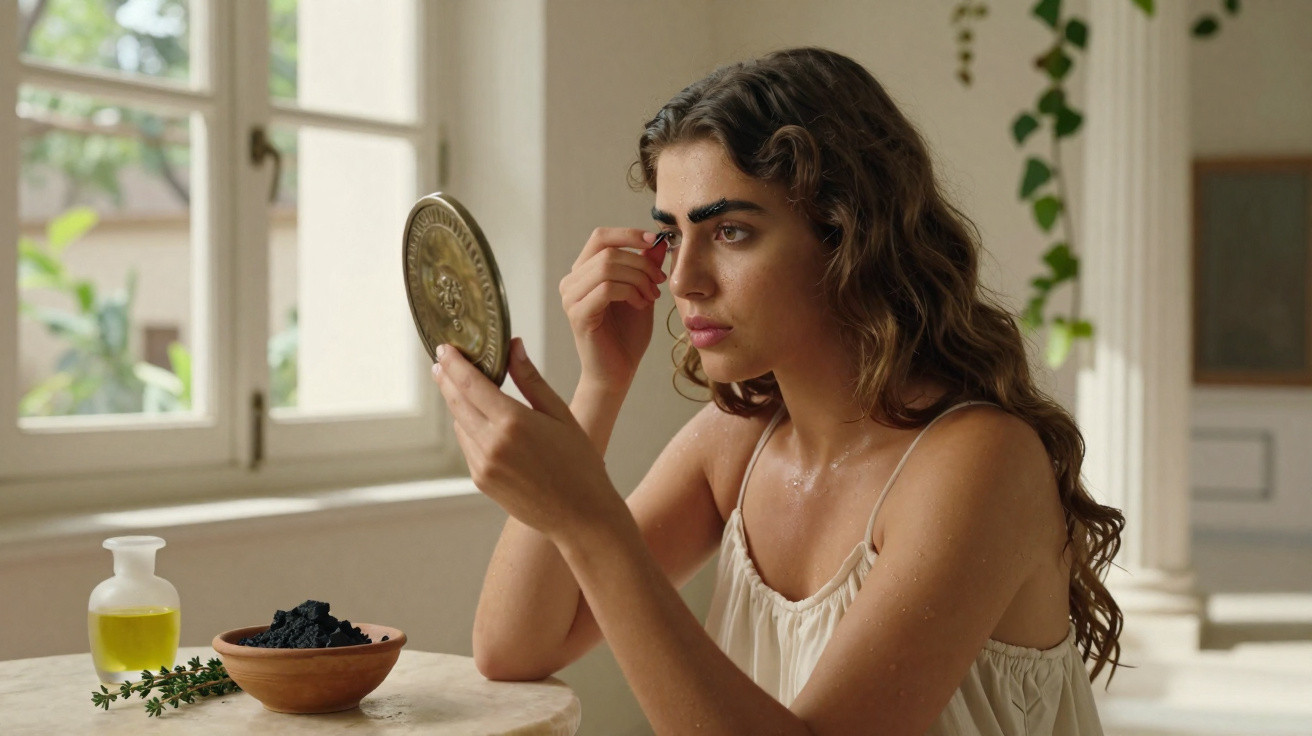
Aesthetic customs of the past reveal fascinating aspects of human vanity. In classical Greek society, the pursuit of facial harmony involved unusual methods, highlighting natural elements that altered the gaze and defined beauty as a reflection of genuine purity.
What was the Ancient Greek ideal of beauty for eyebrows?
Unlike modern preferences for neatly shaped, separate arches, women of that era aimed for particularly full eyebrows. A continuous shape across the centre of the face signified sophistication, making visual harmony an attribute of considerable social prestige among citizens.
To create this striking look while retaining the natural appearance required by custom, dark pigments were carefully applied to the skin. The method intensified the colour of existing hairs, producing an expressive frame that enhanced feminine expression with elegance.
How did Egyptian women encourage eyebrow growth?
Castor oil was an essential resource in Ancient Egypt for encouraging hair growth through… Read more
How was ox hair applied to women’s faces?
When natural hairs were not enough to fill the central space between the eyes, small animal hairs were used. They were secured with resinous substances extracted from trees, ensuring perfect adhesion and a remarkably even finish on the face.
This handmade technique required patience and manual skill, as every small tuft had to be placed in line with the real hairs. The effect created the illusion of a continuous line, allowing the desired aesthetic to remain intact throughout the key events of everyday life.
Below is a video from Betsy Windmill’s YouTube channel that explores the points discussed in this topic:
What other cosmetics were part of the Greek routine?
In addition to eye care, women used mineral powders to even out the complexion and keep the skin pale. Moisturising ingredients such as olive oil and honey completed these rituals, providing deep nourishment while protecting the skin’s daily vitality.
Charcoal and ash were widely used to softly outline the eyes, adding depth without excessive visual effect. For cheeks and lips, beetroot and wine extracts supplied healthy colour, demonstrating the creativity of ancient methods.
Greek ingredients
Traditional elements
Main substances used for facial beautification:
- Olive oil and honey for moisturising the skin;
- Charcoal and ash for darkening the arches;
- Animal hair and plant sap for central fixation.
Why did the unibrow symbolise intelligence and purity?
In the view of Greek thinkers and society, untouched features conveyed wisdom and moral purity. Keeping the arches joined suggested that a woman valued intellectual virtues over frivolous vanity, linking a natural appearance with elevated personal intellect.
Interestingly, even under pressure to appear entirely modest, many women used cosmetic devices to imitate this prized characteristic. The artificial unibrow became an ingenious way to project social status and convey great distinction among one’s peers.
See the main meanings attributed to joined eyebrows during that period:
- An indication of purity and distance from excessive aesthetic practices;
- A symbol of intelligence and refined intellectual ability;
- A demonstration of prestige and conformity with the ideal of the era.
How do these historical customs influence aesthetics today?
Examining ancient rituals shows how beauty standards are dynamic and shaped by culture. While contemporary trends move between thin and full arches, Greek history demonstrates that the search for identity has always guided aesthetic transformation.
Recognising the creativity of women in the past broadens our understanding of the ideals upheld by each society. Their resourceful use of natural elements shows that enhancing the gaze remains central to the construction of human self-esteem.





Comments
No comments yet. Be the first to comment!
Leave a Comment