
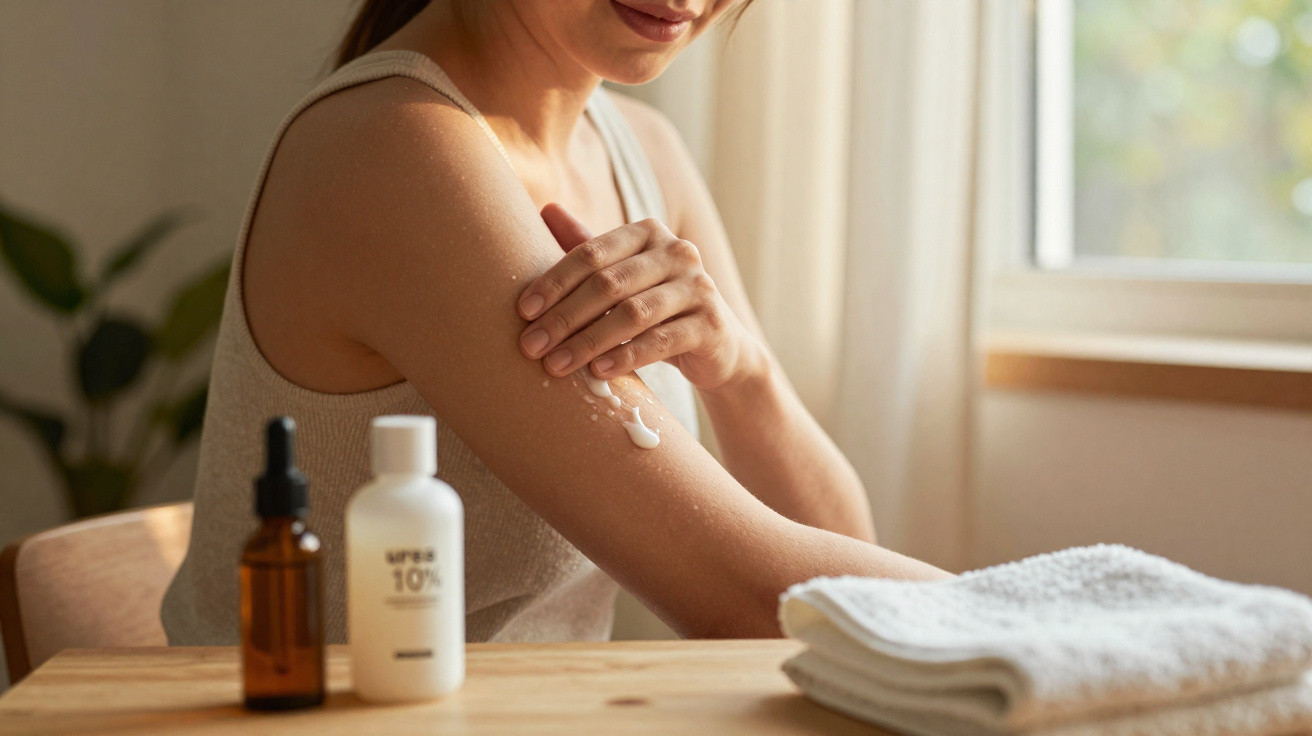
Running your hand over your arms and noticing a texture similar to “gooseflesh” can continue despite bathing and moisturising. These tiny rough bumps are often a sign of keratosis pilaris, a common, harmless condition that mainly affects the arms and thighs but can be managed with a considered at-home routine.
What causes rough bumps on the skin?
Keratosis pilaris develops when keratin - a protein involved in protecting the skin - builds up. The surplus creates small plugs that obstruct hair follicle openings, resulting in raised, dry and rough dots. Although they may resemble spots, this condition is not acne and does not usually cause pain.
The bumps may match the skin tone or look reddish or brownish, depending on a person's natural complexion and the degree of irritation. Their texture is often more noticeable during cold, dry weather, when the skin barrier loses moisture more easily. Very hot showers and harsh soaps can also worsen dryness.
Is there a permanent cure for keratosis pilaris?
There is no lasting cure, as keratosis pilaris is linked to the way the skin produces and sheds keratin, often with a genetic and familial influence. In other words, some people are more prone to blocked follicles even when they follow good hygiene and body-care habits.
Although it may remain present for years, the condition can generally be managed through consistency. Care measures can reduce roughness, improve hydration and make the bumps less noticeable, though they may return if the routine stops. The realistic aim is not to remove the genetic tendency, but to keep the skin balanced.
How can keratosis pilaris be managed at home?
An effective routine should bring together gentle cleansing, gradual skin renewal and moisturising. Scrubbing forcefully can lead to inflammation and worsen redness, so exfoliation needs to be mild and infrequent. The following habits can help improve the texture without further irritating the skin:
- Choose a mild body wash and avoid very hot water.
- Exfoliate gently once or twice a week.
- Apply moisturiser straight after bathing, while the skin is still slightly damp.
- Do not squeeze, scratch or shave over the bumps.
- Continue the routine regularly for several weeks before assessing the results.
Physical exfoliants containing large particles, stiff loofahs and rough brushes should be approached carefully or avoided. Too much friction may cause minor injuries and marks. In many cases, moisturising products containing skin-renewing active ingredients provide more even results than trying to remove the bumps by hand.
Watch the video shared by the YouTube channel Dra. Marina Hayashida discussing keratosis pilaris and how to treat it.
Can urea or lactic acid improve the texture?
Moisturisers containing urea help the skin retain water and soften excess keratin, making its surface feel smoother. Lactic acid, meanwhile, hydrates while encouraging gentle renewal of built-up cells. Product concentrations differ, so it is sensible to introduce them gradually and follow the label instructions.
The product may be used once or twice daily, according to the skin's tolerance. Strong stinging, substantial peeling or persistent redness are signs that use should stop. Applying sunscreen to exposed areas is also important, particularly when using active ingredients that encourage skin renewal.
When should you see a dermatologist?
Seek professional assessment if the bumps become very itchy, painful, discharge fluid or change appearance quickly. Other conditions can cause similar lesions, and only a specialist can confirm the diagnosis. An appointment is also advisable if an at-home routine brings no improvement after several weeks of consistent use.
The most meaningful change happens when force is replaced by regular care. Opt for gentle measures, pay attention to how your skin responds and do not expect to resolve years of roughness within a few days. Start a simple, consistent routine today, because putting care off prolongs discomfort, while small habits can improve both texture and confidence.






Comments
No comments yet. Be the first to comment!
Leave a Comment