
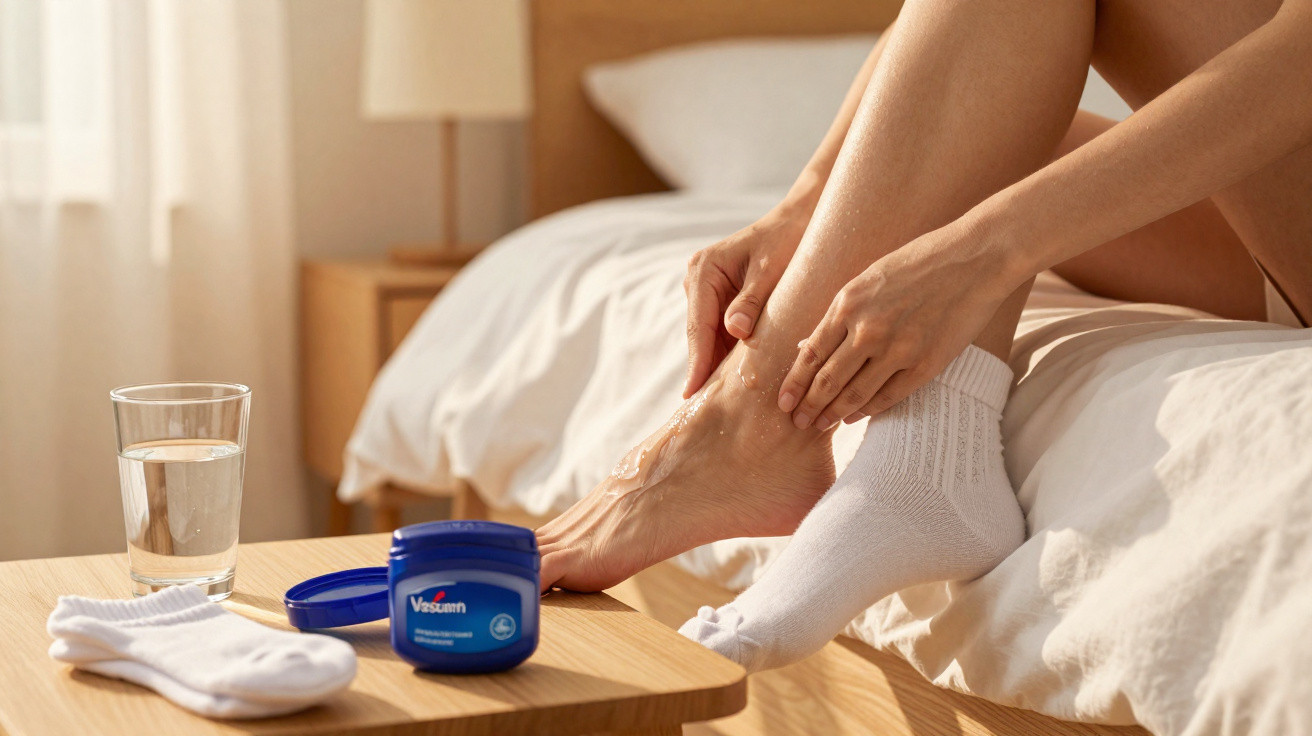
Rough heels can improve considerably with one straightforward bedtime habit: apply a layer of petroleum jelly and cover your feet with socks. The result does not come from any “magical” moisturising effect, but from petroleum jelly’s ability to limit water loss from the skin, which can gradually leave dry areas feeling softer overnight.
Why does petroleum jelly help dry heels?
Petroleum jelly works chiefly as an occlusive ingredient. In other words, it creates a film on the skin that slows water evaporation. On the heels, where skin is naturally thicker and exposed to continual pressure, this protective barrier may help restore softness when dryness is the underlying issue.
It will not instantly remove hardened skin or address every cause of cracking, but it helps retain the moisture already present in the area. It therefore tends to work best after a shower, or once feet have been washed and gently dried, when the skin may still hold more water.
Why wear socks over petroleum jelly?
Socks keep the petroleum jelly against the heels throughout the night, while stopping the product from transferring to the bedding. Covering the feet also reduces friction and creates a more protected environment, allowing the occlusive layer to stay on the skin for several hours while you sleep.
A few simple measures can make this routine more comfortable and help prevent problems:
- Wash your feet and dry them thoroughly, particularly between the toes.
- Apply a thin layer of petroleum jelly, concentrating on the driest areas.
- Wear clean, comfortable socks that do not constrict your feet overnight.
- Avoid putting petroleum jelly between the toes, where excess moisture may be undesirable.
How long do heels take to become softer?
Results depend on the severity of the dryness, how often the treatment is used and everyday habits. Some people notice more comfortable skin after only a few applications, whereas very rough heels may need a more consistent routine. Pressure, friction, dry weather and walking barefoot can also make a difference.
Consistency is generally more important than using an excessive amount of product. Applying an especially thick layer does not necessarily produce better results. Pairing overnight care with comfortable footwear and avoiding repeated damage to the skin can help maintain the improvement achieved.
Watch the video shared by the YouTube channel Bernadete Terracciano, which demonstrates how to apply petroleum jelly to the heels to tackle dryness.
Does this trick work for cracked heels?
Where there are only small, superficial dry patches, the occlusive effect can help make the skin more flexible. Deep, painful cracks, or those involving bleeding, swelling or other changes, need attention because they may require care other than that used for ordinary dryness.
People with diabetes, circulation problems or altered sensation in their feet should also take extra care and seek professional advice before treating fissures themselves. In these circumstances, even minor injuries may need specific monitoring, even if they initially seem unimportant.
How can you make this petroleum jelly trick safe?
The aim is simple: retain moisture in the skin without causing unnecessary overheating or dampness where it is not needed. Petroleum jelly on the heels and a clean pair of socks can be an inexpensive, practical routine, but the outcome also relies on understanding why the skin is drying out and avoiding habits that encourage further fissures.
If your heels are regularly rough, try a gentle routine and observe how your skin responds over the following days. Do not wait for a crack to worsen before taking care of it: protecting the area and seeking help for pain or persistent lesions can prevent a minor discomfort from becoming a bigger problem.

Comments
No comments yet. Be the first to comment!
Leave a Comment