
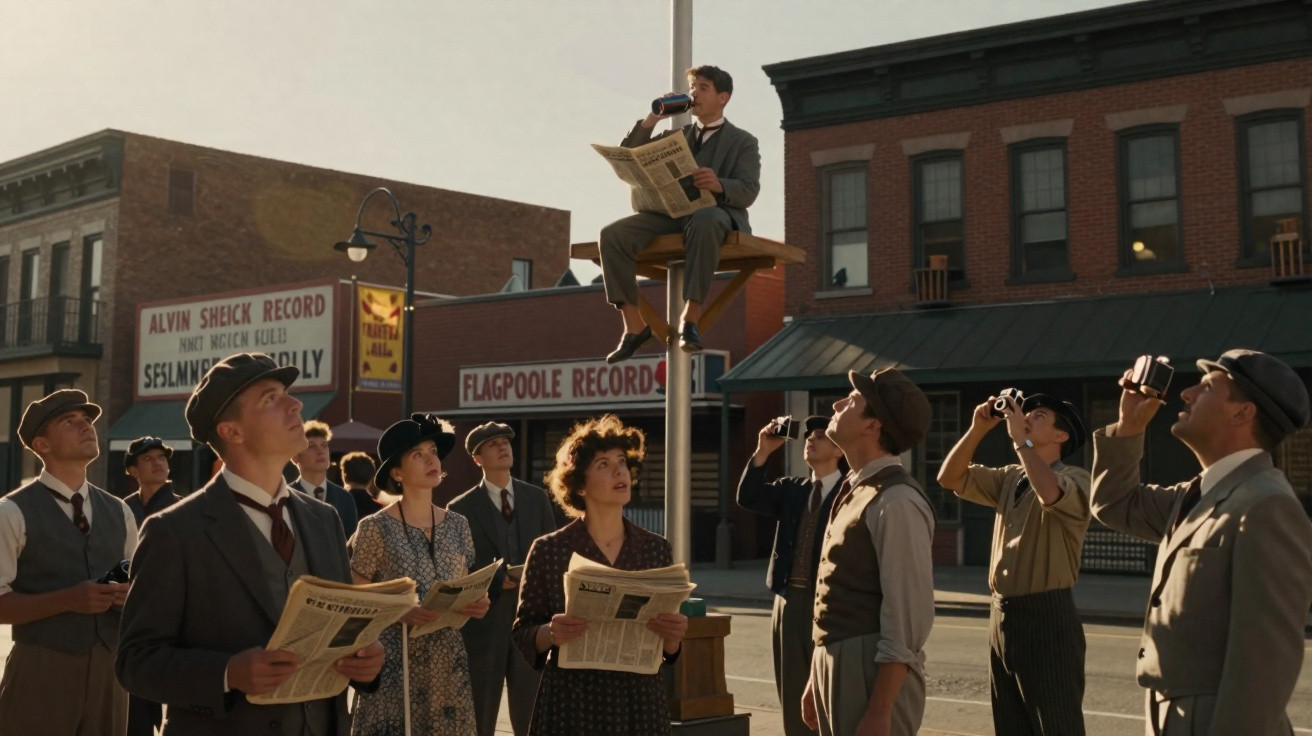
Long before short videos turned bizarre challenges into worldwide sensations, crowds were already stopping to watch a scene that was hard to explain: men sitting motionless at the top of flagpoles for days or even weeks. During the 1920s, the craze known as flagpole sitting swept the United States, making endurance and eccentricity into public entertainment.
How did sitting on a flagpole become entertainment?
The premise was as straightforward as it was ridiculous: climb to a tiny platform fixed to the top of a pole and stay there for as long as possible. Spectators followed attempts to set new records, while newspapers reported every fresh challenge and helped turn participants into brief celebrities.
Stunt performer Alvin “Shipwreck” Kelly became the figure most closely linked with popularising the trend. From the 1920s onwards, his increasingly lengthy stays atop flagpoles attracted nationwide attention and inspired imitators seeking fame, publicity and the chance to beat earlier records.
What did Alvin Kelly do for so many days up there?
The show did not end once he had climbed up. Much of the fascination came from watching someone turn a minuscule platform into their everyday living space. Kelly had to eat, rest and endure wind, cold, rain and long periods of discomfort without simply giving up the challenge.
People followed developments much as they would watch a live broadcast today. Photographs and news reports kept the story in circulation, and every additional day heightened anticipation. The challenge worked because one simple question kept everyone engaged: “How much longer can he last?”
How far did the competition for flagpole sitting records go?
In 1930, Kelly took the stunt to a level that is difficult to imagine. In Atlantic City, he spent around 49 days at the top of a flagpole approximately 68 metres high, erected on the famous Steel Pier. The achievement drew crowds eager to watch the man suspended high above the city.
Several factors help explain why something seemingly pointless could command so much attention and turn a person sitting on a flagpole into a public attraction:
- Every new day allowed people to follow a genuine attempt to break an endurance record.
- The height turned a simple activity into a visible display of danger and courage.
- Newspapers and photographs kept the challenge circulating far beyond those gathered at the site.
- Other participants tried to surpass existing records, creating competition and further reasons to follow the craze.
Watch the video shared by the My Footage YouTube channel, showing what a flagpole sitting performance looked like in 1930.
Was it a form of viral content before the internet?
Allowing for the differences between the eras, the formula feels remarkably familiar. There was an easily understood challenge, a person prepared to take it to the extreme, people tracking their progress, and imitators attempting to attract even more attention. The more absurd the feat appeared, the greater its potential to become a talking point.
Today, a similar challenge might rack up views on TikTok or become an extended YouTube livestream. In the 1920s, streets, newspapers, photographs and word of mouth spread the phenomenon instead. Technology has changed, but human curiosity about strange feats and records remains recognisable.
What does the flagpole craze reveal about the way we watch?
Flagpole sitting shows that viral challenges were not born with algorithms. Decades before social media, an act with little practical purpose could still attract an audience simply because it was unusual, competitive and easy to follow. The difference was that spectators had to look upwards rather than at a screen.
The next time an apparently pointless challenge takes over the internet, remember Alvin Kelly and the crowds beneath the flagpoles. The urge to watch someone push a strange idea to its limit is far older than the mobile phone, and it may explain why certain crazes never truly disappear.






Comments
No comments yet. Be the first to comment!
Leave a Comment