
What are tension headaches and what causes them?
Tension-type headaches (TTH) place a substantial burden on people worldwide, yet they are still widely misunderstood and inadequately managed. Although they are the most prevalent form of primary headache, they have received the least research among primary headache disorders, despite having the greatest worldwide impact.
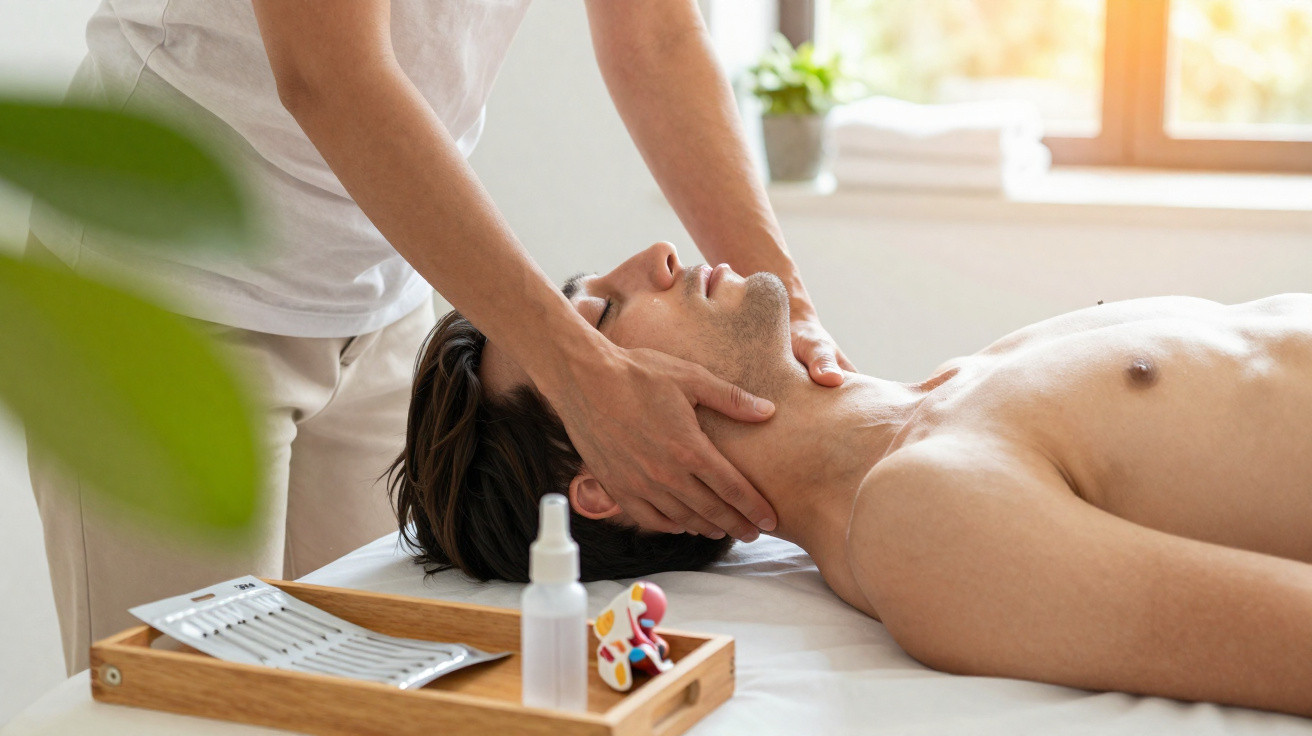
Headaches and migraines can often result from muscle tension in the neck and shoulders. Physiotherapy, sports massage, dry needling and specific exercises can readily address this tension.
Symptoms of tension headaches
Typical tension headache symptoms include:
- Pain affecting both sides of the head, face or neck
- A sensation of pressure on the head, or of something being tightened around it
- Tenderness in the affected area, which may worsen or become painful when touched
Causes of tension headaches
Common causes of tension headaches may include:
- Stress
- Problems with sleep
- Caffeine
- Posture
- Other lifestyle factors, including desk-based work or driving
Tension held in the shoulders and neck can cause the muscles to become extremely tight. This may potentially restrict the nerves and blood supply travelling through the blood vessels to the head.
As the muscles surrounding the head and neck tighten, they can develop tight areas called “trigger points”. Located within the muscle belly, these highly sensitive spots are painful when pressure is applied and are commonly described as knots.
Muscles most often linked with headaches include the upper trapezius, sternocleidomastoid, levator scapulae, temporalis and masseter. Migraines and tension headaches may be caused by the jaw and shoulders, rather than only the head.
How can we help with tension headaches?
Sports Massage
Following an initial assessment, a focused sports massage can reduce muscle tension and increase blood flow. By helping to lessen “trigger points” within the muscles, it can help you feel more like yourself and get on with living your life.
Dry Needling
Dry needling uses fine needles inserted into “trigger points” in the muscle tissue to reduce tension in the affected muscles. It produces a “twitch” response, releasing muscular tension so that you can feel better and move more freely.
References –


Comments
No comments yet. Be the first to comment!
Leave a Comment