
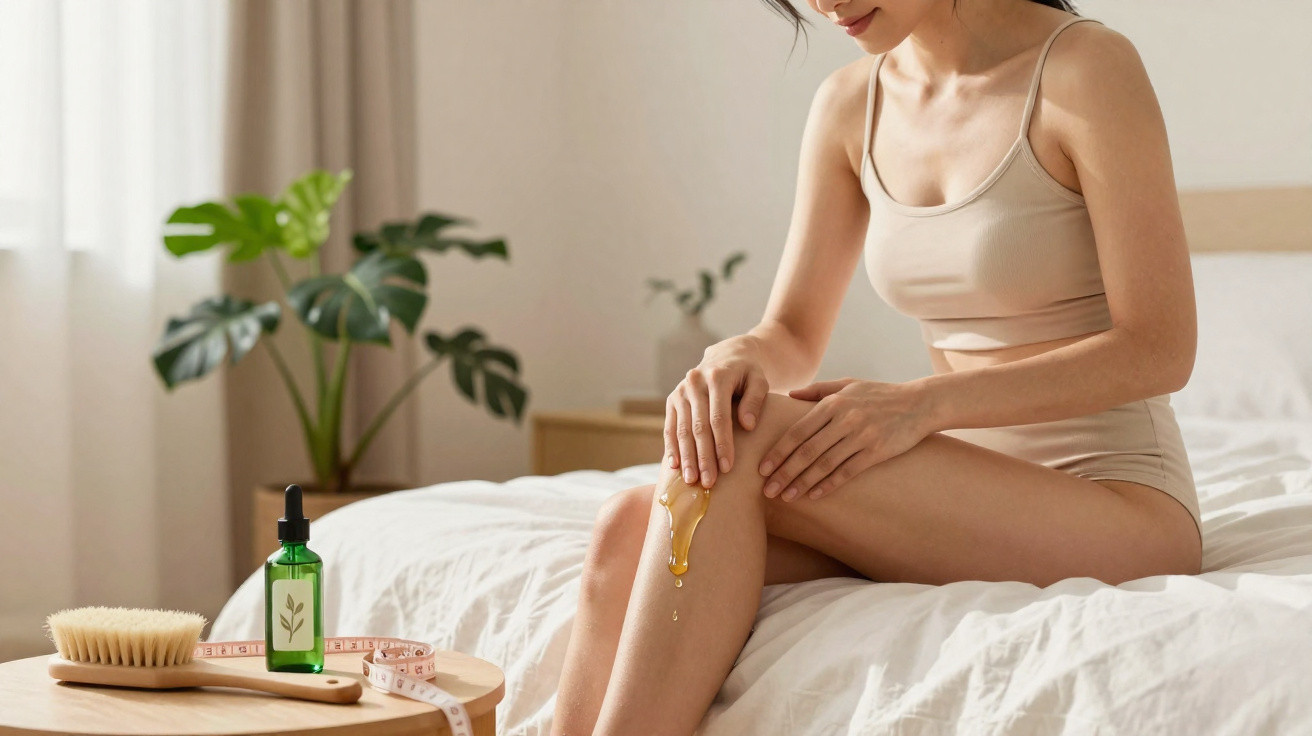
With creamy miracle claims, firming gels and expensive specialist oils all competing for attention, choosing a product can be difficult. An independent French test has now compared nine widely available slimming and anti-cellulite treatments, with an unexpected result: one body-care product, a plant-based oil from a natural cosmetics brand, performed most convincingly in the group. It made no Photoshop-style promises, but delivered measurable, albeit limited, results.
Independent comparison: nine slimming products put to the test
The respected consumer magazine “60 Millions de consommateurs” assessed nine products sold in France as slimming or anti-cellulite treatments. The selection included creams, foams and oils available from chemists, supermarkets, pharmacies and specialist brands.
The investigation centred on two issues: how suitable were the ingredients from health and environmental perspectives, and did the products actually produce a slimming effect on the thighs in everyday use?
Overall, the magazine reached a sober conclusion: most anti-cellulite products produced results that were more “okay” than impressive.
How the test was carried out
For each product, the experts first awarded a “Cosméto-Score”. This assessed the formulation: did it contain concerning substances, and what was its environmental impact? This criterion is particularly relevant to people with sensitive skin or a strong focus on sustainability.
The next stage was a practical trial involving approximately 28 to 30 women for each product, lasting 28 days. The conditions were fairly strict:
- Participants applied the product to only one thigh.
- Their other thigh was left untreated as a comparison.
- Laboratory teams measured the circumference at the upper and lower thigh at the outset, after 14 days and again after 28 days.
- The women also completed questionnaires covering how the product felt, the appearance of their skin and ease of use.
The magazine’s verdict was rather disappointing: the slimming effect of most products was considered “very disappointing”. Many creams achieved only tiny changes, with testers describing their effects as no more than “acceptable” at best.
Why Weleda Birch Cellulite Oil came out on top
Within this generally underwhelming field, one product nevertheless took a clear lead: Weleda Birch Cellulite Oil, listed in the trial as a slimming massage oil. Scoring 12.5 out of 20, it topped the comparison.
That may not initially sound exceptional, but it is notable in the context of this test. Despite their prominent advertising claims, many competing products struggled to produce results that could even be felt.
Particularly positive: the oil was among the few products tested to show a measurable effect in treated areas alongside visibly smoother-looking skin.
Measurable centimetres, but smoother skin above all
According to the test findings and reports based on them, the greatest changes occurred in individual cases. Two of the 29 users reduced their thigh circumference by up to two centimetres while using the oil. This is not a miracle diet, but it is still noteworthy for a cosmetic product.
For most users, though, the main benefit was different. Their skin appeared firmer, smoother and more moisturised. Many reported a visibly more refined skin texture, with the familiar “orange-peel skin” look becoming less pronounced.
The oil also performed well in the health assessment, with the magazine giving it a very good rating for tolerability.
A short ingredient list rather than a chemical cocktail
The formula itself is particularly interesting. While some rival creams contain between 23 and 35 different ingredients, including silicones, solvents and various additives, the Weleda oil relies on a comparatively straightforward plant-based blend:
- Plant oils including apricot kernel oil, jojoba oil and wheatgerm oil (rich in vitamin E)
- Extracts of birch leaves, butcher’s broom (Ruscus) and rosemary
- Fragrance ingredients derived from essential oils
For consumers who take a critical view of synthetic additives, this short list has clear appeal. The oil offers less “high-tech” positioning than many rivals, while providing a coherent natural-cosmetics profile.
Alongside the oil, a firming body cream from Clarins, “Body Fit”, and a treatment from Esthederm also reached the higher places in the rankings. They were similarly among the stronger performers for effectiveness, but their formulas rely more heavily on conventional cosmetic ingredients.
How Weleda Birch Cellulite Oil should be used for cellulite
Anyone hoping to achieve effects similar to those seen in the trial needs to follow a fairly consistent care routine. The protocol required application twice a day, morning and evening, on damp skin. It was not simply a matter of rubbing it in briefly: the oil had to be massaged in thoroughly.
Massage is not an optional extra but a central part of the effect: without firm massage movements, the difference often remains minimal.
Massage technique: more than applying moisturiser
So-called palpate-and-roll movements are recommended. This is a relatively simple but intensive technique intended to stimulate circulation and lymphatic flow. In practical terms, it involves the following:
- After showering, do not dry the skin completely; it can remain slightly damp.
- Put a generous amount of oil into your hands and apply it over the affected areas.
- Using both hands, lift the skin between your thumbs and fingers, then roll it upwards towards the pelvis.
- Work from the bottom upwards, moving from the knee over the thigh and towards the buttocks.
- Allow several minutes for each leg rather than only a few seconds.
Many trial participants found this part particularly demanding. Massaging for several minutes twice daily requires both time and commitment. Anyone who stops after a few days is unlikely to notice much difference.
How much is down to the oil, and how much to lifestyle?
The trial data suggest that the entire effect cannot be credited to the formula in the bottle alone. Regular, vigorous massage often firms the tissue regardless of the product used. Diet, physical activity and hormones are also important factors in cellulite.
Experts point out that expectations should remain realistic. An oil can:
- moisturise and smooth the skin more effectively,
- make massage movements easier and more intensive,
- improve the visual appearance of the skin,
- support circulation through stimulating ingredients such as birch and rosemary.
However, it cannot entirely eliminate fat deposits built up over years or weaknesses in connective tissue. This is precisely reflected in the consumer magazine’s assessment: none of the tested products created a radical change, including the winning oil.
What consumers can take from the test
For the UK market, the most relevant aspect is the combination of effectiveness, ingredients and effort required. Three points stand out:
| Factor | Finding from the test |
|---|---|
| Effectiveness | Measurable effects are possible, but they tend to be modest. |
| Ingredients | Shorter, plant-based formulations often perform better in health assessments. |
| Application | Without consistent, firm massage, the effect declines significantly. |
Anyone considering an anti-cellulite product should therefore look beyond the before-and-after photograph on the packaging. It is worth considering:
- the formula, ideally with as few concerning additives as possible,
- the recommended application method: quick application or a proper massage?
- their own willingness to maintain the routine for several weeks.
Understanding cellulite: why it is so persistent
Cellulite develops through a combination of fat cells, connective-tissue structure and circulation. In women, connective-tissue strands usually run vertically to the skin’s surface. When fat cells accumulate, they can push upwards more easily, creating the typical dimpled appearance.
Other contributing factors include:
- genetic predisposition,
- hormonal status, particularly oestrogen,
- lack of exercise,
- a high sugar intake and a diet high in salt,
- smoking and stress.
For anyone seriously aiming to reduce the appearance of cellulite, a combination of skincare, exercise and dietary changes is considerably more effective than relying on one product alone. Strength training, walking, trampolining and cycling can encourage circulation and support the tissue over the longer term.
How to incorporate anti-cellulite oils into everyday life
Many users say they make massage oil part of an evening ritual or their post-workout routine. This can turn what might feel like an inconvenient task into a brief wellness moment. Those with little time in the morning can move their routine to one longer evening session and use the absorption time to put their feet up for a few minutes.
It can also be useful to combine the routine with dry brushing, alternating hot and cold showers or moderate stretching exercises. Such measures may further encourage circulation in the affected areas. In this context, the oil is less of a “magic potion” and more a massage aid and a treatment for the skin barrier.
The French test therefore delivers a two-part message: hope, yes; miracles, no. A well-formulated plant-based oil such as Weleda Birch Cellulite Oil can measurably improve the appearance of skin, particularly when users massage consistently and also work on exercise, diet and everyday habits.





Comments
No comments yet. Be the first to comment!
Leave a Comment