
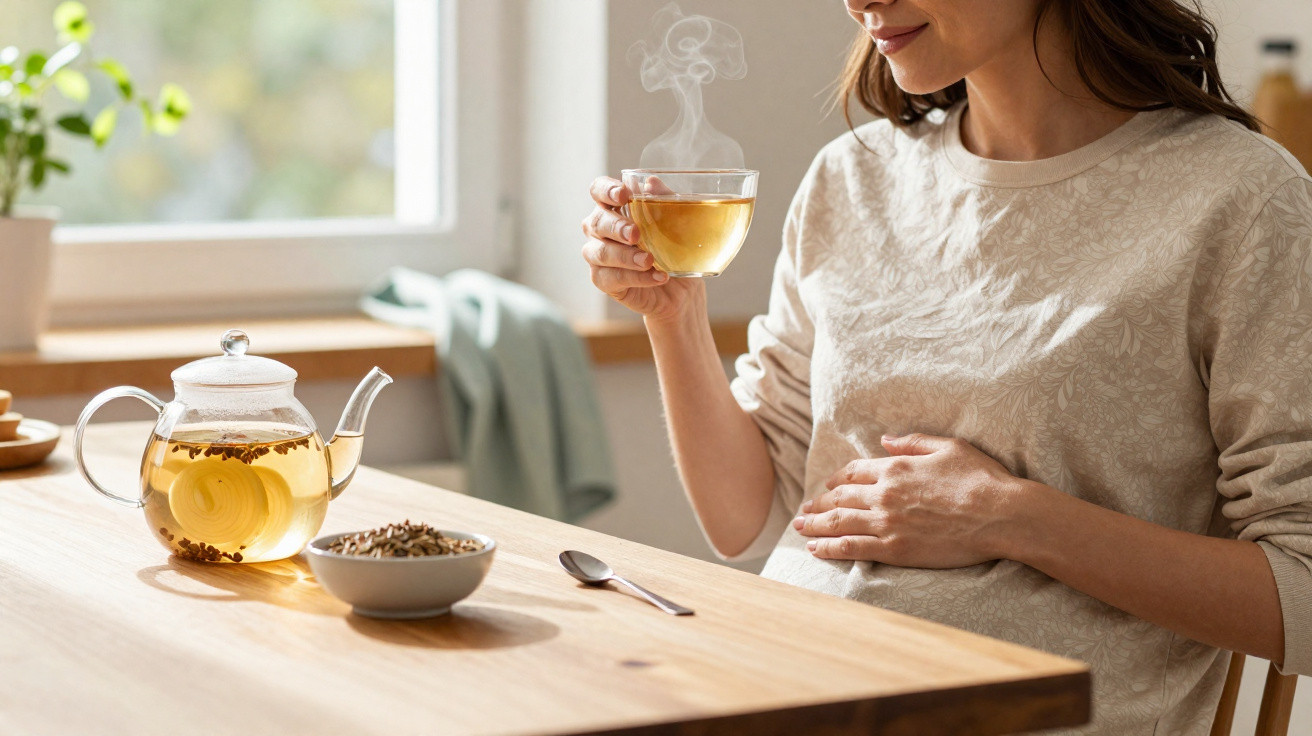
Many people enter spring with a bloated stomach. Their trousers feel tight, their abdomen is uncomfortable, and embarrassing wind can make everyday life unpleasant. This is where a simple hot drink comes in, one that naturopaths and nutrition professionals particularly recommend in March because it may reduce gas, ease cramps and noticeably relieve a bloated tummy.
Why your stomach often acts up in spring
After months of raclette, fondue, festive meals, biscuits and sweet pancakes, the digestive system can simply become overwhelmed. High-fat and sugary foods, along with large portions, put pressure on the stomach and intestines. Stress, rushed meals and too little physical activity often add to the problem.
- Gas forms as difficult-to-digest foods are broken down.
- Eating quickly allows air to enter the stomach (the medical term is aerophagia).
- Food that has not been chewed properly ferments more readily in the intestines.
- Too few digestive juices slow down the entire process.
The result can be bloating, a feeling of pressure, cramps and a stomach that feels like a balloon. Many people accept this as “normal”, although small adjustments can often make a considerable difference.
The March drink: fennel tea, a classic remedy for a bloated tummy
“A simple cup of fennel tea can slow down gas formation, release existing gas and relieve cramps in the abdominal area.”
The focus is on a well-known medicinal plant that is especially popular during the transition from winter to spring: fennel. More specifically, fennel seeds. Specialists class them among so-called carminative seeds. The term refers to plants that reduce bloating, stimulate digestion and make it easier to pass gas.
A naturopathy expert explains that fennel seeds can work in several ways at once. They may limit the formation of new gas in the intestines, bind gas that is already present and help move it out of the body. At the same time, they encourage the production of digestive juices – an important factor in preventing food from lingering in the gut and starting to ferment.
Antispasmodic effects: why fennel is particularly interesting
Fennel seeds can do more than simply help to “release wind”. They are also considered antispasmodic. Anyone prone to abdominal cramps will know the pattern: the intestines contract, gas becomes trapped and the pain intensifies. Fennel may therefore help on two fronts – with both the gas and the cramping.
Fennel seeds are available:
- as loose, dried seeds from health-food shops;
- as bagged tea blends;
- and, in some cases, from pharmacies as medicinal tea.
How to prepare fennel tea for bloating properly
For the tea to develop its full effect, it is not enough simply to dip a teabag in water briefly. Taking a little care is especially worthwhile when using loose seeds.
- Use around one teaspoon of fennel seeds per cup.
- If preferred, lightly crush the seeds with a pestle and mortar to release more of their active compounds.
- Bring the water to the boil, then allow it to cool briefly until it is simmering rather than rapidly boiling.
- Pour the hot water over the seeds and cover the cup so the essential oils do not escape with the steam.
- Leave to infuse for around 10 minutes.
- Strain the tea, or remove the teabag, and drink it slowly.
The tea can be drunk plain or sweetened with a little honey. A cup after a heavy meal or in the evening is ideal.
Other seeds that can ease a bloated stomach
Although fennel is clearly the main option, it is not the only one. Several other carminative seeds and plants may also help with bloating, whether used individually or combined in a tea.
| Plant / seed | Typical effect | Use |
|---|---|---|
| Anise | soothes the intestines, eases gas | bloating, mild fullness |
| Caraway (Carum carvi) | strongly supports digestion, reduces bloating | heavy meals, high-fat foods |
| Cardamom | stimulates the stomach and intestines | fullness, a sluggish stomach |
| Liquorice (liquorice root) | soothing, mildly antispasmodic | irritation in the gastrointestinal tract |
| Angelica | supports digestive juices | weak digestion, tendency to bloat |
Many evening teas marketed specifically for bloating and fullness combine precisely these kinds of ingredients. Anyone who reacts sensitively should start with a small amount when trying them for the first time and pay attention to how their body responds.
Abdominal massage and more: additional ways to help with bloating
“Digestion does not begin only in the intestines, but much earlier – and it does not end with tea.”
One simple measure that is often underestimated is abdominal massage. Gently massaging the stomach clockwise, following the direction of the large intestine, may help trapped gas start to move. This method is particularly suitable in the evening or when the feeling of pressure becomes strong.
A tip from naturopathy is to add one drop of peppermint oil to a little vegetable oil, such as olive or almond oil, and use it to massage the abdomen. Peppermint has a cooling, relaxing effect, while the physical rubbing supports intestinal movement.
Chew properly and swallow less air
Many cases of bloating are caused not only by what people eat, but also by how they eat. Those who rush their meals, talk a lot and barely chew can swallow plenty of air while overloading their digestive system at the same time.
Useful rules at the table include:
- Chew every mouthful carefully several times, until the texture is genuinely soft.
- Put your cutlery down briefly between mouthfuls to slow the pace.
- Cut back on fizzy drinks with heavy meals.
- Avoid very large meals and opt for two smaller portions instead.
People who eat mindfully often need less tea for bloating after only a few days, as the intestines are relieved overall.
When caution is needed
As helpful as fennel tea and other herbs may be, they are no substitute for seeing a doctor. If a bloated stomach persists for weeks, or is accompanied by severe pain, fever, blood in the stool, extreme diarrhoea or persistent constipation, medical assessment is needed. Ongoing symptoms may be caused by food intolerances, inflammatory bowel disease or other problems.
If you have a known underlying condition, take a number of medicines, are pregnant or have high blood pressure – particularly in relation to liquorice – a doctor should check whether certain medicinal plants are suitable.
How to incorporate the March routine into everyday life
Anyone wanting to do something good for their stomach in spring could adopt a small “March routine”:
- Drink 1–2 cups of fennel tea each day, or a blend containing anise and caraway.
- Eat slowly and make a consistent effort to chew thoroughly.
- Include a brief abdominal massage in the evening – five minutes is enough.
- Reduce heavy, very fatty foods for a few weeks.
Many people report that their trousers fit more loosely again after a few days and that the feeling of pressure noticeably decreases. There is another effect too: people who pay attention to their digestion usually become more aware of how their body feels, which may help protect against further discomfort over the longer term.
One further point is frequently underestimated: drinking enough. This applies not only to tea, but to fluids in general. Adequate liquid keeps stools soft, supports bowel movement and helps the body eliminate metabolic waste more effectively. Unsweetened tea, still water and diluted fruit juice are suitable options.
Finding a favourite spiced-tea blend also makes it easy to benefit from the power of long-established medicinal plants – turning an everyday drink into a small digestive ritual that may bring noticeable relief, particularly in March.





Comments
No comments yet. Be the first to comment!
Leave a Comment