
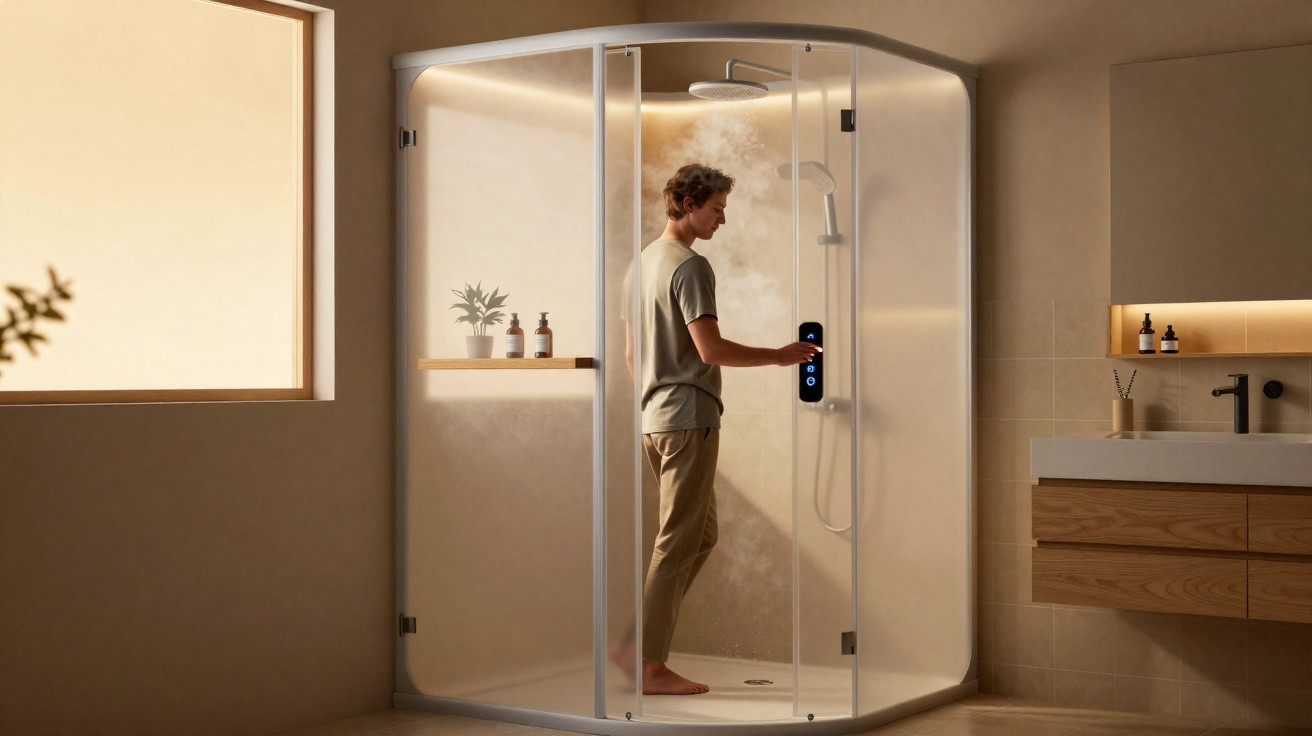
Stepping into the shower is often one of the most anticipated moments of the day. Yet practical drawbacks in the shower area can make it less enjoyable, from the familiar unexpected brush against a shower curtain to water splashing across the dry part of the bathroom. Against this backdrop, the capsule shower is becoming an alternative to conventional open or curtain-enclosed shower cubicles. At European design fairs, architects have already called it “the bathroom equivalent of an induction hob”: compact, technological and designed for increasingly urban routines.
What is a capsule shower and why is it becoming popular?
A capsule shower is an enclosed or semi-enclosed shower cubicle, usually made with toughened glass and metal profiles, designed to hold in heat and steam. Unlike a traditional open shower, which is normally left open or shielded only by a simple panel, a capsule creates a more controlled setting, with fewer draughts and less water escaping into the rest of the bathroom. In many designs, the floor, walls and even the ceiling form one integrated unit, making it easier to manage temperature and achieve a watertight seal.
This layout meets two common demands in 2026: greater thermal comfort while showering and better use of limited space. In countries with harsher winters, heat loss from open showers can cause discomfort and increase energy use for heating. By keeping steam within the capsule, the temperature remains pleasant for longer without major changes to the water temperature or room heating. This appeals to households as well as urban hotels and spas looking to cut operating costs.
Capsule shower in small spaces: a solution for compact bathrooms
For homes and flats with small bathrooms, the capsule shower offers an effective way to use the available floor area. Rather than requiring a large shower enclosure or bath, the capsule occupies a clearly defined footprint, often in a corner, leaving more room for movement. It can also enhance the visual feel of the room: models with clear glass and slim profiles keep the space light, avoiding blocked sightlines and the impression of a cramped bathroom.
Interior designers point out that the capsule prevents splashes from reaching cabinets, walls and mirrors, reducing maintenance needs and helping finishes last longer. In shared bathrooms, this kind of shower keeps the washing area separate from the everyday basin and toilet area, which can make routines more organised. During renovations, it is also considered less disruptive than fitting a bath, often requiring only targeted alterations to the plumbing.
- Fewer splashes: water remains contained within the cubicle.
- More warmth: retained steam reduces the feeling of cold.
- Corner use: many designs are made to fit corners.
- Clean appearance: glass and understated profiles create a greater sense of space.
What technological features are available in capsule showers?
The development of the capsule shower goes beyond its enclosed design. In recent years, several manufacturers have incorporated wellbeing technology inspired by spas and rehabilitation centres. Some models feature programmable LED lighting to create different lighting settings, aromatherapy systems that release subtle fragrances with the steam, and hydromassage jets with adjustable intensity. In many cubicles, these functions are operated using internal touch panels protected against moisture.
There are also versions with colour therapy, in which the lighting changes colour to produce particular atmospheres, alongside scent-diffusion devices integrated into the ventilation system. Some capsule showers function almost as a spa station, combining ambient sound, precise water-temperature regulation and steam-volume control. Certain units connect to apps, allowing users to save shower profiles with preset preferences-a feature valued by families sharing the same space but with different routines and tastes.
- Choosing the intensity of the water jets.
- Selecting the lighting colour and pattern.
- Switching on aromatherapy or steam, where available.
- Adjusting the temperature and shower duration.
Capsule shower design, sustainability and variations
In design terms, the capsule shower is available in minimalist styles, with slim aluminium structures, clear or smoked glass, and LED lighting details around the frame. This combination creates a focal point in the bathroom without visually overwhelming the room. Rectangular, square, corner and even rounded models are available, designed to suit different layouts and interior styles, from industrial to Scandinavian.
Water consumption is also addressed by a range of capsule showers. Shower heads with water-saving technology regulate the flow while maintaining the sensation of volume, reducing environmental impact without changing the showering experience. Some models let users choose between different spray types, from a gentle rainfall-like flow to pulsating massage-focused jets, all with flow limits. When choosing a capsule shower, key considerations include bathroom dimensions, the need for additional features, how easy the surfaces are to clean, and compatibility with the existing plumbing installation. These factors make the capsule a long-term investment rather than simply an aesthetic indulgence.





Comments
No comments yet. Be the first to comment!
Leave a Comment