
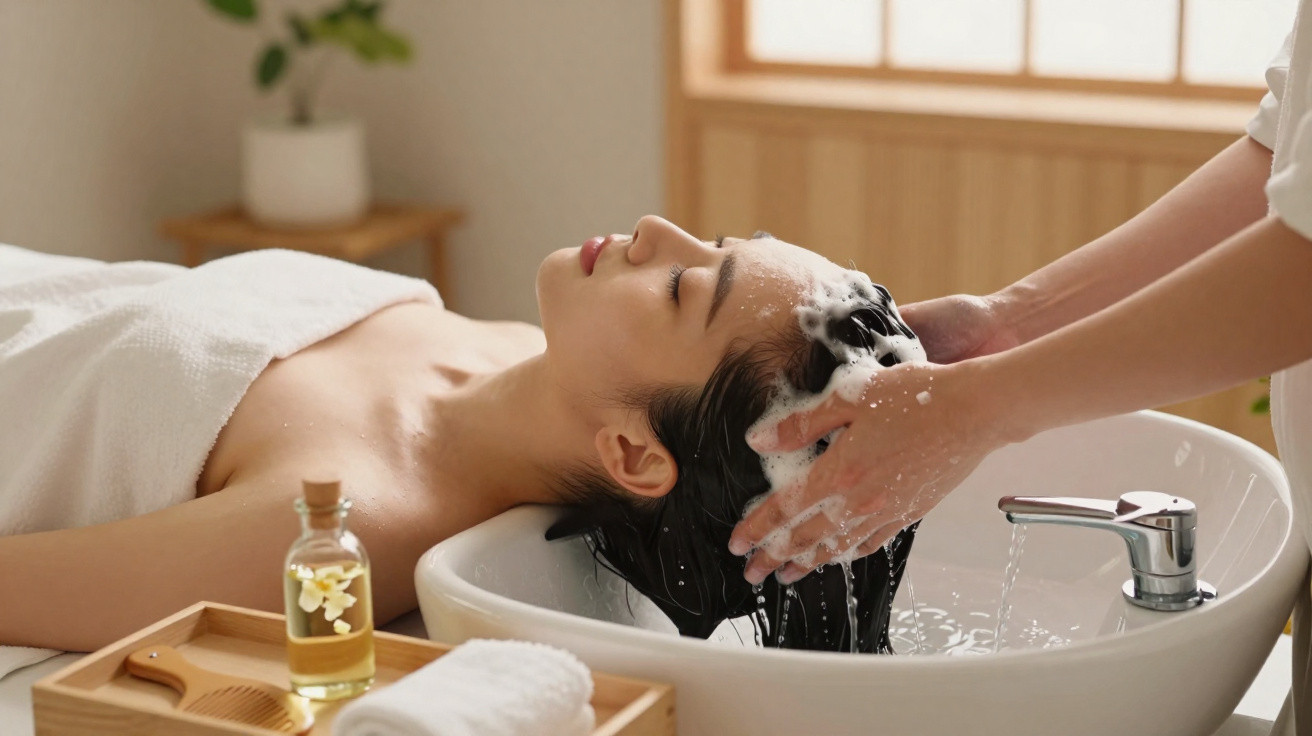
Between a shower, a stream of notifications and a cup of coffee, most of us scrub, rinse and move on. In Japan, however, this moment is anything but a chore to rush through. At some Tokyo salons, clients close their eyes as a hairdresser massages their scalp for 15 minutes, sometimes longer, in an almost reverential silence.
The movements are unhurried, exact and nearly choreographed. The water is neither too hot nor too cold, the lather is worked into a cream-like texture, and fingers trace unseen paths across the head. We have all experienced that point at the hairdresser when we would gladly pay for the shampoo to last another five minutes. In Japan, that feeling has become a genuine ritual - and dermatologists around the world are now taking a close interest.
Why Japan’s hair washing ritual has caught dermatologists’ attention
Enter a mid-priced salon in Osaka or Kyoto and one thing stands out: nobody seems hurried. Rather than being a minor stage before the “real” appointment, the shampoo area is the calm centre of the visit. Clients are often covered with a warm towel, the lighting is softened, and the stylist may devote more time to washing than to cutting.
This goes beyond simple indulgence. Many salons use a defined sequence: a lukewarm rinse, gentle emulsifying of the product, a slow circular massage from the nape towards the temples, then a lengthy, purposeful rinse. The scalp is approached as skin rather than an afterthought hidden beneath the hair. That quiet move from hair-centred to scalp-centred care is precisely what has drawn medical interest.
Japanese cosmetics brands have embraced this culture openly. Several large companies now sell “scalp spa” ranges directly inspired by salon methods. One Tokyo chain says that almost 40% of its clients book appointments specifically for shampooing and scalp care rather than a haircut. Another survey, frequently quoted by the local press, indicates that regular Japanese salon customers describe the washing stage as “the most relaxing moment of their week.”
Dermatologists became interested for a more clinical reason. Japan has long recorded lower rates of some inflammatory scalp conditions than Western countries, including in densely populated, polluted cities. Genetics and lifestyle make the situation complex, yet the consistent and methodical approach to washing the scalp has emerged as an interesting factor. It is not proof, but it strongly suggests that hurried showers could be contributing to the issue.
Scientifically, the attention is understandable. The Japanese ritual covers several points that matter to dermatologists: moderate water temperatures that protect the skin barrier, longer but gentler contact that helps remove sebum and pollution, and massage techniques that stimulate microcirculation.
Rather than scrubbing forcefully every few days, many Japanese routines favour more frequent washing with soft, repeated movements. There is less friction and greater consistency. This may help maintain the scalp microbiome, the ecosystem of bacteria and fungi that discreetly keeps irritation under control. Let us be honest: hardly anyone follows this perfectly every day, but the principle alone is prompting interest in dermatology clinics from Paris to New York.
How to recreate the Japanese hair washing ritual at home
You do not need a Tokyo salon or a bamboo stool to take on the essentials of this ritual. Begin with the easiest adjustment: slow down for the first 60 seconds. Before using shampoo, allow lukewarm water to run through your hair for half a minute, using your fingertips to gently separate sections. Think of this as rinsing away dust and product before washing, rather than simply wetting your hair.
Next, use a small amount of shampoo and emulsify it between your hands with a little water until it becomes almost creamy. Put it on the scalp first, not the lengths, then make small circles from the back of the head towards the crown. Spend 3–4 minutes on these small, deliberate movements. The first attempt will seem lengthy, but it becomes strangely addictive.
The essential principle is to treat every square centimetre of your scalp as though it matters. Rather than rubbing frantically in every direction, picture yourself “combing” the scalp with your fingertips. Rinse with the same care used to wash, letting the water remove the foam as your fingers continue to glide over the skin. Many Japanese stylists say this is where the real difference lies: a complete, almost meditative rinse.
Many people fail to realise that their “bad hair days” often begin at the scalp. Excessively hot water, harsh scrubbing around the hairline and layering product at the roots can all lead to the tight, itchy sensation that many people regard as normal. A Japanese-inspired wash does the reverse: it replaces aggression with attention.
If your diary is full, approach it as a matter of trade-offs. Keep the shampoo you already use, avoid buying new devices, and simply give your existing routine more structure. On one day, you could focus on rinsing for longer; on another, use lighter pressure; on another, properly massage the nape instead of overlooking it.
According to dermatologists, the most frequent error is mistaking a “clean” sensation for one of being stripped. That squeaky, almost rubbery feeling on the hair or scalp often signals that you have overdone it. Many Japanese routines deliberately avoid this, aiming instead for a softer result. Respecting natural oils is not the same as being unclean; it means not treating your own skin as an enemy.
As one Tokyo-based dermatologist told me during a video call:
“We started joking that the scalp is the ‘face you never see’. When patients begin to treat it with the same respect as their facial skin - gentle cleansing, consistent routine, less punishment - we see fewer flare-ups and less hair breakage over time.”
Small, realistic changes can bring this approach into your bathroom without disrupting your life:
- Use lukewarm rather than steaming water, at least during the scalp-washing stage.
- Avoid using your nails; massage and cleanse with the pads of your fingers.
- Take twice as long to rinse as you do to lather.
- Keep stronger clarifying shampoos for occasional rather than daily use.
- Pay attention to how your scalp feels two days later, not only immediately after washing.
This is not about adopting a foreign tradition purely for its aesthetic appeal. It is about taking the elements that can make your own routine gentler, more sensory and more in keeping with what skin specialists quietly recommend. Take the slowness. Take the precision. Leave everything else.
What the global interest in Japanese hair washing says about us
When dermatologists in Europe or the US refer to the Japanese ritual, they are rarely speaking about shampoo alone. They are considering how we treat our bodies when nobody else is watching. The shower has become a place where we race against time, mentally replay emails and scroll automatically between each step.
That is why this straightforward practice has meaning far beyond beauty. It quietly challenges the belief that every action must be efficient, optimised and fast. Spending a few extra minutes moving your fingers in circles over your scalp will not solve your life, but it can alter the feel of a morning. What once felt like another task can become a pause.
Some people will turn this into an elaborate ritual involving candles, playlists and costly scalp serums. Others will simply make the water a little cooler and stop scratching with their nails. Both approaches are valid. The subtle effects may appear weeks later, as flakes lessen, hair becomes less brittle and persistent tightness around the temples begins to ease.
There is something almost political in how Japan’s method is presented: hair and scalp care are not a rapid surface-level solution, but ongoing care for living tissue. It recognises that the head has a history. Stress, pollution, hormones, previous colouring and poor sleep can all leave their marks.
Sharing this ritual, or even individual parts of it, has become a type of online conversation starter. Some people discuss how it supported them through postpartum hair changes, while others describe finally understanding why their scalp hurt by the end of the day. It is not a miracle routine. It is more modest - and perhaps more useful - than that: a reminder that health can lie in the small movements we repeat without thought.
| Key point | Detail | Benefit for the reader |
|---|---|---|
| Focus on the scalp | Japanese routines view the scalp as skin, using gentle, structured cleansing and massage. | Helps reframe hair care around the roots, where issues often begin. |
| Gentle, longer washing | More time is devoted to rinsing and massaging, with less harsh scrubbing and hot water. | May reduce irritation, dryness and breakage while providing a more relaxing experience. |
| Easy to adapt at home | No specialist tools are needed; only small adjustments to pace, pressure and water temperature. | Makes showering more enjoyable and potentially more “dermatologist-approved”. |
FAQ:
- Is Japanese-style hair washing suitable for oily scalps? Yes. A gentle but thorough massage and longer rinsing can remove excess sebum without over-stripping the scalp, which can often cause oiliness to rebound.
- How often should I wash my hair if I follow this ritual? Most dermatologists recommend tailoring it to your lifestyle, from every other day to twice weekly. The method matters more than sticking to a strict timetable.
- Do I need special Japanese products for this to work? No. Your usual mild shampoo is sufficient. The main change involves water temperature, time and how you touch the scalp.
- Can scalp massage really influence hair growth? Massage promotes microcirculation, which indirectly supports follicles. It cannot reverse genetic hair loss, but it can benefit overall scalp health.
- What if I don’t have 10 minutes to wash my hair? Start with 60–90 seconds of more mindful, structured washing. Even a small part of the ritual is preferable to hurried, aggressive scrubbing.




Comments
No comments yet. Be the first to comment!
Leave a Comment