
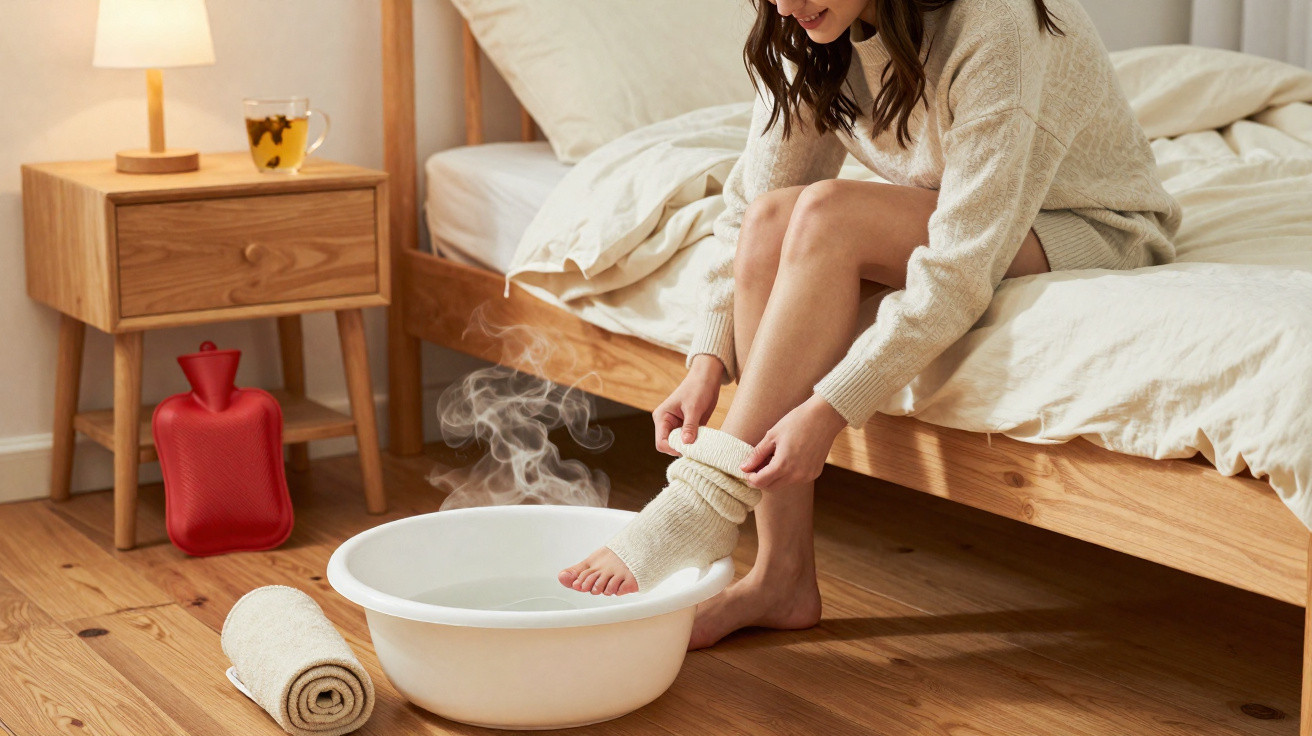
Every evening, it is the same routine: while the rest of the body gradually winds down, your feet feel like two blocks of ice.
Anyone who lies in bed at night with cold feet will know the feeling: you toss and turn, cannot drift off and wonder whether it is still normal or already a warning sign from your body. Icy feet are often caused by harmless factors, but they can sometimes point to genuine health issues. A few targeted measures can make a considerable difference.
Why feet get so cold in the evening
When it comes to retaining warmth, feet are particularly vulnerable. They are a long way from the heart, contain little muscle and quickly lose heat to the floor and surrounding air.
“The body protects the heart, lungs and brain first – toes are at the very bottom of the priority list.”
A normal response to cold
- When the outside temperature drops, the body narrows the blood vessels in the hands and feet.
- This keeps more warm blood in the centre of the body, ensuring the organs remain well supplied.
- As a result, toes and soles can soon feel freezing, particularly on cold floors.
Walking across tiled flooring in winter wearing a T-shirt and thin socks is a perfect example: the body “sacrifices” the extremities to keep its core warm.
Poor circulation as a key cause
Many people have cold feet throughout the year, rather than only in sub-zero temperatures. In these cases, poor circulation is often responsible.
- an unsuitable diet leading to nutrient deficiencies, such as too little iron or B vitamins
- not drinking enough – blood becomes more viscous
- tight shoes or socks that constrict blood vessels
- raised blood fats such as cholesterol, which alter the blood vessels
- smoking: nicotine can constrict blood vessels considerably
- certain medicines that have a blood-vessel-constricting effect
Hormones and body shape also have an influence. Women report cold feet substantially more often. On average, they have less muscle mass and often a different distribution of body fat, which affects temperature regulation.
When an underlying condition may be involved
Cold feet are sometimes more than an annoyance and may indicate a medical condition. Common examples include:
- metabolic disorders such as diabetes
- anaemia
- an underactive thyroid
- circulation disorders such as Raynaud’s syndrome
If you also experience numbness, pain while walking, blue toes or wounds that heal poorly, you should arrange to see a doctor promptly.
The right equipment for icy feet
Your choice of shoes and socks can determine whether your feet stay warm or become a cold trap – not just outdoors, but later in the evening while sitting on the sofa as well.
Shoes: thick soles and dry feet
- A thick, non-slip sole: This insulates against cold ground and provides a secure footing. If you are not constantly trying to keep your balance, your toes tense up less and circulation can flow more freely.
- Sufficient room: Shoes must not pinch. Compressed feet mean compressed blood vessels.
- Water-repellent material: Damp feet lose heat exceptionally quickly. Even slight moisture is enough.
- Warmth from below: Extra insoles made from felt or wool create an insulating layer between the foot and the cold floor.
Here is a simple everyday trick: before putting shoes on, place a ball of tissue paper warmed on a radiator inside each shoe. This heats the interior without damaging the material through direct radiator heat.
Socks: natural fibres rather than synthetic perspiration
Effective socks need to do two things: insulate and absorb moisture. Sweaty feet become extremely cold after a short time.
- Cotton or wool socks retain warmth and absorb perspiration more effectively than purely synthetic fibres.
- Specialist sports socks transport moisture away from the foot.
- Two layers can be helpful: a thin, smooth sock, such as silk, directly against the skin, topped with a warming layer. Neither pair should feel tight.
People react differently in bed. Many sleep better without socks because their feet remain free and sweat less. If cold feet prevent you from falling asleep, choose loose cotton or wool socks – slightly too roomy is better than too tight.
Practical tips for cold feet in the evening
When your feet are already icy, quick and straightforward measures can help. Many can easily become part of your evening routine.
Massage gets the blood moving
Use your hands to rub firmly across the soles, heels and every individual toe twice a day for a few minutes each time. This stimulates circulation and releases minor tension.
“People who massage their feet regularly often notice after just one week: their feet warm up faster and stay warm for longer.”
If you wish, use a rich cream or homemade foot balm containing nourishing oils. The massage itself matters most, not the product.
Movement – even while sitting
Spending hours on the sofa with motionless feet is harmful to circulation. You can easily do small exercises in front of the television:
- stamp your feet firmly several times in succession
- alternately pull your toes towards your nose and stretch them again, for around 20 repetitions
- make circles with your ankles, ten times inwards and outwards
- take a brisk walk regularly during the day
People who spend much of their time sitting in an office particularly notice the difference when they add a few thousand extra steps each day. Their blood vessels remain more flexible and their feet become less sensitive to cold.
Warm foot baths – but not too hot
A classic home remedy is a basin of pleasantly warm water at around 37 to 39 degrees. Water that is too hot irritates the skin and may do more harm than good.
- Soak your feet for 10 to 15 minutes.
- If desired, add a nourishing oil or a few drops of essential oil.
- Afterwards, dry your feet thoroughly, especially between the toes, and put on warm socks straight away.
The result is that blood vessels widen, blood flows more easily and the whole body relaxes. Many people find that an evening foot bath helps them get to sleep more easily.
Wool socks and a pre-warmed bed
In winter, many people swear by thick wool socks in the evening. Pure wool has strong temperature-regulating properties: it stores warmth without causing rapid overheating and absorbs moisture without immediately feeling clammy.
To avoid a cold shock when getting into bed, prepare in advance:
- place a hot-water bottle or cherry stone cushion in bed around 30 minutes before going to sleep
- put the heat source in the foot area, then remove it later so that it does not become too hot
Once in bed, raising your feet slightly can also support circulation – for example, by placing a second pillow at the foot of the bed beneath the mattress or directly under your calves.
Lifestyle habits that benefit your feet in the long term
If you do not want to battle icy feet from scratch every evening, it is worth reviewing your everyday routine too. Many habits have a direct effect on the blood vessels.
Hot meals and foods that support circulation
Calories are not the only consideration: the temperature of meals matters too. Including several hot elements across the day keeps the circulation more active.
- warm soups, stews or oven bakes rather than only cold snacks
- mildly spicy meals containing ginger, chilli or pepper
- foods rich in vitamin B12 and omega-3 fatty acids, such as fish, nuts or certain seeds
- fresh herbs such as parsley, alongside vegetables including onions, celery or carrots
A generally balanced diet stabilises circulation and prevents deficiencies that can encourage circulation problems.
Drink enough – not only in summer
Many people underestimate how closely the sensation of cold is connected to fluid balance. Those who do not drink enough are more likely to have cold hands and feet.
- A guideline is around 1.5 to 2 litres per day, depending on body size and activity levels.
- Water, unsweetened tea and diluted juice are suitable choices.
- If drinking enough feels difficult, keeping a visible bottle at your workplace or using a reminder app can help.
With certain conditions, such as heart failure or kidney disease, fluid intake must be tailored individually – medical advice applies here.
Less caffeine, no tobacco
Caffeine and nicotine cause blood vessels to narrow. That is exactly what cold feet need least.
- rather than drinking coffee constantly, switch to herbal or fruit tea now and then
- cut down on smoking or stop altogether – your blood vessels will benefit noticeably
Many former smokers report warmer hands and feet just a few weeks after quitting. Their blood vessels regain more room to function.
When it makes sense to see a doctor
In most cases, the measures above are enough to manage cold feet effectively. However, some signs should still be taken seriously:
- persistently cold feet regardless of the ambient temperature
- pain in the calves or feet when walking that eases again at rest
- numbness or tingling in the toes
- skin discolouration – blue, white or purple – on the toes or foot
- wounds on the feet that heal poorly or not at all
These symptoms can indicate serious circulation problems or nerve damage. Your GP is the first point of contact, with referrals to specialist vascular, diabetes or endocrinology clinics arranged if necessary.
A closer look at less familiar connections
Many people with cold feet also struggle with sleep problems. The body sends a clear message: falling asleep becomes easier only once hands and feet are no longer freezing. Planning your evening routine so that your feet warm up in good time – with a foot bath, movement and a warm bed, for instance – often leads to more restful sleep.
Stress is another factor. Ongoing tension keeps the body in alert mode, while stress hormones constrict blood vessels. Relaxation exercises, brief breathing breaks during the day and a calm wind-down in the evening help not only the mind, but also circulation in the hands and feet.
People who gradually adjust their habits usually find that the “blocks of ice” at the ends of their legs become less frequent. If the cold persists despite every trick, it is a good reason to have your vascular and metabolic health assessed professionally.





Comments
No comments yet. Be the first to comment!
Leave a Comment