
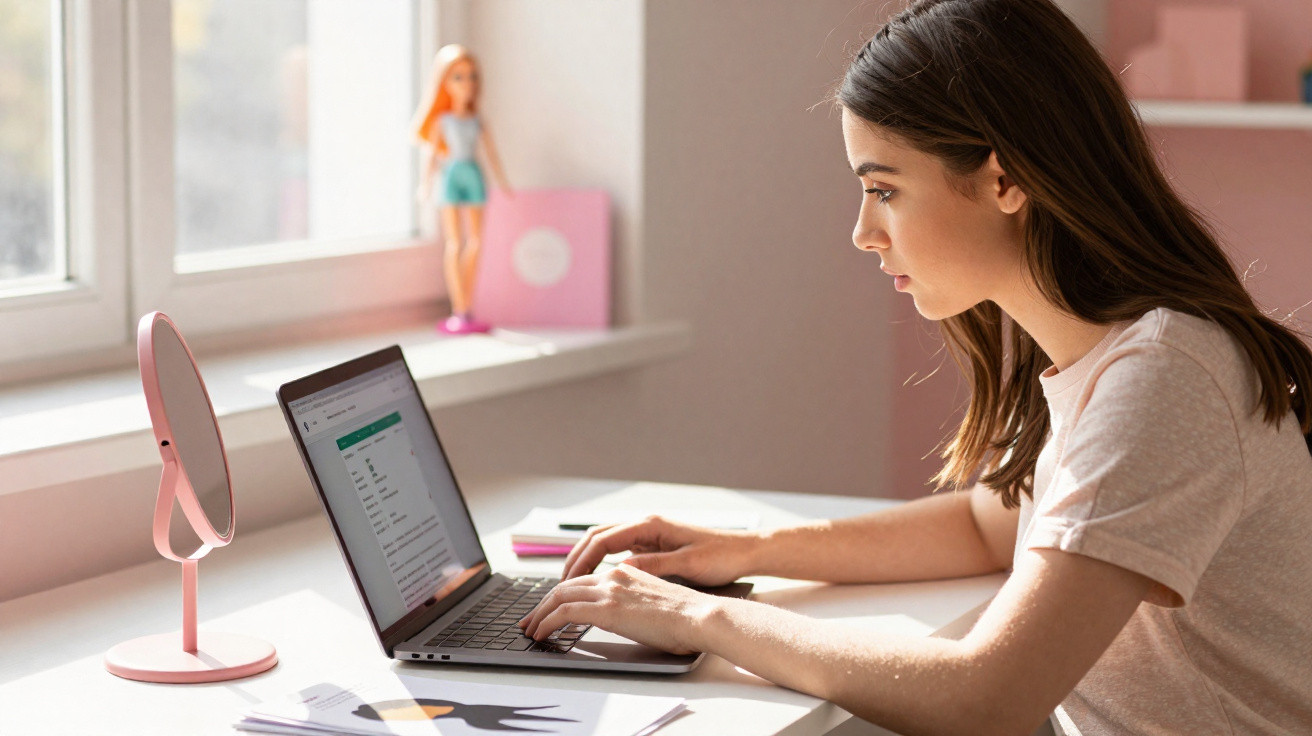
Health specialists predicted last year that the ‘mic drop’ gag at the end of the blockbuster Barbie film could have meaningful real-world consequences. They suggested it might encourage viewers to pursue reproductive healthcare they needed, had delayed, or had never considered.
A new study now appears to support that prediction, reporting an increase in relevant online searches after the film arrived in cinemas.
Barbie and interest in gynaecologist care
For anyone who has not watched the film, Eva Sénéchal, a psychology researcher at McGill University in Montreal, and the colleagues behind the new internet-search analysis explain why Barbie’s closing line may have achieved more than a laugh.
"In the film's final scene, after deciding to leave Barbieland for the real world, Barbie enthusiastically tells a receptionist, "I'm here to see my gynecologist," a joke that could be based either on her supposed lack of genitals or her evident excitement for care many women find unpleasant." Sénéchal and colleagues write in their paper.
"We hypothesized that this final line may have spurred public interest in gynecologic care."
The team tracked weekly US online searches after Barbie’s release, examining 34 terms. These ranged from questions about the role of gynaecologists to broader searches including "gynecologist near me", "make a doctor's appointment", and "pap smear".
Searches specifically concerning gynaecologists rose noticeably. During the three months after the film’s July 2023 release, searches for questions such as "Why see a gynecologist?" and "Do I need a gynecologist?" were more than twice as high as during the preceding year.
Awareness may not lead to appointments
Yet seeking information about gynaecologists represents only the initial stage of accessing this specialist healthcare. The study did not assess other data that could reveal whether cinema-goers booked or attended appointments, and patterns in other search queries indicate that they may not have done so.
"There were no changes in searches for gynecologist appointments, suggesting that searches for information about gynecologists did not translate to searches for new gynecologic care," Sénéchal and colleagues write.
"Therefore, it remains unclear whether a 'Barbie effect' in awareness would translate to improved measurable health outcomes."
Still, such an outcome is possible, as a similar effect has occurred previously.
In 2013, actress Angelina Jolie publicly discussed her choice to have a double mastectomy after testing positive for an inherited breast cancer gene. Referrals for genetic counselling and testing in the UK subsequently more than doubled, a pattern known as the ‘Angelina Jolie effect’.
Body image and the wider influence of Barbie
The Barbie film may also have affected body image more broadly, much as the dolls themselves have. Studies indicate that Barbie dolls, traditionally associated with highly extreme and unrealistic body proportions, can shape young girls’ views of body image and eating behaviour, although findings have been mixed.
"We know that children learn by observing, absorbing, and imitating the things they see around them, and that their early ideas about weight and appearance are shaped by their family, their peers, and the media," body-image researcher Zali Yager wrote for Women's Health Agenda after watching the film in July 2023.
However, in this latest analysis it is difficult to disentangle the effects of family, friends and social media on how a person sees themselves or seeks healthcare.
"There's so much of the context that we are missing in these studies," clinical health psychologist Jennifer Webb, from the University of North Carolina at Charlotte, told Nature in a July 2023 interview. She was referring to the inconsistent results from studies examining Barbie’s effects on young girls’ body image and self-esteem.
"We don't know about the other aspects of the children's social environment, whether in the immediate home environment, at school or other activities."
That limitation also applies to Sénéchal and colleagues’ analysis. Internet-search trends offer only a brief view of people’s lives and reveal nothing about the anonymous searchers themselves, including their age or health.
Although the evidence cannot show this directly, some people may have been encouraged to seek reproductive healthcare because seeing Barbie go to her first gynaecologist appointment "normalizes the experience," physician and health-policy researcher Leana Wen told CNN last year.
"It solidifies the understanding that reproductive health is an integral part of overall health."
The study was published in JAMA Network Open.


Comments
No comments yet. Be the first to comment!
Leave a Comment