
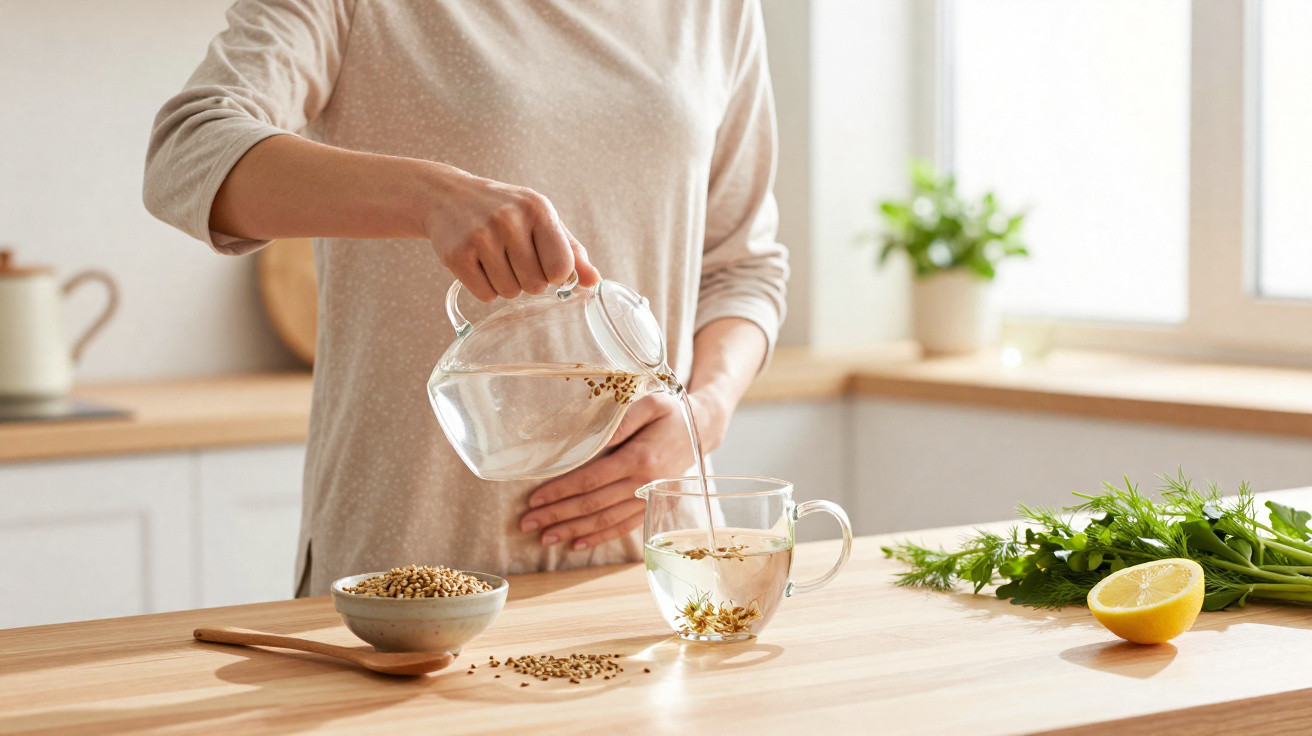
Many people enter spring feeling heavy and bloated. Between raclette, fondue, festive roasts and sweet treats, the digestive system has a great deal to cope with over winter. Now that March has arrived, it is an ideal time to ease the pressure on your stomach – and one particular herbal infusion can work surprisingly well to reduce gas and soothe the gut.
Why your stomach often protests after winter
Bloating and a feeling of fullness are more than merely an embarrassing minor issue. They can seriously affect day-to-day life, lower your mood and make any close-fitting clothing uncomfortable. These symptoms are often caused by a combination of rich meals, eating too quickly and not getting enough exercise.
Medical professionals refer to excessive air in the digestive tract as aerophagia – meaning swallowed air – alongside gases produced during digestion. This can result in:
- a distended stomach
- pressure or tightness in the lower abdomen
- sometimes cramp-like pain
- frequent burping or wind
Anyone who has regularly enjoyed cheese fondue, hearty home cooking and sugary desserts throughout winter is likely to know these symptoms well. This is where the “March infusion” comes in: it supports digestion, helps the body move trapped gas along and can bring noticeable relief.
The anti-bloating infusion: fennel seeds in focus
At the heart of this approach is a classic herbal remedy: a cup of fennel seed tea. Fennel seeds are among the plants described as carminatives. This group of seeds and herbs is known for reducing gas production in the bowel and helping existing gas pass more easily.
“Fennel seeds counter bloating, reduce gas and help the body ‘clear out’ the stomach from within.”
Experts particularly highlight three benefits of carminative seeds such as fennel:
- They reduce the formation of new gas in the bowel.
- They help move along air that is already present.
- They stimulate the production of digestive juices, making food easier to process.
When too few digestive juices are produced, food may ferment more in the bowel, creating even more gas. A cup of fennel tea after a meal can make a remarkable difference here.
An added benefit: fennel eases cramps
Fennel seeds offer another quality that is especially important for many people: they have an antispasmodic effect. When gas builds up, the muscles in the intestinal wall can often contract, causing painful cramps. Fennel helps relieve this pressure, allowing the muscles to relax, pain to subside and gas to pass more readily.
How to prepare the March infusion properly
How effective the seeds are depends greatly on how the tea is prepared. A weak cup that has not been left to infuse for long will do little, but a more effective version is easy to make with a few simple steps.
Step-by-step guide to fennel seed tea
You will need:
- 1 teaspoon of fennel seeds, ideally whole dried seeds
- 250 ml hot water that is no longer rapidly boiling
- a cup or mug with a saucer or lid
- a little honey, if desired
Prepare it as follows:
- Put the fennel seeds into a cup.
- Pour over hot water shortly after it has boiled.
- Cover the cup so the essential oils do not escape with the steam.
- Leave the tea to infuse for around 10 minutes.
- Strain the seeds or pour the tea through a tea strainer.
- Drink slowly, taking small sips.
“Covering the tea while it infuses is crucial – otherwise, many of the active ingredients simply disappear with the steam.”
Health food shops, wholefood stores and well-stocked supermarkets usually sell fennel seeds loose or as part of tea blends. If convenience is your priority, ready-made teabags are an option, although it is worth choosing one with as high a fennel content as possible.
Other seeds that can make your stomach look flatter
Fennel is not the only plant that can support the gut. Many people respond well to particular combinations. Among carminative seeds and roots, the following are considered especially tried and tested:
| Plant | Typical effect | Suitable for |
|---|---|---|
| Aniseed | Encourages gas to pass; has a mildly sweet flavour | Bloating after rich meals |
| Caraway seeds (or cumin) | Strongly supports digestion and counters fullness | Heavy, fatty foods |
| Cardamom | Stimulates digestion and provides warmth | Bloating accompanied by feeling cold |
| Liquorice root | Soothes the stomach and bowel | An irritated stomach or a mildly burning sensation |
| Angelica root | Supports digestion more generally | Slow, sluggish digestion |
Many evening teas marketed for a “flat stomach” combine precisely these plants. A cup after the final meal of the day may help the stomach feel visibly less tight by the following morning.
Further simple ways to reduce bloating
The herbal infusion works best when paired with a few easy everyday habits. Some cost nothing at all and can be put into practice immediately.
A clockwise stomach massage
A gentle stomach massage can help get gas in the bowel moving. Many people notice relief after only a few minutes. Here is how to do it:
- Put a little plant oil, such as olive, almond or another neutral oil, into your hand.
- If desired, add 1 drop of peppermint oil and distribute it well.
- Using a flat hand, make circles clockwise around the navel.
- Apply gentle pressure without causing pain.
- Massage for 3–5 minutes, ideally in the evening or after a heavy meal.
“Clockwise movement follows the natural route of the large bowel and helps gas move through it.”
Anyone who is very sensitive or pregnant should avoid essential oils such as peppermint and use only a neutral plant oil.
Eat more slowly and swallow less air
Digestion begins in the mouth – it may sound obvious, but it has practical consequences. People who eat in a rush swallow more air, chew less thoroughly and place unnecessary strain on the stomach and bowel.
Useful changes in behaviour include:
- chewing every mouthful at least 15–20 times
- putting your cutlery down briefly between mouthfuls
- avoiding drinking litres of fluid while eating
- not talking continuously during meals where possible
This allows far less air to enter the digestive tract, breaks food down more effectively and means the bowel does not have to work as hard.
When to be cautious and when to seek medical advice
Plant-based aids such as fennel tea are generally considered well tolerated. Even so, it is sensible to be aware of possible limitations. Anyone with a known allergy to plants in the carrot family – for example celery, carrot or coriander – should try fennel and similar plants cautiously. Severe, persistent or new abdominal pain, blood in the stool, significant weight loss or symptoms that occur at night should be assessed by a doctor.
People with chronic bowel conditions or those taking medication regularly should also speak briefly to a healthcare professional before using larger quantities of herbal preparations.
How to make the March infusion part of your routine
The benefits are most likely to develop when fennel seed tea is not drunk only occasionally. A simple routine could include:
- one cup after lunch
- one cup in the early evening or shortly after dinner
Anyone who is particularly sensitive to certain foods can drink a cup before eating. Combined with eating slowly, a brief stomach massage in the evening and a little more movement – such as a 20-minute walk after a meal – many people notice within a few days that their stomach feels flatter and lighter.
The transition from winter to spring is an ideal time to try out this kind of routine. The ingredients are inexpensive and easy to find, and they can offer more than support for the stomach: they often add a small moment of relaxation to a hectic day.






Comments
No comments yet. Be the first to comment!
Leave a Comment