
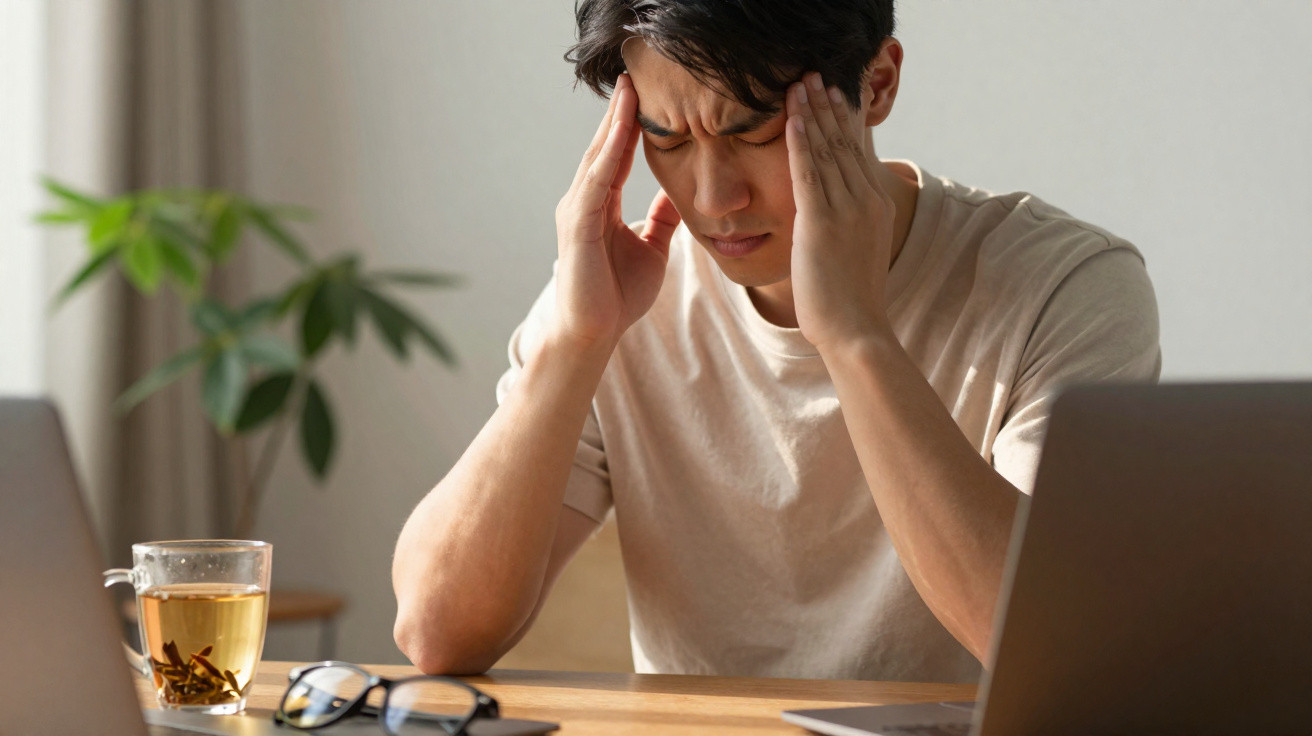
The office lighting was painfully bright: the stark white kind that somehow makes every sound seem sharper. You had looked at the same email for three minutes without taking it in, while a dull, tightening band began to form around your head. There was no time to take painkillers, and no bottle of water to take them with. A meeting started in seven minutes. Notifications kept chiming. With every sound, your jaw tightened further.
Across the desk, someone pressed the web between their thumb and index finger and shut their eyes. Half a minute later, they were sitting a little taller. You watched, equally intrigued and desperate.
You spread your own hand and pressed the same spot. For a moment, the pain receded.
Why headaches strike at the worst possible time
Headaches almost never arrive politely. They creep up during a looming deadline, on a packed commute, or at the family meal that was always unlikely to be peaceful. Your brain itself does not feel pain; instead, the surrounding nerves, muscles and blood vessels stage a quiet rebellion.
Screen time, noise, missed sleep and skipped meals each add another small brick to the wall of tension. Eventually, your body decides “enough” and switches on the headache. The timing may seem cruel, but it is often your system raising a warning flag that you have overlooked all week.
There is a reason headaches tend to become noticeable at your desk or while using your phone. Research repeatedly connects prolonged screen use and poor posture with more frequent tension headaches. Rounded shoulders, a neck pushed forwards and a clenched jaw create the perfect storm.
One UK survey reported that almost three-quarters of office workers experience at least one headache every week during busy periods. Most people quietly turn to coffee, painkillers, or both. Very few leave the screen for long enough to give their body a genuine reset. The outcome is all too familiar: the “normal” afternoon headache that never fully lifts.
A straightforward chain reaction sits behind that common pain. The muscles of your neck and scalp tighten. Blood vessels may widen or constrict. Nerves begin sending signals that the brain interprets as pain. Once this cycle begins, stress, anxiety and even concern that the headache could become a migraine all help to keep it going.
This is why simple physical techniques, such as applying pressure to a pressure point, can seem unexpectedly helpful. They do not provide a magical cure. Rather, they disrupt the cycle. For a short time, the body attends to a different signal, circulation may alter, and the nervous system has an opportunity to come down from high alert.
The pressure point technique for fast headache relief
The pressure point most often discussed for headache relief is in the hand rather than the head. On the palm side, it lies in the fleshy web between the thumb and index finger. In traditional Chinese medicine it is known as LI4, or Hegu, and is frequently used for pain and tension.
To locate it, bring the thumb and index finger of one hand together in a gentle pinch and identify the highest point of the small muscle mound. Relax the fingers, then put the thumb of your other hand directly on that point. You are looking for an area that is a little tender, rather than intensely painful.
When you have found the spot, apply firm pressure and hold it. It should not be a light stroke, nor should it be a punishing squeeze: aim for something between the two. Breathe in through your nose for four seconds, then exhale slowly through your mouth. Maintain the pressure for 30 seconds to a minute before releasing it.
Repeat the process on the other hand. Many people notice a slight change, such as less tension across the forehead or reduced heaviness behind the eyes. Some find that the throbbing seems to “step back” a level. It is not magic; it is more like guiding your nervous system into a different conversation.
Certain approaches can make relief less likely. Pressure that is too light often produces little change, while pressing until you wince simply creates more tension. You’re aiming for meaningful discomfort, not punishment.
If you are pregnant, most midwives and acupuncturists recommend avoiding firm pressure on this point because it is traditionally linked with stimulating labour. If you are experiencing a severe migraine with nausea and sensitivity to light, this method may feel like a tiny bucket against a tidal wave. It may still benefit some people, but it cannot replace appropriate medical care when headaches are severe or frequent.
Treat it as one item in a small, highly personal toolkit. Some people find the hand pressure point particularly useful. Others get better results by pressing the base of the skull, where the neck meets the head, or by massaging the temples in slow circles. Your body often “tell” you what feels best: the place you instinctively rub when stress rises can offer a useful clue.
“The most powerful part of acupressure isn’t the mystique,” says one London-based therapist I spoke to. “It’s that it gives people a way to touch their own pain with curiosity instead of fear.”
- Begin with clean, relaxed hands, preferably after stepping away from screens for a few minutes.
- Use your breathing: take a slow inhale and an even slower exhale while holding the point.
- Give the technique a fair chance with 2–3 rounds on each hand before deciding it “doesn’t work”.
- Combine it with something straightforward, such as drinking a glass of water or walking to a window.
- Stop and get help if a headache is sudden, severe or unlike any you have previously experienced.
What a small pressure point can reveal about your life
There is something subtly revealing in the instant you stop, open your hand and press. It is a minor physical gesture, yet it says: I’m going to do something about this pain, right now, with what I’ve got. No tablets or expensive device, only your fingers and your attention.
On a particularly difficult day, it may lower the pain from an 8 to a 6. On a better day, it may clear your head sufficiently to enjoy an evening you expected to lose. In either case, it moves you from feeling powerless to taking action, and that change in mindset alone can take the edge off a headache.
We like to think headaches can be solved through an ideal routine: eight hours of sleep, ergonomic chairs, daily stretches and no late-night scrolling. Let’s be honest: nobody really does that every day. Life is loud, untidy and full of blue light.
That is why these “pressure point tricks” travel so quickly among colleagues and friends, and across TikTok videos. They are small, practical actions that can fit into a toilet break, a train journey or a quiet moment in a meeting with your camera switched off. One thumb, one breath and one small decision to step out of the spiral.
At a deeper level, discovering where your own pain eases - in your hand, neck or temples - can become a map. It can reveal where you are carrying things you never found time to let go: anger over an email, anxiety about a bill, or the burden of caring for children or parents. On an ordinary day, the pressure point is simply a rapid response to a bad headache.
On another day, it may be the first occasion when you realise that your shoulders climb towards your ears every time your boss calls. Once you recognise that pattern, you can begin to change more than the pain itself.
The next time your head begins to pound and the pharmacy is nowhere near, you may remember the small web of skin between thumb and index finger. It scarcely looks like anything. Yet, when pressed deliberately for a minute, it may make a meeting more manageable, rescue a train journey or offer just enough relief for you to be kind to the people waiting at home.
Some people will try it once and shrug. Others will make it a private ritual, like pressing a mental “reset” button in the middle of chaos. The act of stopping to press and breathe may even become a way of reminding yourself: I’m still here in this body, not just in my inbox.
And perhaps that is the real technique behind easing a headache quickly without medication: not the pressure point alone, but the instant you stop rushing long enough to notice where it hurts and what that pain has been trying to tell you.
| Key point | Detail | Benefit for the reader |
|---|---|---|
| Location of LI4 | Between the thumb and index finger, at the highest point of the muscle mound | Helps you locate the effective point without uncertainty |
| Pressure and breathing | Firm but tolerable pressure, paired with slow breathing | Improves the likelihood of easing pain quickly |
| Limits and caution | Avoid during pregnancy or if you have a sudden, unusual headache | Helps you use the technique safely without ignoring warning signs |
FAQ:
- Where exactly is the pressure point to stop a headache? The most common point is on the back of the hand, in the fleshy web between the thumb and index finger. Pinch the area, locate the highest point of the muscle, then press it using the thumb of your other hand.
- How long should I press the point for headache relief? Apply steady pressure for 30–60 seconds on one hand while breathing slowly, then change to the other hand. Repeat the process 2–3 times and see whether the pain changes.
- Can pressure points really replace painkillers? They may reduce the severity of mild to moderate headaches for some people, but they are not a complete replacement for medical treatment, particularly for severe or chronic headaches.
- Is it safe to use this headache pressure point every day? For most healthy adults, gentle hand acupressure is regarded as low risk. If you are pregnant, have circulation problems or feel worse while pressing the point, speak to a healthcare professional.
- What if the pressure point trick doesn’t work for me? Every body responds differently. Try other points, including the temples or the base of the skull, pair the technique with water, fresh air and a brief break, or seek medical advice if headaches keep returning.





Comments
No comments yet. Be the first to comment!
Leave a Comment