
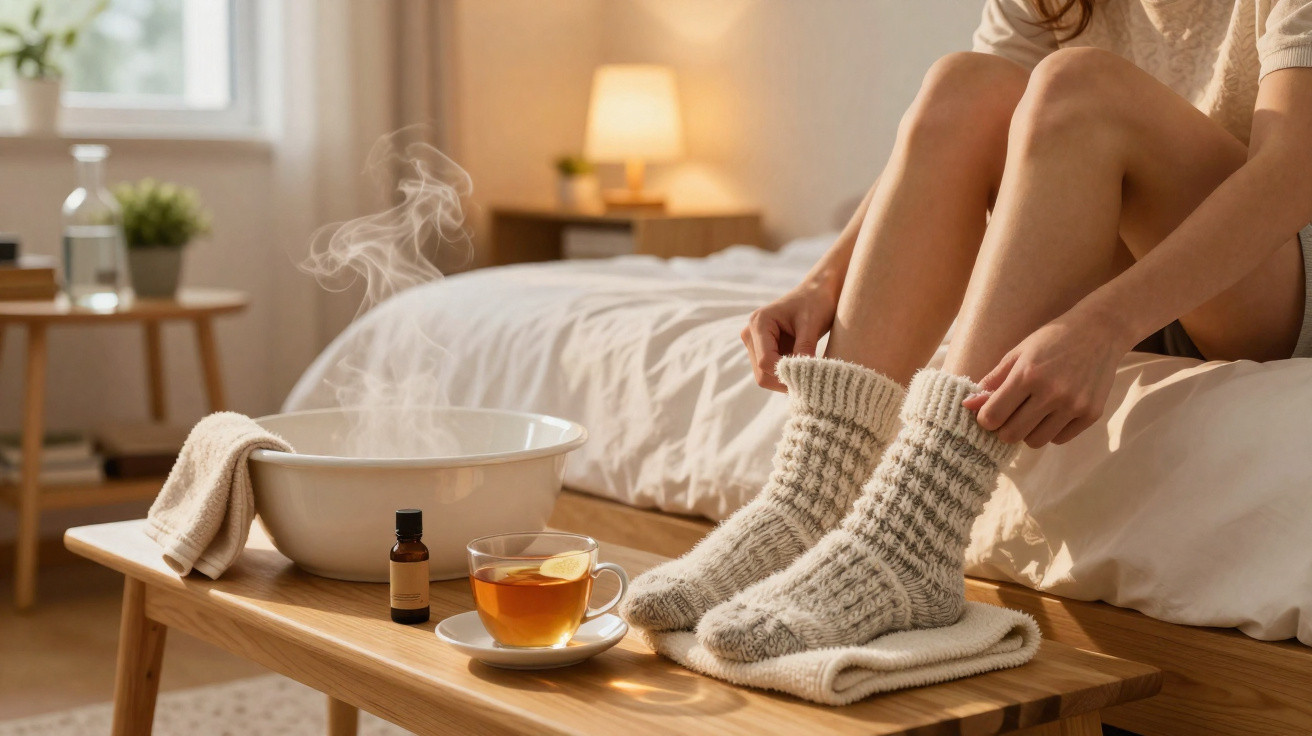
Many people know the feeling: it is already warm enough outside and the home is heated, yet their feet feel like two blocks of ice. This is more than simply uncomfortable; it can disrupt sleep and may point to health concerns. Find out what can cause persistently cold feet and what you can do to warm them up properly in the evening.
Why feet are so often freezing cold in the evening
Feet are among the first body parts the body effectively ‘sacrifices’ when it feels cold. The reason is straightforward: the body’s priority is protecting vital organs in the torso. Blood flow to the hands and feet is reduced to keep the heart, lungs and brain warm.
“A cold bedroom, bare ankles and thin socks – cutting corners in the wrong places forces the body to cool the feet, quite literally.”
Several factors can contribute to chilly toes in the evening:
- Cold from below: Cold floors or poorly insulated footwear can cause foot temperature to drop considerably.
- Different distributions of fat and muscle: Women are affected more often because they frequently have less muscle mass and less insulating fatty tissue on their feet.
- Constricted blood vessels: In low temperatures, blood vessels narrow and circulation to the extremities decreases.
When cold feet are a warning sign
A cold winter floor is not always to blame. Cold feet can also indicate impaired circulation or other health conditions.
- Poor circulation: An unfavourable diet, mineral or iron deficiency, inactivity and overly tight shoes can all affect blood flow to the feet.
- High cholesterol: When cholesterol builds up in blood vessels, their diameter narrows, making it harder for blood to reach the toes.
- Smoking: Nicotine can cause blood vessels to spasm, significantly worsening circulation in the hands and feet.
- Medication: Certain medicines constrict blood vessels and may intensify coldness in the feet.
Cold feet can also be a possible symptom of the following conditions:
- Diabetes
- Anaemia
- Thyroid disorders
- Raynaud’s syndrome, in which toes or fingers become extremely cold and turn white-blue in episodes
“Anyone who has persistently extremely cold feet and also notices pain, numbness or discoloured toes should have the cause assessed by a doctor.”
The right everyday gear for cold feet
Before turning to creams, baths and home remedies, it is worth looking at what sits directly on your feet each day: your shoes and socks.
Shoes: a protective barrier rather than a conductor of cold
- Thick, insulating soles: A substantial, well-cushioned sole separates the foot from the cold ground and retains heat in the shoe more effectively.
- Slip resistance: Grippy tread soles do more than prevent falls; they also stop toes from tensing up through strain, which improves blood flow.
- Water-resistant materials: Wet feet become cold exceptionally quickly, so waterproof or water-resistant shoes are worthwhile, especially in autumn and winter.
- Extra insoles: Insoles made from felt or other insulating materials provide an additional barrier against cold rising from the ground.
- Never restrictive: Shoes that pinch can compress blood vessels. There should always be a little space between the toes and the front of the shoe.
Socks: the frequently overlooked detail
- Choose natural fibres: Cotton, wool or specialist performance fibres from sports retailers wick away moisture while keeping feet warm.
- Make good use of two layers: Wear a thin, smooth sock underneath and a warmer, slightly roomier layer over it to create a small insulating air pocket.
- Non-restrictive cuffs: Tight elastic tops can impede circulation, particularly when you spend a lot of time sitting or lying down.
At night, allowing air around the feet often supports better circulation. Many sleep specialists advise sleeping without socks where possible. If you cannot settle at all without them, choose soft, fairly loose cotton socks at least.
Evening routines: quick relief for warm feet
When the day is over but your feet are still icy cold, a few simple routines can help raise their temperature.
Massage gets circulation moving
A brief but firm foot massage before bed can often work wonders. Knead not only the soles thoroughly, but also the toes and tops of the feet.
“Five to ten minutes of massage per foot is often enough to bring noticeably more warmth to the toes.”
If you wish, use a warming foot cream or make a rich balm yourself, for example with plant oils and a little beeswax. Massage encourages blood flow, eases tension in the arch of the foot and also has a calming effect on the nervous system.
Move rather than sit for hours
Spending long periods seated, whether on the sofa or at a desk, is bad for circulation in the feet. Even small exercises can bring the toes back to life:
- While standing or sitting, tap your feet firmly on the floor several times.
- Pull the toes upwards 20 times in succession, then stretch them out again.
- Draw circles with your feet – ten clockwise and ten anticlockwise on each side.
- Take regular short walking breaks during the day; a moderately brisk walk is ideal.
Warm foot baths – but not boiling hot
An evening foot bath is relaxing and can raise the temperature of your feet considerably. Keep the following in mind:
- Keep the water between 37 and 39 degrees – water that is too hot puts stress on the blood vessels.
- A 15-minute soak is sufficient; longer can strain both circulation and skin.
- If you like, add a little plant oil or a few drops of essential oil to the water.
Afterwards, dry your feet thoroughly, including between the toes, then put on warm, dry socks straight away.
Wool favourites and a warm bed
Pure wool socks can help while relaxing on the sofa in the evening or shortly before bed. They retain warmth, absorb moisture and do not develop unpleasant odours as quickly. Silk socks perform a similar role, although they feel noticeably thinner.
To prevent feet from cooling down in bed in the first place, try a simple trick: warm the bed for half an hour before going to sleep with a hot-water bottle or a heatable warming pad. It is important to remove the heat source later so that it does not become too hot and damage the skin.
Raise your feet slightly
If you tend to have poorly circulated feet, place a flat pillow beneath your lower legs while lying down. This slight elevation helps blood return flow and may lessen the sensation of cold.
Lifestyle: how to influence foot temperature in the long term
Anyone who repeatedly struggles with freezing cold feet should consider more than just thicker socks and address a few everyday habits as well.
Diet: warming foods for better circulation
Hot food warms more than your stomach; it can warm your whole body. Particularly suitable choices include:
- Hot vegetable stew or soup
- Mildly spicy dishes with a little chilli or ginger
- Foods rich in vitamin B12 and omega-3 fatty acids, such as fish
- Nuts, onions, and herbs including parsley or celery
- Fruit and vegetables containing plenty of liquid and minerals, such as melon or apricots
A balanced diet that is not overly fatty supports circulation and helps keep body weight and blood fats under control – two important factors for well-circulated feet.
Drink enough – otherwise the body gets cold more quickly
Those who do not drink enough become cold more easily. Blood becomes thicker, circulation slows down and the extremities receive less replenishing warmth.
| Situation | Recommended drinking approach |
|---|---|
| Desk-based day with little movement | Take small sips regularly, around 1.5 litres of water or tea |
| Sport, sauna or heavy sweating | Increase the amount considerably and choose clear, unsweetened drinks |
| Cold winter days | Favour warm drinks such as herbal tea or lukewarm water |
Keeping water bottles visible on your desk or using apps that remind you to drink can help.
Coffee and cigarettes: a double brake on blood flow
Caffeine and nicotine have one thing in common: both cause blood vessels to constrict. This also affects the small vessels in the feet. If you are already prone to feeling the cold, choose herbal tea in the evening rather than a fifth coffee. Smokers often notice after just a few smoke-free weeks that their hands and feet do not cool down as quickly.
When it makes sense to see a doctor
In most cases, the measures described can improve cold feet significantly. However, there are situations in which professional advice is needed.
- Persistently cold feet, regardless of outdoor temperature or clothing
- Pain when walking or standing that radiates into the lower leg
- Pale, bluish or patchy discolouration of the toes
- Numbness, tingling or wounds that heal poorly
A healthcare professional can establish whether there is, for instance, a circulatory disorder, diabetes, a thyroid condition or anaemia. The sooner the cause is identified, the better it can be treated – and the sooner your feet are likely to feel warm again.
By paying close attention to your body’s signals, choosing suitable shoes, incorporating short movement and warming routines into the evening, and avoiding smoking, excessive coffee consumption and a severely unbalanced diet, you have a good chance of enjoying much more comfortable evenings – with feet that no longer feel like ice cubes.





Comments
No comments yet. Be the first to comment!
Leave a Comment