
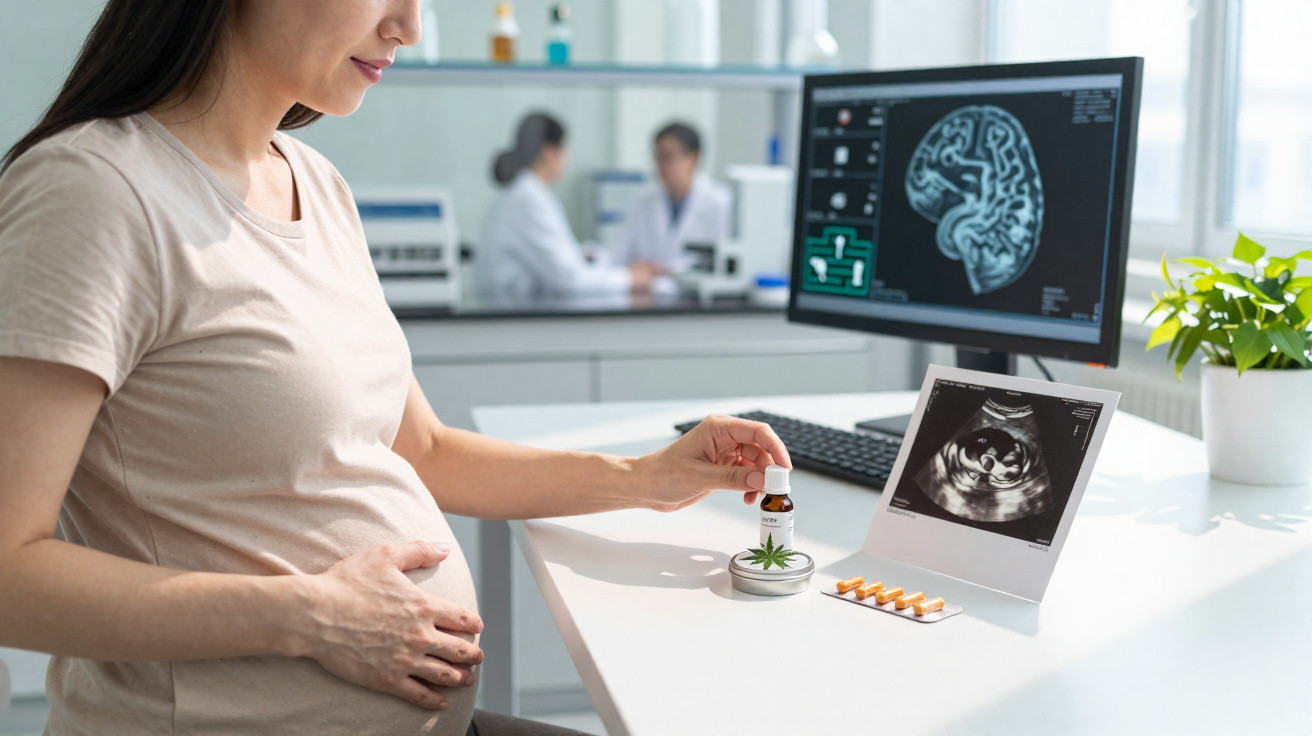
People who are pregnant or breastfeeding should be made aware that cannabis use in any form could adversely affect a developing child.
THC and CBD exposure during pregnancy
A new preclinical rat study draws attention to the potential risks of treating morning sickness or other pregnancy symptoms with products containing THC (Δ9-tetrahydrocannabinol) or CBD (cannabidiol).
Scientists from the University of Western Ontario and Queen's University in Canada found that rats repeatedly exposed to THC and CBD in the womb underwent notable developmental changes. These effects were seen even when the chemicals were given alone, without other compounds typically present in cannabis.
THC is the more psychoactive component among cannabis's plant-derived molecules. Worryingly, this cannabinoid can pass through the placenta into foetal circulation at concentrations similar to those measured in the mother's blood. By 14 weeks, a human foetus already has neural receptors for cannabinoids.
CBD is another prominent cannabis compound. Although it is widely available and many people regard it as harmless, relatively little research has examined its safety during pregnancy.
CBD does not cause an intoxicating 'high', but it still affects the body. Like THC, it can readily cross the placenta in rodent research, where it appears to impair the organ's structure and function.
For almost the full duration of pregnancy, the rat mothers in the current experiment received daily doses of THC, CBD, or both compounds together.
Pups exposed in the womb to a low THC dose had lower birth weights than control mice, as did those prenatally exposed to CBD. Offspring exposed to both THC and CBD were born with still lower body and brain weights.
Although their growth rates had caught up by adolescence, some pups later displayed behavioural changes and altered neuronal activity in particular brain areas.
Cannabis use and developing offspring
These results align with human health research associating cannabis exposure during pregnancy with low birth weight, cognitive and behavioural changes, and an increased risk of neuropsychiatric disorders.
"Marjiuana has been legalized in Canada and in many states in the US, however, its use during pregnancy has not been well studied up until this point," says David Natale from Queens.
"This study is important to support clinicians in communicating the very real risks associated with cannabis use during pregnancy."
In the US, 24 states have legalised recreational cannabis. Some surveys indicate that its use has doubled among pregnant people, who may use it for mood problems, morning sickness, pain, or sleeping difficulties.
The US Surgeon General, the American College of Obstetricians and Gynecologists, and the American Academy of Pediatrics all concur that, until further evidence is available, cannabis of any type should not be used during pregnancy.
Even so, many women are still unaware of the potential risks.
A rat experiment cannot conclusively establish that cannabis use in pregnancy is harmful. However, it offers insight into several troubling links that epidemiological research has identified.
Long-term behavioural and neurological effects
In this study, only male rat offspring exposed to THC in the womb showed impaired cognitive behaviour during adolescence.
Female offspring prenatally exposed to THC had typical neurological outcomes and an almost a "complete lack of molecular changes", according to the researchers.
CBD exposure by itself produced an unexpected effect on subsequent brain development in mice. During adolescence, both male and female mice exposed to CBD showed indications of neuropsychiatric problems.
Female offspring exposed before birth to CBD alone, and to CBD combined with THC, demonstrated anxiety-like behaviour in tests. Male offspring exposed to THC and CBD, meanwhile, displayed impulsivity-like behaviours.
"In contrast to the popular belief that CBD is safe for use in pregnancy, CBD alone produced distinct long-term neuropsychiatric effects and did not mitigate the consequences of prenatal THC," write the authors of the study.
With THC and CBD products becoming increasingly popular, the findings underline the need for more robust research into cannabis use during pregnancy and its potential effects on a developing foetus.
The study was published in Neurobiology of Disease.






Comments
No comments yet. Be the first to comment!
Leave a Comment