
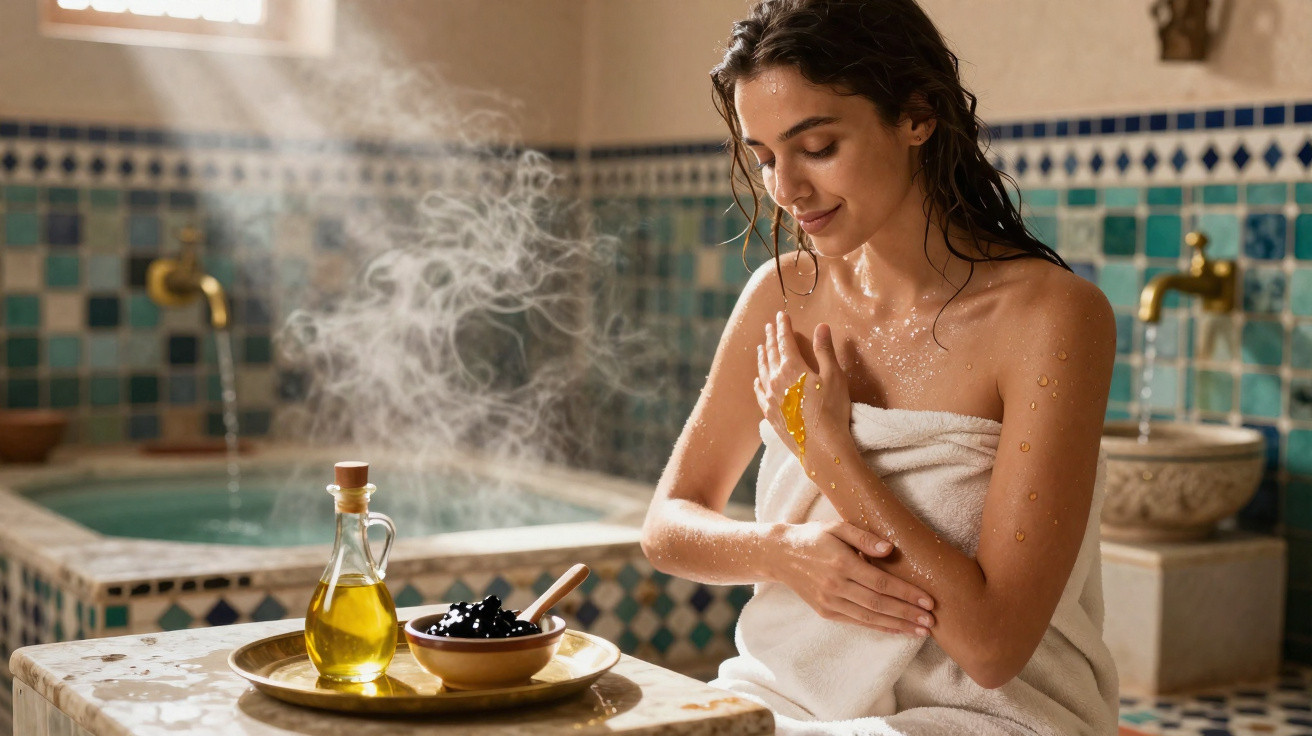
Moroccan women's beauty rituals have endured for centuries and still arouse curiosity in many parts of the world. Rather than relying on complicated routines, many women favour natural ingredients and self-care moments rooted in local culture. The traditional hammam, argan oil, black soap and ghassoul clay are among the key allies used to keep skin and hair well cared for.
How does the traditional beauty ritual in the Moroccan hammam work?
The hammam is far more than a steam bath. For many Moroccan women, it is a weekly occasion for cleansing, relaxation and skin care. The heat helps open the pores, readying the body for exfoliation and the application of other natural treatments.
After steaming, black soap made from olives is commonly applied, followed by exfoliation with the traditional kessa glove. Ghassoul masks and moisturising argan oil then complete the ritual, leaving the skin soft and radiant.
Which natural ingredients are part of Moroccan beauty secrets?
Much of this traditional care relies on ingredients found in Morocco itself. Chosen for their moisturising, purifying and nourishing qualities, they are used on both skin and hair.
Among these products, argan oil stands out because it is rich in vitamin E and fatty acids, while ghassoul is valued for cleansing gently without drying out the skin. Floral waters, including rose water and orange blossom water, are also part of the daily care routine.
- Argan oil to moisturise skin, hair and nails
- Black soap to prepare the skin for exfoliation
- Ghassoul to cleanse and purify the skin
- Rose water to tone and soothe
- Orange blossom water to refresh the skin
- Henna to strengthen hair and decorate hands and feet
How can you adapt these Moroccan beauty rituals at home?
Although the traditional hammam is a unique cultural experience, some of the ritual can be recreated at home with a few simple steps. A hot bath helps create steam and prepare the skin before exfoliation, making the treatments that follow more effective.
After bathing, opt for gentle body exfoliation, apply a clay mask, then finish with a few drops of argan oil on skin that is still slightly damp. This order helps maximise moisturisation and keeps the skin feeling soft for longer.
- Take a hot bath to create steam
- Exfoliate the body gently
- Apply a ghassoul mask or another facial clay mask
- Moisturise the skin with argan oil
- Finish with rose water as a facial toner
- Repeat the ritual once a week
Why do these rituals continue to win admirers around the world?
Moroccan rituals owe their appeal to simplicity and consistency. Instead of using numerous different cosmetics, they focus on a small number of natural ingredients and a care routine that respects the balance of skin and hair. This philosophy has been passed down through generations and continues to inspire people seeking a more natural approach to beauty.
Beyond the physical benefits, these moments also provide a break from everyday life. Self-care is part of Moroccan tradition, turning time devoted to beauty into an experience of wellbeing and relaxation.


Comments
No comments yet. Be the first to comment!
Leave a Comment