
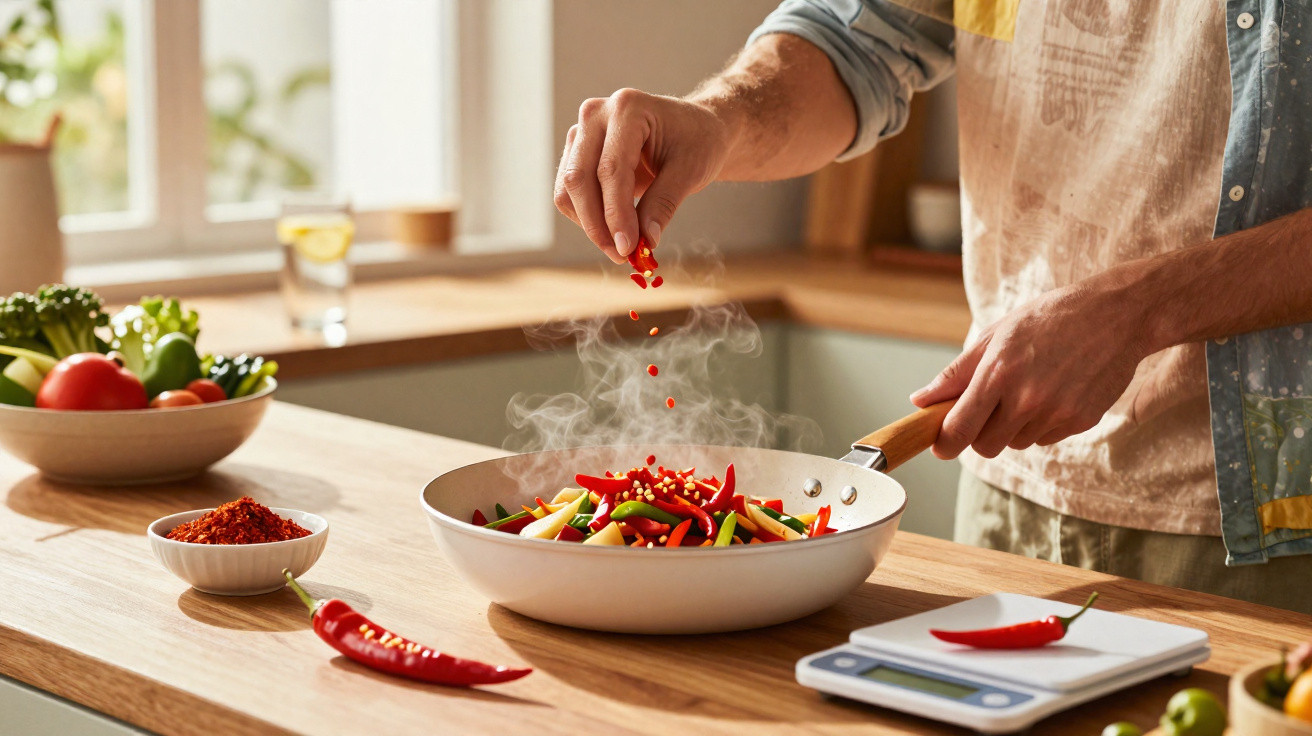
Among everyday kitchen ingredients, one ally has attracted increasing attention in weight-loss research: capsaicin, a compound found in several types of chilli pepper. While it is not a stand-alone solution, research suggests that this natural substance may support weight management when combined with healthy habits. It is also an accessible ingredient found in common seasonings.
What is capsaicin and which foods contain it?
Capsaicin is an alkaloid compound that gives hot chillies their burning sensation. It is mainly concentrated in the seeds and the white inner membranes. Common varieties such as cayenne pepper, bird's eye chilli, finger chilli and chilli pepper generally contain good levels of this substance.
In everyday diets, capsaicin can be consumed through fresh, dried or powdered chillies, ready-made sauces and capsule supplements. Its content can differ considerably in manufactured products, so it is worth checking the label. When using fresh or powdered chilli in home cooking, however, it is easier to regulate the amount added to each meal.
How can capsaicin support weight loss?
Research indicates that capsaicin may promote thermogenesis: a slight rise in body temperature after it is consumed that leads the body to use a little more energy. The effect is small, but alongside a balanced diet, good sleep and exercise, it may help with weight control over time.
Studies are also examining whether regular, moderate chilli consumption affects fat metabolism and feelings of fullness, potentially helping some people eat smaller portions. On average, the increase in calorie expenditure is modest-only a few dozen calories a day-so capsaicin is considered a supporting tool rather than a decisive factor on its own.
How to include capsaicin in your diet in practical ways
Chillies can be introduced gradually, particularly by people who are not used to spicy food. Starting with small amounts and milder varieties allows the palate to adapt, while reducing the likelihood of digestive discomfort or excessive burning.
A few straightforward ideas can make daily culinary use of capsaicin easier, without needing to turn directly to supplements:
- Fresh chilli: Finely chop small amounts and add them to beans, soups, tomato sauces or stir-fried vegetables.
- Chilli powder (such as cayenne): Sprinkle very small quantities over eggs, grilled foods, rice or salads.
- Chilli sauces: Choose options with few additives and use them sparingly in sandwiches and everyday meals.
What precautions should you take when using capsaicin for weight loss?
Although it may be helpful, capsaicin should be used carefully. Excessive amounts can irritate the digestive tract lining, causing burning, heartburn, abdominal pain or diarrhoea. People with gastritis, reflux, ulcers or intestinal conditions should take extra care and, preferably, seek professional advice before increasing their intake of chilli or supplements.
There have also been reports of airway irritation after exposure to highly concentrated chilli powder, which is why moderate culinary use is the safest option. In 2026, research is still investigating ideal doses and effects across different population groups. Until clearer evidence is available, the main recommendation is to incorporate capsaicin into a healthy lifestyle that includes a balanced diet, daily movement and sustainable long-term habits, regarding chilli as additional support rather than a shortcut.






Comments
No comments yet. Be the first to comment!
Leave a Comment