
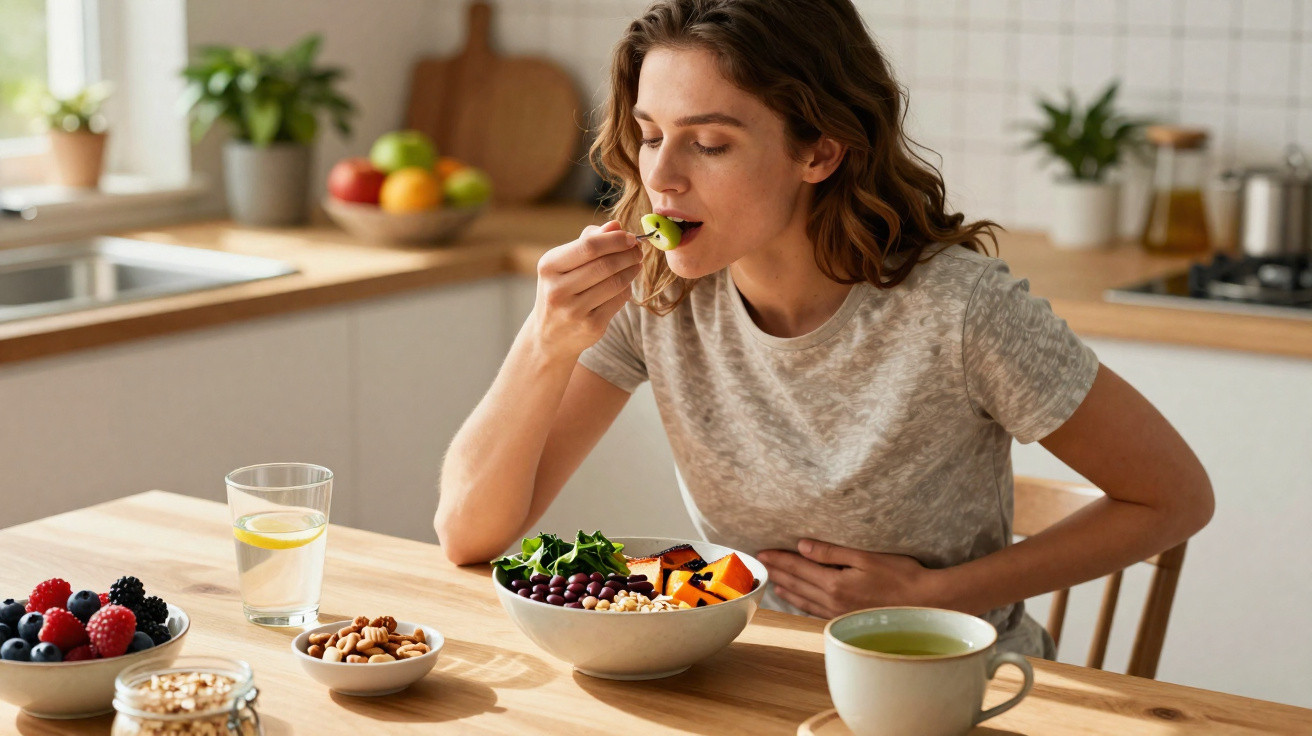
Despite the widespread use of semaglutide medicines such as Ozempic and Wegovy for weight loss, survey findings indicate that most people would still rather lose weight without medication.
For people who want a medication-free route to weight loss, research indicates that particular nutrients and eating habits may naturally replicate some of semaglutides’ effects.
Eating more fibre and monounsaturated fats, which are present in olive oil and avocados, can boost production of the same hormone targeted by semaglutide drugs. The timing of meals, the sequence in which foods are eaten, how quickly someone eats and even how thoroughly they chew may also have this effect.
As a family physician with a PhD in nutrition, I turn current nutrition research into dietary advice for my patients. A science-based, strategic weight-loss plan is not only more effective than outdated calorie counting, but also draws on the biological processes that make popular weight-loss medicines successful.
Semaglutide medicines increase levels of GLP-1, or glucagon-like peptide 1, a hormone that signals fullness, slows digestion and helps us feel satisfied. At the same time, these medicines reduce levels of DPP-4, an enzyme that deactivates GLP-1.
Consequently, this "stop eating" hormone, which naturally lasts for just a few minutes, can remain active for a full week. This creates an almost continuous sense of having just eaten, reducing food intake and eventually resulting in weight loss.
Medicines, however, are not the sole means of increasing GLP-1 levels.
What you eat
Fibre, found mainly in beans, vegetables, whole grains, nuts and seeds, is the nutrient most clearly associated with substantial increases in GLP-1. When the trillions of bacteria in the gut ferment fibre, they produce short-chain fatty acids, a by-product that prompts GLP-1 production.
This could help explain why fibre intake is among the strongest predictors of weight loss and why it has been shown to support weight loss even without calorie restriction.
Monounsaturated fats, including those in olive oil and avocado oil, are another type of nutrient that increases GLP-1. One study found higher GLP-1 levels after participants ate bread with olive oil than after they ate bread with butter. Importantly, though, bread eaten with any type of fat, including butter or cheese, raises GLP-1 more than bread eaten alone.
A separate study found that eating an avocado with a breakfast bagel increased GLP-1 more than eating the bagel by itself. Pistachios and other nuts that provide both fibre and monounsaturated fats have likewise been shown to increase GLP-1 levels.
How you eat
The foods and nutrients that affect GLP-1 represent only one part of the picture. GLP-1 demonstrates that the way food is eaten matters as much as the food itself.
Research shows that meal sequence, meaning the order in which foods are consumed, can affect GLP-1. Eating protein, such as fish or meat, before carbohydrates, such as rice, produces a higher GLP-1 level than eating carbohydrates before protein. Having vegetables before carbohydrates produces a comparable result.
The time of day matters as well because, like every hormone, GLP-1 follows a circadian rhythm. The same meal triggers a stronger GLP-1 release when eaten at 8 am than when eaten at 5 pm.
This may partly account for why the old saying "eat breakfast like a king, lunch like a prince and dinner like a pauper" is supported by evidence showing greater weight loss when breakfast is the day’s largest meal and dinner its smallest.
Eating pace can also have an effect. One study showed that eating ice cream over 30 minutes generated a significantly higher GLP-1 level than eating it over five minutes. Studies examining blood-sugar responses have suggested, however, that eating vegetables first makes the speed of eating less significant.
Chewing also makes a difference. In one study, eating shredded cabbage increased GLP-1 more than drinking puréed cabbage.
Not as potent as medication
Although certain foods and dietary practices can raise GLP-1 naturally, their effect is much smaller than that achieved with medication. A study examining the GLP-1-increasing effects of the Mediterranean diet found a peak GLP-1 level of around 59 picograms per millilitre of blood serum.
According to the Ozempic product monograph, the lowest dose produces a GLP-1 level of 65 nanograms per millilitre; one nanogram equals 1,000 picograms. In other words, medication raises GLP-1 by more than one thousand times as much as diet does.
Even so, the Mediterranean diet reduces the long-term risk of cardiac events by 30 per cent, exceeding GLP-1 medicines, which reduce that risk by 20 per cent. Although medicines will always produce faster weight loss, dietary methods are better than medication for overall health.
The following strategies are useful for people seeking to lose weight without a prescription:
- Eat breakfast.
- Try to make breakfast the largest meal of the day, or at least eat as much of your food as possible earlier in the day.
- Include at least one fibre-rich food with every meal.
- Make olive oil a staple of your diet.
- Consider the order in which you eat: have protein and vegetables before carbohydrates.
- Choose nuts as snacks.
- Chew your food.
- Eat slowly.
Natural ways of increasing GLP-1 may not match the potency of medicines, but they offer a medication-free approach to weight loss and healthy eating.
Mary J. Scourboutakos, Adjunct Lecturer in Family and Community Medicine, University of Toronto
This article is republished from The Conversation under a Creative Commons licence. Read the original article.


Comments
No comments yet. Be the first to comment!
Leave a Comment