
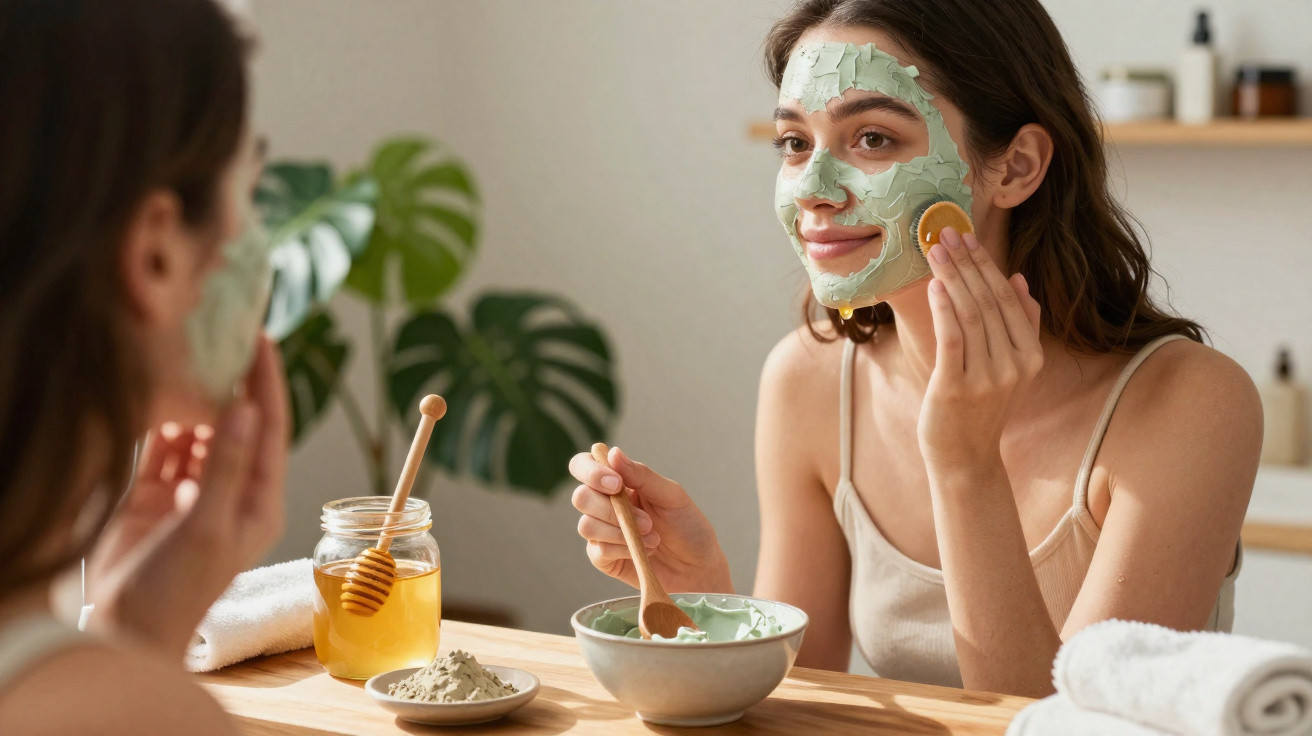
A clay and honey face mask has become a firm part of the skincare routine for people seeking to manage excess oil, cleanse gently and achieve a healthy glow without relying on complex formulas. When prepared properly, with a balanced consistency and a brief application time, it can enhance the feeling of clean skin and help maintain a well-rested appearance.
Which ingredients make a difference in the mixture?
A homemade recipe does not require lots of ingredients, but the quality of each one matters. The base generally combines cosmetic clay with pure honey, ideally without added fragrance or colourings. Filtered water, cold camomile tea or saline solution can be used to alter the consistency without making the paste too heavy on the face.
In practice, clay creates a layer that absorbs some surface oil, while honey provides a more comfortable texture and eases the tight feeling that can occur immediately after drying. For natural beauty, the best results come from balance rather than using too much product.
How can you prepare the homemade recipe with the right texture?
This homemade recipe works best when the mixture is creamy, easy to spread and does not run. A reliable starting ratio is one tablespoon of clay, one teaspoon of honey and a few drops of liquid, mixed until a smooth paste forms.
- Put the clay into a glass, ceramic or plastic container.
- Add the honey and stir with a non-metal spoon.
- Gradually add drops of filtered water until it reaches a creamy consistency.
- Apply it to a clean face, avoiding the eyes and lips.
- Leave it on for 8 to 10 minutes, without allowing it to harden completely.
This detail can make a considerable difference to the outcome. If the mask dries out too much, it may leave the skin feeling tight and uncomfortable, particularly on sensitive skin. The layer should remain slightly damp in certain areas, as the aim is to purify without disrupting the skin barrier.
Who should adapt clay and honey face mask use to their skin type?
Skincare needs differ greatly between oily, combination, dry and sensitive skin. A clay and honey face mask is usually more comfortable on combination and oily skin, provided it is left on only briefly. Dry skin, however, calls for less frequent use and a thinner layer, followed by moisturiser straight after rinsing.
Before the first application, it is worth looking out for a few simple signs to prevent irritation. In a facial routine, these points matter more than copying a viral mixture.
- Patch-test on a small area of the face or forearm.
- Stop using it if persistent stinging or pronounced redness occurs.
- Do not apply it to inflamed acne, wounds or skin made sensitive by acids.
- Apply sunscreen afterwards, as freshly cleansed skin may be more reactive.
Which mistakes make application less safe?
A clay and honey face mask loses its benefits when it is added to a routine without care. The most common mistake is adding lemon, bicarbonate of soda, alcohol or excessive essential oils in an attempt to “enhance” the recipe. This raises the risk of irritation, pigmentation marks and an impaired skin barrier, which goes against the very idea of natural beauty.
The source of the clay is another important consideration. Cosmetic products should come from trustworthy brands with clear labelling. A recent study of cosmetic clays found mercury in analysed samples, reinforcing the need to choose regulated products intended for facial use rather than clay of uncertain origin or products sold without suitable identification.
How can you keep skin looking healthy throughout the week?
A homemade recipe works best as a complement rather than the entire focus of a routine. Gentle cleansing, moisturising suited to the skin type and daily sun protection have a greater effect on visible results than any mask used on its own. The clay and honey face mask can be used once a week or every ten days, according to sensitivity, the weather and the skin’s response.
Consistent skincare provides greater stability in texture, radiance and comfort. When the mixture uses reliable cosmetic clay, pure honey, a short contact time and gentle rinsing, it fits well into a routine focused on purification, oil control and maintaining a healthy-looking complexion.



Comments
No comments yet. Be the first to comment!
Leave a Comment