
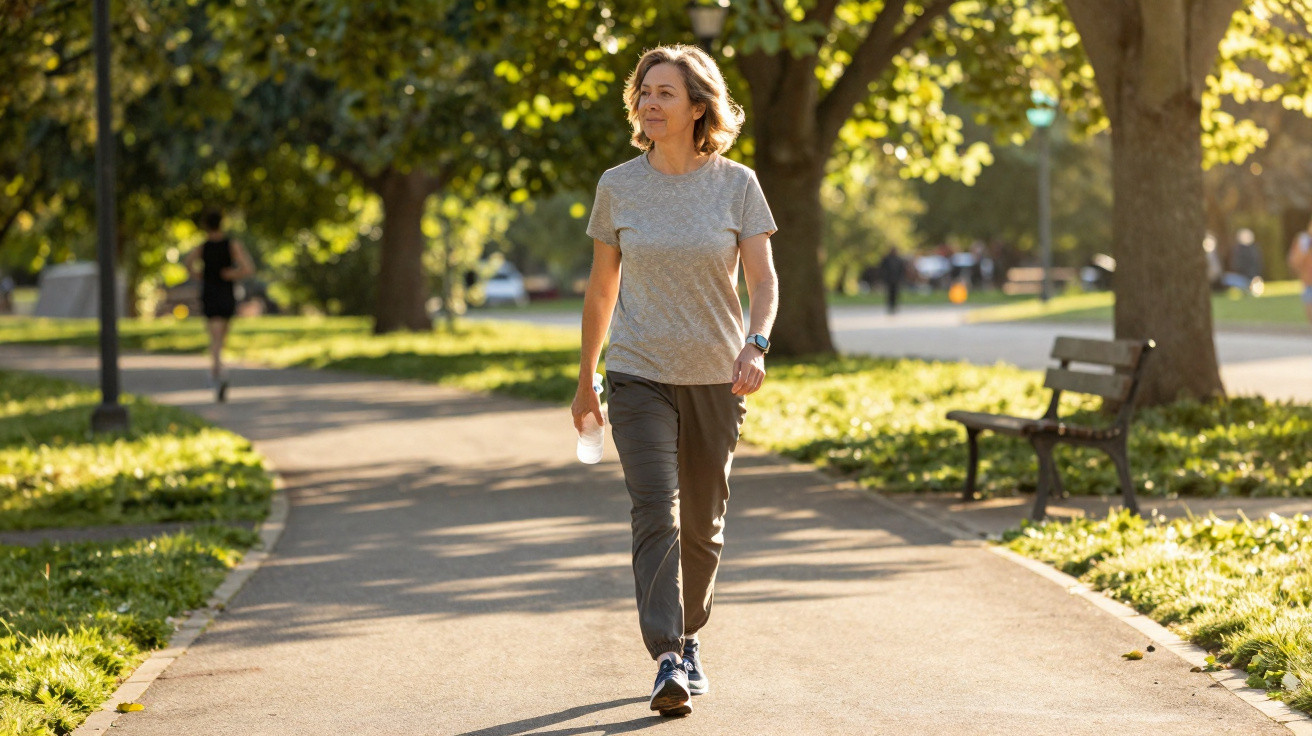
Walking for one hour every day at an easy pace can produce a substantial calorie burn over the course of a year. The figure of 75,000 calories illustrates how consistency and accumulated time can outweigh intense but occasional efforts.
How does daily walking reach 75,000 calories a year?
The calculation begins with a straightforward estimate: an hour of light-to-moderate walking may burn around 200 calories, although this varies according to body weight, speed, terrain and fitness level. Carried out for 365 days, this habit comes close to 73,000 to 75,000 calories.
This figure should not be regarded as an exact promise, as every body responds differently. Even so, it helps demonstrate the strength of a repeated habit, particularly when walking is done with regularity and safety.
The calculation is mainly affected by the following factors:
- Duration: one hour each day builds up a high annual volume of movement.
- Pace: an easy pace makes it simpler to continue the activity over time.
- Terrain: hills and varied routes naturally increase the effort required.
- Fitness level: the body adapts as the routine progresses.
- Estimate: calorie expenditure differs from one person to another.
Why can an easy pace work so well?
An easy pace lowers the barrier to getting started, as it does not require expensive equipment, complex technique or lengthy recovery. It allows someone to talk, breathe more comfortably and maintain the habit without turning exercise into suffering or pressure.
This level of intensity also supports consistency, which is the most important part of the annual calculation. Very demanding walks may cause fatigue quickly and lead more people to stop, whereas a comfortable pace fits more easily into everyday life and preserves energy for the day.
What benefits go beyond calories?
Daily walking should not be considered solely a way to burn calories. It can also improve circulation, support cardiovascular fitness, encourage better sleep, reduce time spent sitting and provide a mental break, bringing benefits to both body and mind.
Consistency changes the outcome
The benefit comes from accumulation, not haste.
A gentle walk repeated regularly can be more sustainable than intense training sessions that are later abandoned.
The ideal pace is one that can be maintained without pain, exhaustion or a sense of punishment.
As the weeks pass, the same walk will usually feel easier because the body learns the movement and becomes more efficient. This may improve motivation, confidence and the sense of physical ability without requiring excesses.
Among the effects most often sought are:
- A gradual improvement in breathing capacity and endurance.
- Less time spent sitting throughout the week.
- Greater regularity in sleep and the daily routine.
- Lower joint impact compared with running.
How can you start without making walking excessive?
Anyone who has been inactive does not need to begin immediately with one hour a day. The safest approach is to build up gradually, starting with 20 or 30 minutes, paying attention to the body's signals and respecting limits, pain and fatigue.
It is also important to wear comfortable footwear, select safe places to walk, stay hydrated and vary routes where possible. People with heart disease, persistent pain, dizziness or medical restrictions should seek professional advice before taking on a prolonged daily routine.
To make the habit sustainable, it is worth:
- Starting with less time and increasing it progressively.
- Keeping to a pace at which conversation remains possible.
- Stopping if there is severe pain, dizziness or intense shortness of breath.
- Choosing times with less heat and greater safety.
Why does consistency matter more than intensity?
The principle behind walking for one hour a day at an easy pace is to show the effect of accumulated volume. Small choices repeated over time create a greater impact than extreme efforts made without continuity or planning.
For that reason, the 75,000-calorie figure works best as an illustration of regularity rather than a strict demand. Walking should be a realistic, enjoyable habit that fits real life and supports health without becoming an obsession.





Comments
No comments yet. Be the first to comment!
Leave a Comment