
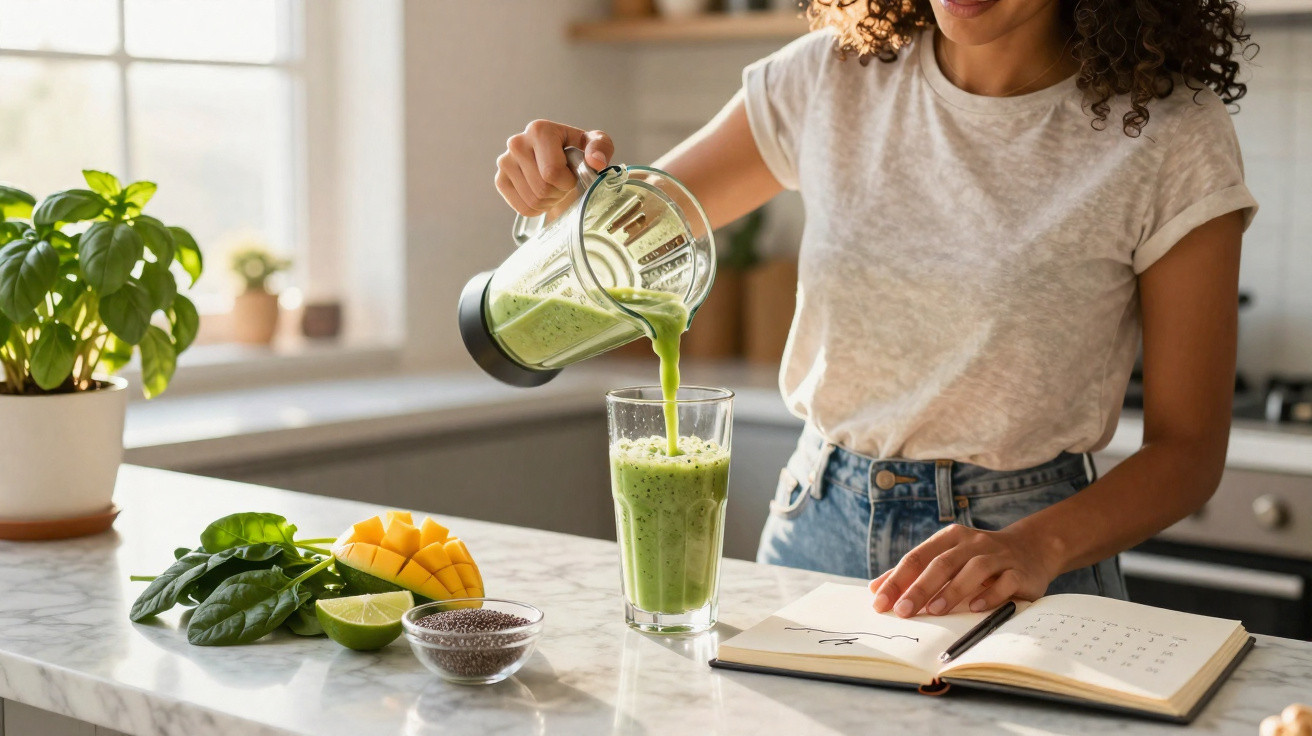
A low, impatient growl rises from the kitchen, as though reminding everyone that the day is already under way. In the dim light, a figure at the worktop throws in handfuls of spinach, an Instagram-unworthy overripe banana, a dash of oat milk and something green from a jar. Half a minute later, the drink shines in the glass like a traffic light on a wet street. She tastes it, pulls a face, then gives a slow nod. “It’s not bad, actually.”
A fortnight later, that same woman no longer adds sugar to her coffee. She strides a little more quickly towards the Underground. Her complexion looks less like the glow of a late-night screen and more like she has spent the weekend outdoors. She has not transformed her whole life. She has simply introduced one green smoothie a day. What comes next is the surprising part.
The green smoothie that quietly reshapes your day
Open TikTok at 7 a.m. and it is everywhere: the same thick green blend in transparent glasses, invariably placed beside a perfectly made bed or a yoga mat unrolled like a statement of intent. Green smoothies have become the unofficial symbol for people hoping to “do better” without retreating to a cabin in the countryside. Nutritionists are not dismissing it; they are in agreement.
The concept is straightforward: combine leafy greens, fruit, healthy fats and liquid in one quick drink. Keep doing it for 14 days, however, and its effects can feel far less straightforward. You are not merely consuming vitamins; you are altering your morning’s first choice, which can influence everything that comes afterwards.
In theory, it may sound like one more wellness craze. In practice, it is more like a small, repeatable success that builds momentum. This is why dietitians have a quiet affection for the trend: it requires some effort, rather than a completely new identity.
Speak to people who have tested it for a fortnight and a clear pattern emerges. A 34-year-old graphic designer in London began a “green smoothie reset” with colleagues, initially more as a joke than a serious programme. Their rule was one green smoothie on each weekday morning, with no other adjustments. There was no calorie counting, no forbidden foods and no pressure to be perfect.
By the fifth day, three of the group said they were reaching for fewer office biscuits. By day 10, one had replaced her usual second latte with water “because I just wasn’t crashing at 11 a.m. like before.” When the two weeks ended, all four described sleeping “a bit deeper” and waking “a bit less wrecked”. It was not magic, simply subtle changes that became difficult to ignore.
Findings from larger groups reflect the same experience. Small pilot studies examining increased fruit and vegetable consumption through smoothies show higher fibre, potassium and folate in blood markers. Participants commonly say they feel “lighter” and “more regular” – hardly poetic descriptions, but meaningful ones. When nutritionists unpack the reasons, the science is reassuringly solid.
The principle is almost painfully simple. A typical green smoothie using spinach or kale raises daily fibre intake without requiring you to chew your way through an enormous salad. Fibre helps stabilise blood sugar and slows digestion, meaning energy levels are less likely to surge and crash. Include a banana or berries and your body gets vitamin C and natural sweetness in place of a pastry.
A tablespoon of nut butter or chia seeds contributes healthy fats alongside a little protein. Together, they signal to your hunger hormones that they can settle down for several hours. Your brain loves that kind of stability. You are likely to feel less irritable with hunger and less mentally hazy, making it much easier to pass up the vending machine or a third espresso.
There is a psychological element too, one nutritionists discuss in appointments more often than they do in academic papers. Making something fresh, colourful and vaguely virtuous at the start of the day quietly communicates: today, I’m someone who takes care of themselves. From that point, selecting a marginally better lunch or turning in 20 minutes earlier can seem far less daunting. The smoothie may be small, but its effects can spread widely.
How to create a two-week green smoothie ritual that lasts
The effective version is not a fluorescent-green concoction containing 20 ingredients and carrying an eye-watering price tag. The recipe most likely to last is almost embarrassingly uncomplicated. Begin with one or two cups of leafy greens: choose spinach if you are new to it, or kale or romaine for a slightly sharper flavour. They blend more smoothly than you might expect.
For sweetness, add one fruit – banana, mango, apple, pear or a handful of frozen berries. Next comes a healthy fat: one tablespoon of peanut butter, almond butter, tahini, flaxseeds or chia seeds. Add a cup of water, coconut water or plant milk. Blend until the leaves have disappeared. Taste and alter it if needed. That is all; no superfood powder is necessary.
For the full two weeks, consistency matters more than perfection. On Sunday, make freezer bags containing your greens and fruit. Every morning, empty one bag into the blender, add the liquid and fat, and the job is complete in less than three minutes. Let’s be honest: nobody genuinely manages this daily without at least a little organisation behind the scenes.
Most unsuccessful green smoothie efforts fail in one of three familiar ways. The first is the “too green” catastrophe: adding celery, kale, parsley and spirulina on day one, then being surprised when it tastes like a lawn. Begin gently and allow your taste buds time to adapt. You can make it greener later; initially, the aim is simply a drink you do not dread.
The second is the sugar trap. Some people add juice, honey, sweetened yoghurt and three fruits, then question why they crash at 10 a.m. Natural sweetness has a place, but whole ingredients should remain central. One or two fruits will do. Your palate adjusts quickly, especially if you sip it slowly rather than downing it in three heroic gulps.
Third comes the “all or nothing” attitude. After missing a day, many people abandon the habit altogether, repeating the familiar complaint: “See? I can’t stick to anything.” A kinder and more realistic view is this: you had five green smoothies this week, whereas last week you had none. That is significant, even if the blender remained unused on Wednesday.
Nutritionist Maya L., who has supported hundreds of drained office workers, prefers to present the green smoothie as a modest daily anchor rather than a dieting device.
“What changes my clients,” she says, “isn’t a magical ingredient. It’s the feeling of starting the day by keeping one simple promise to themselves. The smoothie is just the easiest promise to keep.”
To make that commitment feel manageable, she recommends several basic rules:
- Never make yourself drink a smoothie you dislike – amend the recipe until it is at least neutral.
- Allow yourself two guilt-free “off” days every week.
- Have water rather than coffee alongside the smoothie for the first 20 minutes of the morning.
- For 14 days, monitor just one thing: energy, digestion, mood or cravings.
- Say small successes out loud, even if it is only “I blended something green before emails.”
On a difficult day, when the prospect of being “healthy” feels irritating and burdensome, these rules allow the ritual to feel more like a kind friend than an overbearing plan. On a better day, you may even anticipate that gentle growl of the blender.
A small habit that raises bigger questions
Continue with the green smoothie for two weeks and something unusual often occurs. You begin to notice not only your current state, but also how you felt beforehand. The afternoon dip that once appeared “normal” seems more severe once it starts to disappear. The bloating you had silently accepted becomes more obvious on the occasions when it is absent.
That fresh contrast may feel uncomfortable. It prompts a modest confrontation with reality: perhaps you were relying on caffeine and adrenaline more than you realised. Perhaps breakfast was not truly breakfast, but a sugar spike inside pastry packaging. The smoothie does not judge, but it can cast an odd green light over your routines.
Socially, it can become a talking point as well. Colleagues notice the jar on your desk, friends joke about you “turning into that person,” and before long you are exchanging recipes instead of only discussing poor sleep. This tiny community – whether online or in the office kitchen – quietly strengthens the routine. We are social creatures; drinking something together will always feel easier than doing it alone.
There is an emotional dimension as well. During a hard week, putting spinach and banana into a blender can feel like one of the few things within your control. In a good week, that added energy may lead you to walk home rather than take the bus, or cook one meal instead of ordering a takeaway. On a deeply human level, one glass may become evidence that change does not always demand drama or discomfort.
Some people will complete the 14 days before moving on. Others will retain the ritual for months, adapting the recipe according to the seasons and their mood. For many, what remains is the knowledge that their body responded to care, even amid a rushed life. That is not a trend; it is information you can carry forward.
| Key point | Detail | Benefit for the reader |
|---|---|---|
| Simple composition | Greens + fruit + healthy fat + liquid | A memorable recipe that is easy to adapt for everyday life |
| Effect in 14 days | More stable energy, fewer cravings, digestion that is often more regular | Quick results without completely transforming your lifestyle |
| Ritual, not diet | A morning action that acts as a psychological anchor | Less pressure and greater consistency over time |
FAQ:
- Can a green smoothie really change anything in just two weeks? For many people, yes. Increasing fibre, hydration and micronutrients every day often produces better energy, fewer cravings and more regular digestion within 10 to 14 days.
- Is it okay to replace breakfast with a green smoothie? It can be, provided you include sufficient calories, protein and healthy fats. If you are hungry again after one hour, add more nut butter, seeds or a spoonful of plain yoghurt.
- Do I need expensive powders or supplements in my smoothie? No. Leafy greens, fruit, seeds or nut butter and a simple liquid already provide a powerful nutritional boost. Powders are optional rather than essential.
- What if I hate the taste of greens? Begin with mild spinach, mask it with banana or mango, and use a creamy plant milk. You can gradually increase the greens as your taste adjusts.
- Can I prep my green smoothies in advance? Yes. Freeze portioned bags of greens and fruit, then blend them with liquid and fats in the morning. Blended smoothies will keep for 24 hours in the fridge, although they taste best freshly made.





Comments
No comments yet. Be the first to comment!
Leave a Comment