

A short routine in bed is said to get your stomach, back and energy levels moving in record time.
Many people would like to exercise more purposefully, yet lack of time, motivation or simply the trip to the gym gets in the way. That is where a new morning routine currently attracting huge attention online comes in: ten minutes of exercise directly in bed – with no mat, weights or workout clothes required. The premise is that simple, Pilates-style movements can stimulate the metabolism, shape the waist and relieve pressure on the back.
Why a bed workout can make sense
At first glance, it may seem too comfortable to be genuinely effective. Yet there is sound reasoning behind it, particularly because the soft, slightly yielding surface of an ordinary mattress has an important role to play.
“The unstable surface forces the body to activate small, deeper muscles that often barely engage on a hard floor.”
These include, above all:
- the deep abdominal muscles, especially the transverse abdominal muscle (transversus)
- the small stabilising muscles running alongside the spine
- the pelvic floor and gluteal muscles
These muscle groups keep the body upright in daily life, protect the spinal discs and influence the shape of the waist more than many people realise. Activating them regularly can improve posture, stop the abdomen from protruding as much “forwards” and noticeably reduce typical morning stiffness.
Reducing belly fat: more than appearance
Abdominal fat is not simply about bikini photographs. Beyond a certain level, the body increasingly stores what is known as visceral fat around the internal organs. This fat is linked to a higher risk of cardiovascular disease, diabetes and inflammatory processes in the body.
The bed routine will not solve this issue on its own – no single trick can. However, it addresses an important component: more everyday movement and improved muscle tension through the core. Waking up the muscles in the morning can support a more active metabolism and more stable posture for the rest of the day.
How the 10-minute routine in bed works
The session officially takes ten minutes and is divided into five sections. It can be done without previous experience, provided a few basic principles are followed: breathe calmly, avoid jerky movements and maintain abdominal tension.
Minutes 0 to 2: Breathing and a gentle wake-up
Lie on your back with your arms relaxed at your sides. For around one minute, breathe deeply in through your nose and out through your mouth. Your exhalation can be slightly longer than your inhalation. Then stretch as though you wanted to make yourself a few centimetres longer: bring your arms above your head, push your heels downwards and lengthen your spine.
These two minutes may seem insignificant, but they release tense muscle chains and signal to the nervous system: the day is beginning – without stress.
Minutes 2 to 4: The half shoulder bridge for glutes and back
Stay on your back and place both feet hip-width apart, with your knees bent. Tighten your abdomen and glutes, then slowly roll your pelvis upwards until your knees, pelvis and shoulders form roughly one line. Hold this position for five seconds before lowering yourself back down with control. Ten repetitions are a good target.
“The half shoulder bridge strengthens the glutes, lower back and backs of the thighs – precisely the areas affected by prolonged sitting.”
Minutes 4 to 6: Slow “cycling” in the air
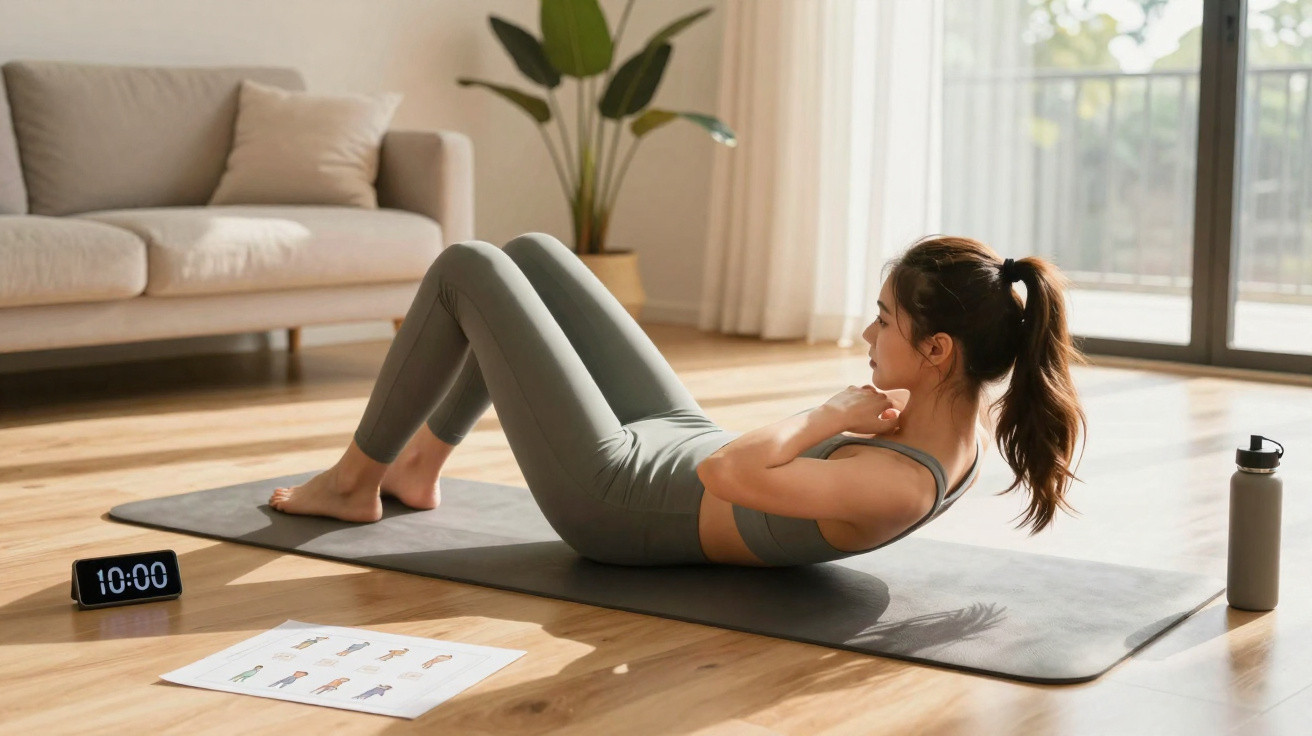
Remain on your back. Raise your legs as if you were sitting on an invisible bicycle. Keep your lower back firmly pressed into the mattress. Now make a slow pedalling movement for 30 seconds, take a brief break, then repeat for another 30 seconds.
This bed bicycle exercise mainly activates the rectus abdominis and oblique abdominal muscles. Anyone with neck problems should keep their head on the pillow and avoid pulling their upper body upwards.
Minutes 6 to 8: Cat movement on hands and knees
Come onto your hands and knees, as far as this is possible on the bed. As you breathe out, round your back and gently draw your navel inwards. As you breathe in, softly lower your abdomen, bringing your breastbone slightly forwards without allowing your lower back to sag.
- 10 to 12 slow repetitions
- Keep the movement flowing; do not force an exaggerated hollow back
The exercise mobilises the spine, releases tension and is ideal for morning stiffness or for those who spend a lot of time at a desk.
Minutes 8 to 10: “Stomach vacuum” for a flatter stomach
The final part is perhaps the most unusual: the “Stomach Vacuum”. Lie back down, either on your back or your side, whichever feels more comfortable. Exhale until your lungs are largely empty. Then pull your navel as far as possible towards your spine and, in effect, upwards beneath your ribcage. Hold the tension for around ten seconds, without anxiously holding your breath. Then relax. Three to five repetitions are enough.
“The Stomach Vacuum primarily trains the deep transverse abdominal muscle, which acts like an internal corset and visibly shapes the waist.”
How quickly results may become noticeable
Anyone who follows this routine every morning may often feel the first changes after only a few days: less pulling in the back, easier rising and a more stable feeling around the abdominal area. Visible changes to the waist take longer, usually at least two weeks and more often four to six.
It is important to set realistic expectations: the focus is on muscle tone and posture. Body fat itself will only disappear if the overall energy balance is also right, meaning diet and everyday movement need to play their part.
Breakfast as a boost: why protein helps
Many coaches recommend pairing the routine with a protein-rich breakfast. Classic options include scrambled eggs, boiled eggs, an omelette or quark with nuts. Protein helps to prevent blood sugar levels from going on such a rollercoaster ride and makes cravings for sweet foods later in the morning less likely.
- feeling full for longer
- less spontaneous snacking
- better support for maintaining and building muscle
Those who tolerate it in the morning can also choose natural yoghurt, cheese or plant-based alternatives with a high protein content. Combined with the bed routine, this creates a simple programme: activate the muscles, consume protein and make daily life a little more active – and the stomach benefits step by step.
Who bed exercises suit – and their limits
This approach is particularly aimed at people who otherwise struggle to get moving: office workers with little time, people who dislike exercise, older adults who feel uncomfortable in gyms, or women during and after the menopause. The strain on joints remains low because many movements are performed lying down and involve no jumping.
Even so, anyone with known back problems, slipped discs or cardiovascular conditions should first discuss suitable exercises with a doctor or physiotherapist. Warning signs include sharp pain, discomfort radiating into the leg or severe dizziness.
How to make the routine part of everyday life
Its greatest advantage is that the barrier to getting started is extremely low. There is no journey to an exercise space and no gym bag to pack. Simply set the alarm ten minutes earlier, ideally leave the phone alone at first, and begin the day with movement instead of scrolling.
Over time, the session can be adapted if desired: add a few repetitions to the half shoulder bridge, extend the holds during the Stomach Vacuum or include extra stretches for the hip flexors and chest muscles. A short walk during the morning also enhances the effect, as the circulation then becomes even more active.
Why deep muscle strength deserves so much attention
Many people focus on crunches or sit-ups when training their stomach. These exercises mainly work the superficial muscles and can strain the neck and back. The movements used in the bed workout focus more on the foundation: they teach the body to draw stability from its centre.
A well-trained transversus works like a natural belt. It keeps the organs closer to the body, takes pressure off the lumbar spine and can even make a bloated stomach look less pronounced, because the abdomen hangs less “forwards”. This is precisely what the combination of Stomach Vacuum, bed bicycle exercise and conscious breathing is designed to achieve.
Anyone who understands the principle can also incorporate similar exercises while sitting in an office chair or on the sofa: occasionally draw the navel gently inwards, hold briefly and release again – without holding your breath. Spread across the day, this creates a kind of “light ongoing workout” that reinforces the effects of the morning routine.


Comments
No comments yet. Be the first to comment!
Leave a Comment