

The reason runs deeper than you might think.
When people look in the mirror, they rarely take in their whole body; instead, they tend to focus on one perceived “problem area”. For some, it is the hips, for others the upper arms – but for most, it is the stomach. Fitness myths promise quick fixes through particular exercises or foods supposedly aimed directly at belly fat. Science, however, shows that the body does not work that way.
The big misconception: spot fat loss does not exist
The wish is understandable: lose weight only around the stomach while leaving everything else unchanged. From a medical perspective, though, this remains wishful thinking. Spot fat loss – deliberately losing fat from only one specific area – has been disproven.
“No workout in the world and no ‘fat-burner’ snack can dictate where your body releases fat.”
Fat deposits are made up of fat cells, known as adipocytes, which store energy. Whether these cells are located around the stomach, bottom or thighs depends largely on three factors:
- Genetics: Some people are more likely to store fat around their stomach, while others store it around their hips and thighs.
- Hormones: Insulin, cortisol, oestrogen and testosterone affect where the body builds up reserves.
- Sex: A typically “male” pattern mainly involves the stomach, whereas a typically “female” pattern tends to affect the hips, bottom and thighs.
Whether you gain weight is determined primarily by an energy surplus: if you consume more calories than you burn, you gain weight – regardless of whether those calories come from pasta, crisps or organic nuts. You cannot personally decide where your body stores that surplus.
No food turns exclusively into belly fat
One widespread myth claims that certain foods “go straight to the stomach”. Experts disagree. No food automatically ends up as belly fat. The body processes carbohydrates, fats and proteins through complex metabolic pathways. Ultimately, the energy surplus matters, rather than the individual food.
Even so, some products have a poor reputation – often not entirely without reason, but for different reasons:
- Calorie-dense foods: Fatty snacks, alcohol and sugary drinks provide a large number of calories in a short time.
- Low satiety: White flour products, sweets and highly processed foods can leave you feeling hungry again quickly.
- “Liquid calories”: Fizzy drinks, juices and energy drinks barely fill your stomach but can provide plenty of energy.
“It is not the ‘bad food’ that causes a stomach; it is the total number of calories that consistently exceeds your needs.”
That said, strict lists of forbidden foods are rarely useful. Denying yourself everything can lead to frustration, cravings and binge eating. What works sustainably is, above all, an eating pattern that can realistically fit into daily life – enjoyable, but structured.
Why abdominal training does not “burn off” belly fat
Crunches, sit-ups and planks are not pointless; they are simply often misunderstood when it comes to losing stomach fat. These exercises strengthen the core muscles and can improve posture and stability. They do not, however, automatically burn the fat lying directly above those muscles.
“Abdominal exercises shape muscles – they are not an eraser for the fat covering them.”
What actually happens during training:
- The muscles beneath the fat become stronger and may become more visible when overall body-fat percentage falls.
- Energy expenditure rises only moderately, far less than is often assumed.
- When you are in a calorie deficit, your body decides for itself where it releases fat.
For a leaner silhouette, a combination of full-body strength training and moderate endurance exercise is more effective. Greater muscle mass raises your basal metabolic rate, meaning the energy your body requires at rest.
What really works: a calorie deficit, approached sensibly
Anyone wanting to reduce body fat cannot avoid one principle: a calorie deficit. This means that across the day, the body burns more energy than it receives from food and drinks. The missing energy is supplied from reserves – including fat stores.
| Component | Role in reducing belly fat |
|---|---|
| Calorie deficit | The basic requirement for the body to draw on fat reserves. |
| Protein | Protects muscles, is filling and makes it easier to stay on track. |
| Fibre | Promotes lasting fullness and stable blood sugar. |
| Strength training | Maintains or increases muscle mass and raises basal metabolic rate. |
| Sleep & stress management | Influence hunger hormones, cravings and fat storage. |
A deficit can be created in two ways:
- Directly: Track calories and set a target deficit (e.g. 300–500 kcal below your needs).
- Indirectly: Change eating habits, include more filling foods, cut down on unconscious snacking and move more in everyday life.
A practical everyday strategy against belly fat
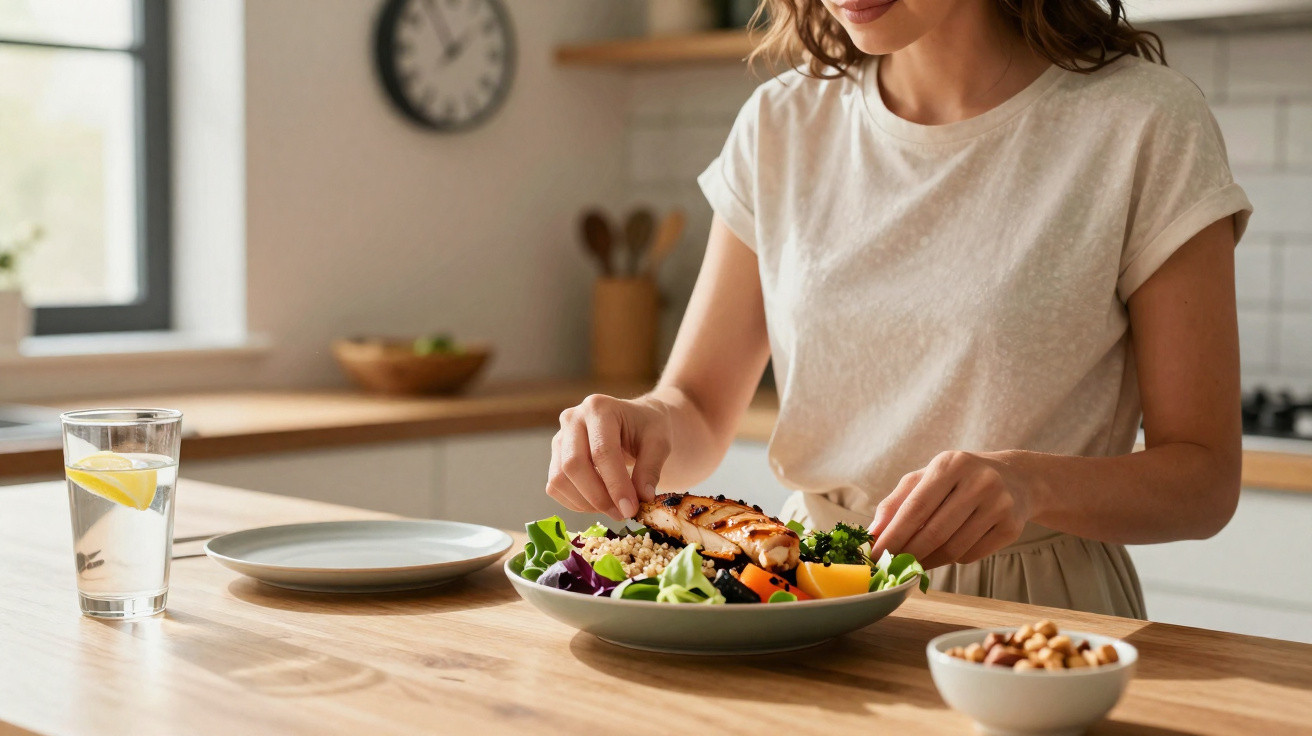
More filling foods, fewer empty calories
Rather than looking for “miracle cures”, it is worth focusing on patterns:
- Plenty of vegetables and wholegrains: These provide fibre and keep you full for longer.
- Enough protein: For example, from fish, eggs, pulses, quark or tofu.
- Reduce highly processed snacks: Treat crisps, chocolate bars and ready meals as occasional choices rather than staples.
- Drink your drinks rather than eat them: Choose water and unsweetened tea instead of excessive soft drinks and juice spritzers.
This often creates a moderate deficit automatically, without having to count every calorie or feeling as though you are constantly going without.
Train with purpose – not just your stomach
A sensible weekly plan does not need to be complicated. One possible framework is:
- 2–3 strength-training sessions (full body, including the core)
- 2–3 endurance sessions (for example brisk walking, jogging, cycling or swimming)
- Everyday movement every day (stairs, walking short journeys, brief stretching breaks)
“What matters is not the ‘perfect’ programme, but what you genuinely stick to month after month.”
Abdominal exercises can certainly be included – as an addition, not as the only weapon against fat stores.
Stress, sleep and hormones: frequently overlooked factors
Belly fat in particular can be sensitive to stress and lack of sleep. Cortisol, a hormone that rises during ongoing stress, encourages fat storage in the abdominal area. People who are constantly under pressure and sleep poorly are also more likely to experience cravings, especially for sweet and fatty foods.
Useful adjustments include:
- a clear sleep routine with as consistent a schedule as possible
- evening rituals without phones, social media or work emails
- stress outlets such as walking, exercise, breathing exercises or short breaks during the day
Hormonal changes – for example during the menopause or as a result of certain health conditions – can also shift fat distribution towards the stomach. In these cases, medical assessment is more helpful than struggling with diets alone.
The risks of an overly severe calorie deficit
Cutting calories too aggressively often comes at a cost. Typical consequences of an excessive deficit include:
- persistent tiredness and difficulty concentrating
- muscle loss rather than fat reduction
- nutrient deficiencies, hair loss and brittle nails
- increased pressure to eat, potentially leading to eating disorders
The rule, therefore, is to aim for moderation and consistency. Many professionals advise seeking support from doctors specialising in nutrition, dietitians or sport and nutrition coaches when making more substantial weight changes.
Why looking beyond your stomach can ultimately change it
Focusing solely on your stomach can quickly become frustrating: your jeans still feel tight even though the scales show a loss. Yet the body does not change according to a wish list. Sometimes the face becomes slimmer first, then the legs, and only later the stomach.
“People who focus on healthy routines often see a flatter stomach as a side effect – not as the first visible success.”
A realistic approach is therefore to strengthen the entire body, improve your diet in a structured way, lower stress levels and learn patience. Over time, this creates changes visible not only in the mirror, but also in blood results, physical performance and wellbeing.
In the end, a clear-eyed view of the facts replaces every myth: no individual food creates a stomach, and no individual workout removes it. The decisive factor is the complete package – and the willingness to shift habits permanently in a direction that is sustainable in everyday life.




Comments
No comments yet. Be the first to comment!
Leave a Comment