
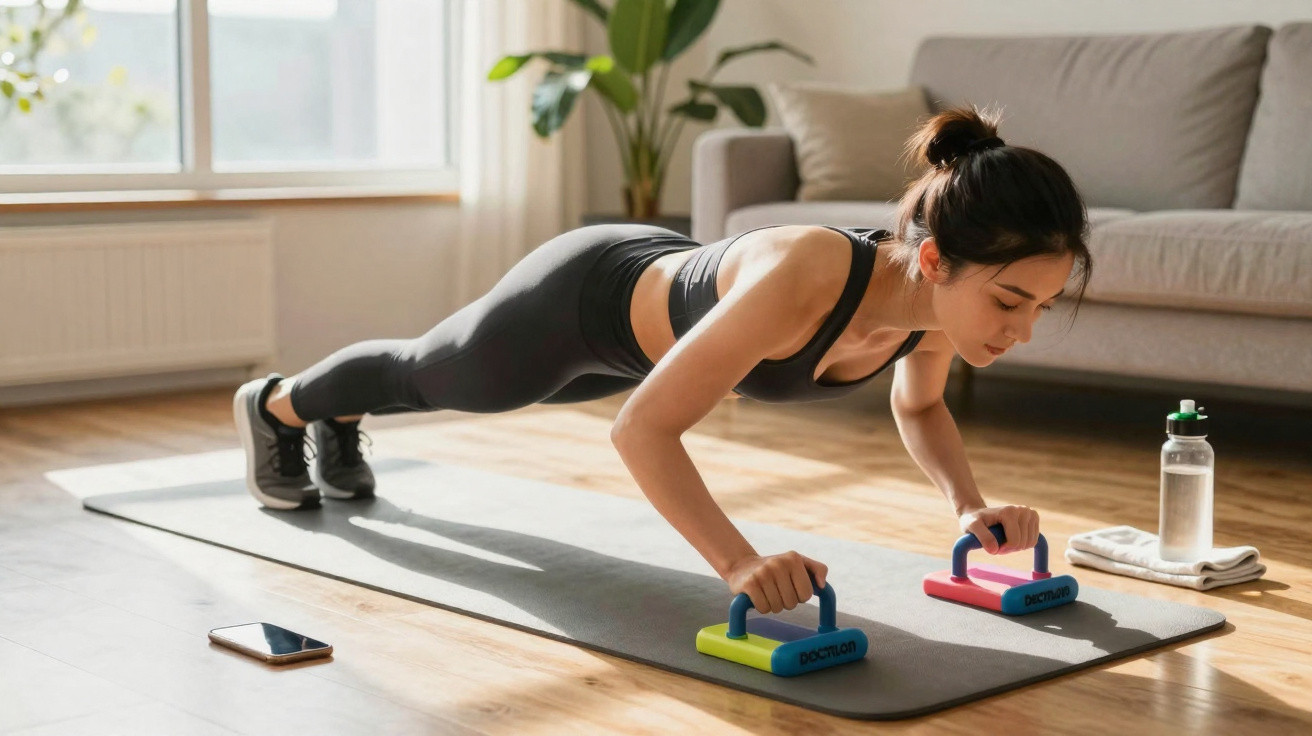
A simple training aid for the home could be exactly what is needed.
Anyone who does not want to travel to the gym after a long day at work is increasingly turning to smart home equipment. Decathlon offers a device that brings together press-ups, planks and abdominal exercises on one sturdy platform, complete with a digital counter for every repetition. The aim is to make training more targeted, motivating and noticeably more effective, particularly when tackling stubborn belly fat.
What the Decathlon push-up and abs board is all about
At its centre is the HMS DBP03 multifunctional push-up board, marketed exclusively through retailers such as Decathlon. This compact piece of equipment combines three functions:
- a stable board surface for planks and abdominal exercises
- adjustable press-up handles with a colour-guidance system
- an integrated counter with an optical sensor
The concept is straightforward: rather than wobbling on the floor, you exercise on a solid board designed specifically for upper-body and core loading. The handles slot into colour-coded openings, guiding hand placement according to the muscle group you want to target.
“The DBP03 is designed to cover a complete upper-body workout – from the chest muscles to the deep abdominal muscles, without a gym membership.”
The digital counter uses an optical sensor to register every correctly performed downward movement. Each repetition appears immediately on the display. It may sound simple, but in practice it makes a substantial difference: there is no need to count in your head, progress is clearly visible, and you can improve from one session to the next.
How the device can help reduce belly fat
Belly fat is considered particularly persistent, especially when everyday life involves mostly sitting down. A device alone cannot solve that problem, but the DBP03 supports several factors that are important for a flatter stomach:
- higher basal metabolic rate: regular strength training increases calorie use, including during rest periods
- a more stable core: stronger core muscles take pressure off the back and improve posture
- more frequent training: because the board is at home, excuses are less likely
- manageable intensity: different handle positions and plank variations allow the workout to suit every ability level
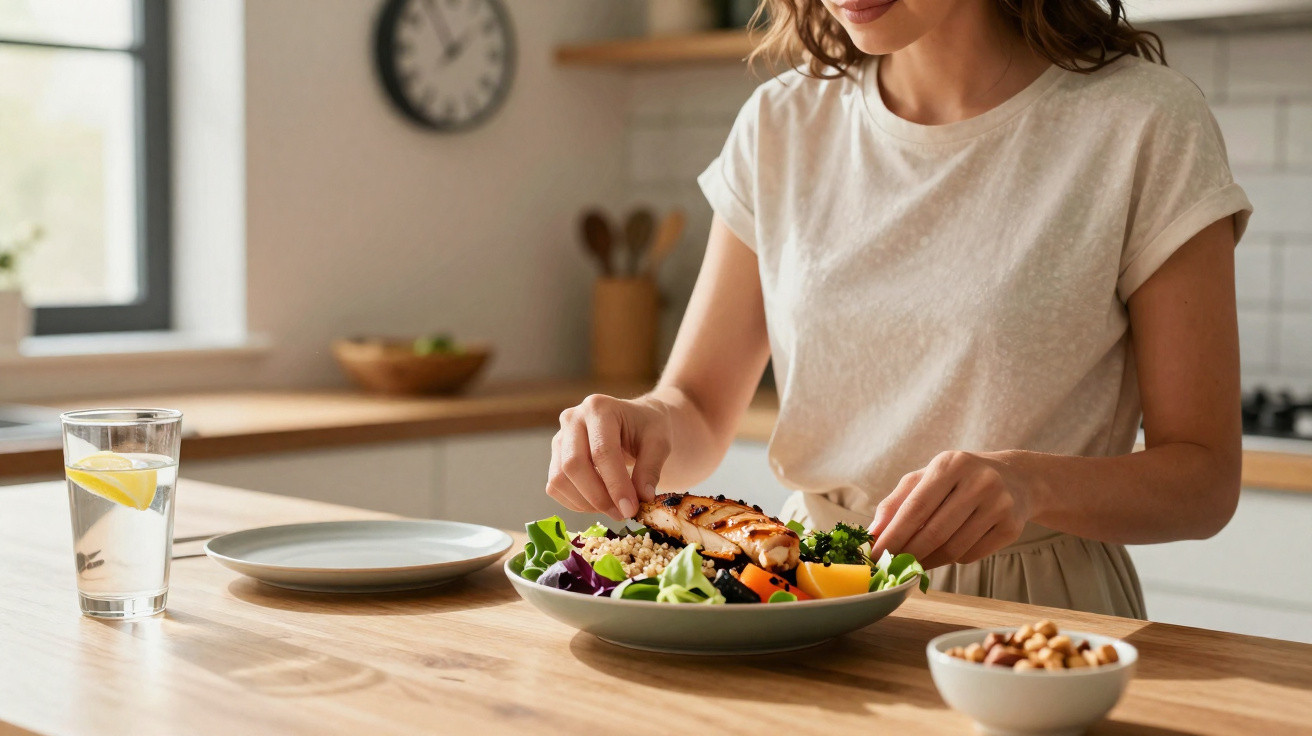
Fat never disappears precisely from one area alone. However, regularly working large upper-body muscle groups raises total energy expenditure. Combined with a reasonably balanced diet, this can also reduce waist circumference.
Train the whole upper body: how the colour-guidance system works
One feature makes the board especially practical for everyday use: the handle openings are colour-coded, with each colour representing a target muscle group. Rather than studying lengthy training plans, you simply move the handles according to the colour.
Typical handle positions on the board
| Colour / zone | Main muscle group | Training effect |
|---|---|---|
| Chest area | Chest muscles | Stronger upper body, a broader-looking chest |
| Shoulder zone | Front and side shoulders | More stable shoulders, improved posture |
| Triceps area | Back of the upper arms | More defined arms, less “bingo wing” appearance |
| Back zone | Upper back, rear shoulders | A balance to desk posture, less tension |
Different stimuli are created depending on whether the grip is narrow or wide. Beginners will generally start with a position around shoulder width and, if necessary, keep their knees on the floor for support. More experienced users can alternate between narrow, wide and slightly offset grips to challenge the upper body as much as possible.
How to use the DBP03 for abs and core training
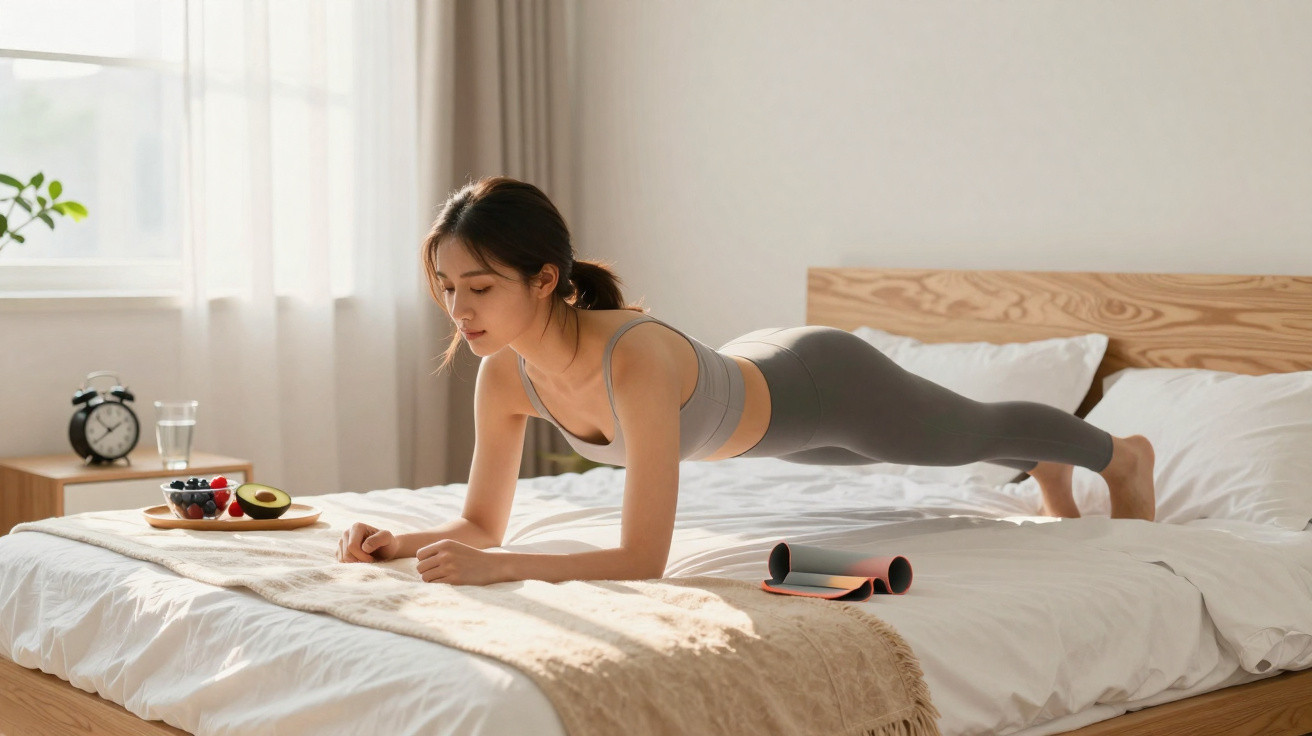
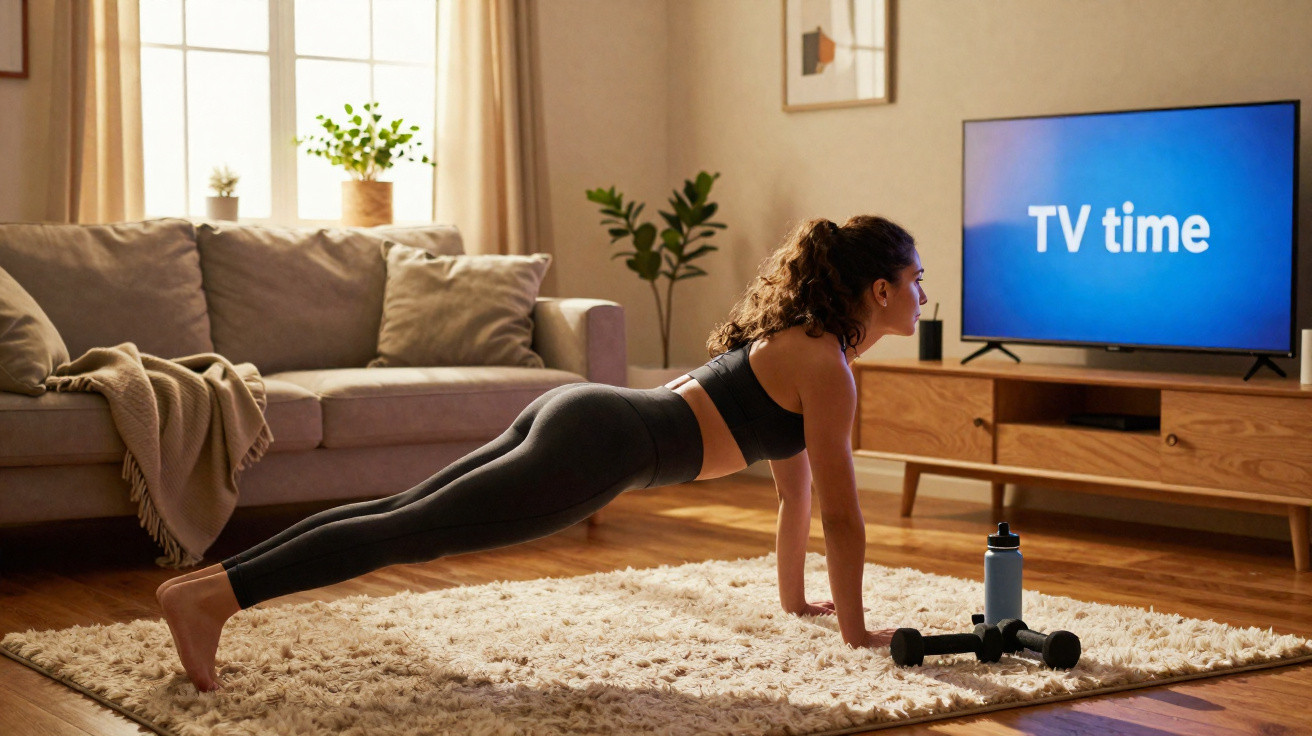
Alongside standard press-ups, the board is designed mainly for planks: static holds in which the entire body is suspended in one straight line. This is where the benefit of the firm board is most apparent. It reduces slipping, the handles relieve some pressure on the wrists, and the back generally remains more stable.
Exercise examples using the board
- classic plank: place your forearms on the board surface, extend your legs, actively tighten your abs and hold for 20–40 seconds
- high-low plank: from a forearm plank, press up onto your hands one at a time, then lower yourself back down
- side plank: support yourself on one forearm, lift the hips and engage the side abdominal muscles
- plank with shoulder taps: from a high plank, tap the left shoulder with the right hand, then alternate
Combining the board with classic press-ups works the upper body and core in a single session. Training two to three times per week is enough to notice initial changes in body tension and posture.
“Regular planks on a stable surface are a real gamechanger for the core – just a few minutes a day are enough.”
Who the Decathlon board is genuinely worthwhile for
The DBP03 is aimed both at strength-training newcomers and at people with existing sporting experience who want a compact addition for home use. Typical user groups include:
- office workers: quick 10-minute home-working sessions to strengthen the back and abs
- parents: training between childcare and household tasks, without travelling to a gym
- recreational athletes: a supplement to running, cycling or team sports so the upper body is not neglected
- beginners returning after a longer break: a gradual restart at lower intensity, for example with knees supported
A clear advantage is that the board is relatively flat and can be stored under a bed, behind a door or beside a desk. For anyone with limited space at home, it provides a capable upper-body training tool without placing half a weights bench in the living room.
Where this small fitness tool has its limits
Despite its benefits, the board does not replace a complete full-body workout. Legs and glutes are only worked indirectly, as the focus is clearly on the upper body and core. A well-rounded programme should still include exercises such as squats and lunges, or at least brisk walking and climbing stairs.
In addition, anyone who already has discomfort in their wrists, shoulders or lower back should speak to a doctor or physiotherapist before starting. Although the handles provide some relief, poor technique can make problems worse. A quick check in the mirror or a video of your own workout can help prevent an overly arched lower back and drooping shoulders.
Tips for making real progress with the DBP03
To prevent the device from ending up in a cupboard after two weeks like so many home trainers, a few simple strategies can help:
- set fixed times: choose two or three set days each week and block them out in the calendar
- keep goals small: it is better to begin with 3 sets of 5–8 repetitions than to overdo it
- use a progression plan: every one to two weeks, slightly increase either repetitions or holding time
- link it to a routine: for example, do a short plank set every evening after brushing your teeth
Competing against yourself can also be motivating: if you photograph the counter readings after every session, you can see very clearly what has changed after four to six weeks. That is usually more motivating than the number on the scales.
Price, perspective and useful combinations
At its current price point, the multifunctional board costs around €54. Compared with an annual gym subscription or monthly membership at a gym chain, that is modest. In return, you get a robust device that improves and adds structure to several classic exercises.
It is particularly useful when paired with straightforward basics: an exercise mat, a small resistance band for leg exercises and perhaps a skipping rope for some cardio. Together, this mini set covers considerably more than many expensive multi-gym machines that ultimately serve only as clothes horses.
Anyone who recognises that losing belly fat always requires a mix of diet, everyday movement and focused strength training can make the DBP03 an important part of the process. The rest depends on routine, patience and a few consistent choices in the kitchen and supermarket.
Comments
No comments yet. Be the first to comment!
Leave a Comment