
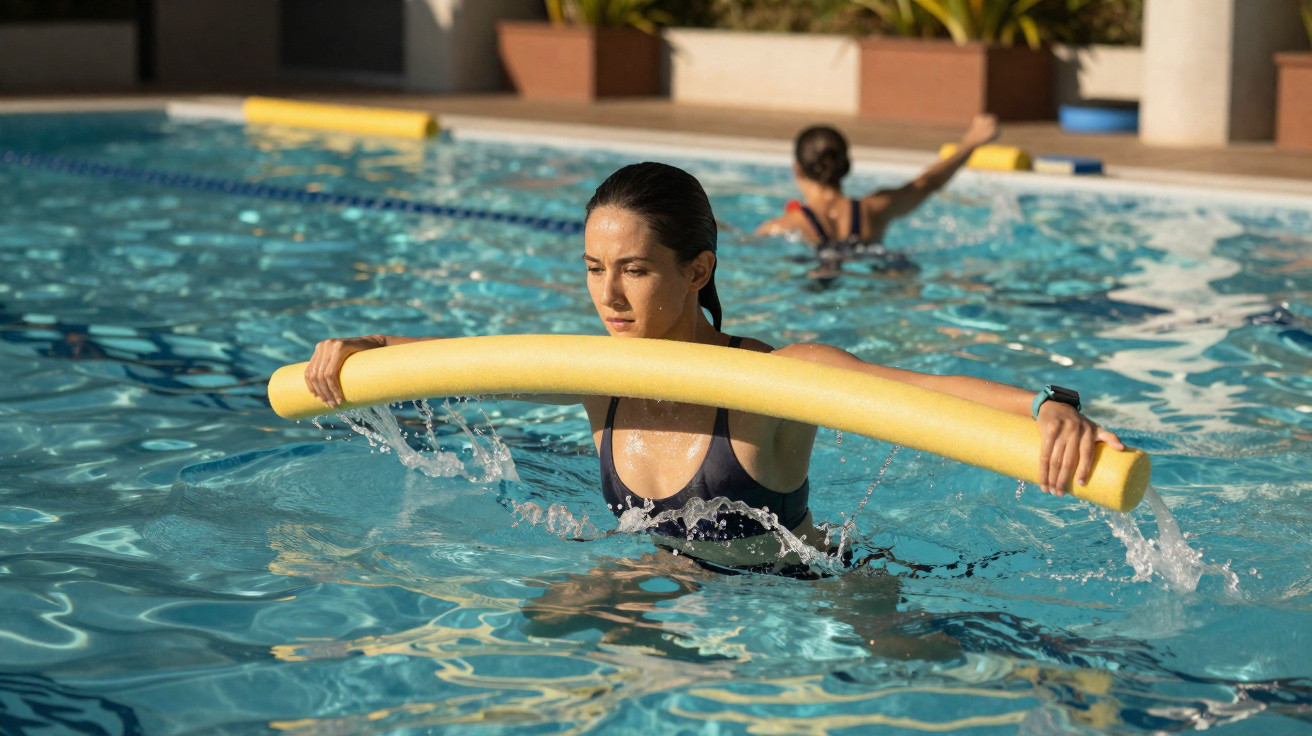
Water-based exercise has become increasingly popular with people who want to tone their abdomen while placing less strain on their joints. The water’s natural resistance, combined with the constant need for balance, makes a swimming pool a favourable setting for engaging the core and burning energy continuously. Sessions can also be adapted to suit different fitness levels.
Do water exercises for abdominal fat really work?
As the body moves through water, resistance is created in every direction, so continuous effort is needed without external weights. This raises energy expenditure while the abdomen works to keep the torso stable, particularly during kicking, arm strokes and changes of direction.
Water also lessens the impact on the knees, hips and spine, making longer sessions possible with less overload. For anyone aiming to reduce abdominal fat, combining aerobic effort with core strengthening in the pool is an effective and more comfortable approach for the body.
Which water exercises activate the abdomen most?
Certain movements are particularly useful for working the abdomen, lower back, glutes and deep stabilising muscles, combining postural control with calorie burning. Their intensity can be adapted, making the workout suitable for beginners while remaining challenging for advanced participants.
Among the exercises most often used in pool-based core training are:
- Kicks with a kickboard: keep the body horizontal, hold the board in front and kick continuously, engaging the abdomen to prevent the hips from sinking.
- Water “V” pike: in the deep end, create a “V” shape with the torso and legs, requiring strong abdominal control and balance.
- Side bends (tick-tock): standing in shallow water, alternately tilt the torso from side to side to work the obliques and waist.
- Alternating kicks while holding the pool edge: place the hands on the edge or a float, extend the body and kick quickly, with a cardiovascular focus.
- Dolphin kick: use a wave-like movement from the chest to the feet, controlled by the core and breathing control.
- Swimming with a float between the legs or a resistance band: move only the arms while the abdomen stabilises the torso without help from the legs.
How can you build an effective water workout for the core?
A well-planned session alternates strengthening exercises with more aerobic periods of swimming or continuous kicking. This keeps the body moving for 20 to 40 minutes, while taking fitness level and professional guidance into account when available.
A straightforward format may include a gentle warm-up, three or four abdominal-focused exercises with controlled repetitions, short active intervals, and water-based stretches to finish. Attention to technique is essential: if alignment is lost or another area begins to compensate, the intensity or duration should be adjusted.
Benefits of water exercises for the abdomen and posture
Regular water activities that target the body’s central region strengthen the abdomen and lower back, improve stability and support better alignment in everyday posture. This can make simple activities, such as walking, climbing stairs or carrying weight, less uncomfortable.
Another advantage is that the water environment can make it easier for people who are overweight or have a history of joint pain to maintain an active routine without excessive impact. Alongside healthy habits and a balanced diet, pool training becomes a reliable ally in managing abdominal fat and supporting overall health.


Comments
No comments yet. Be the first to comment!
Leave a Comment