
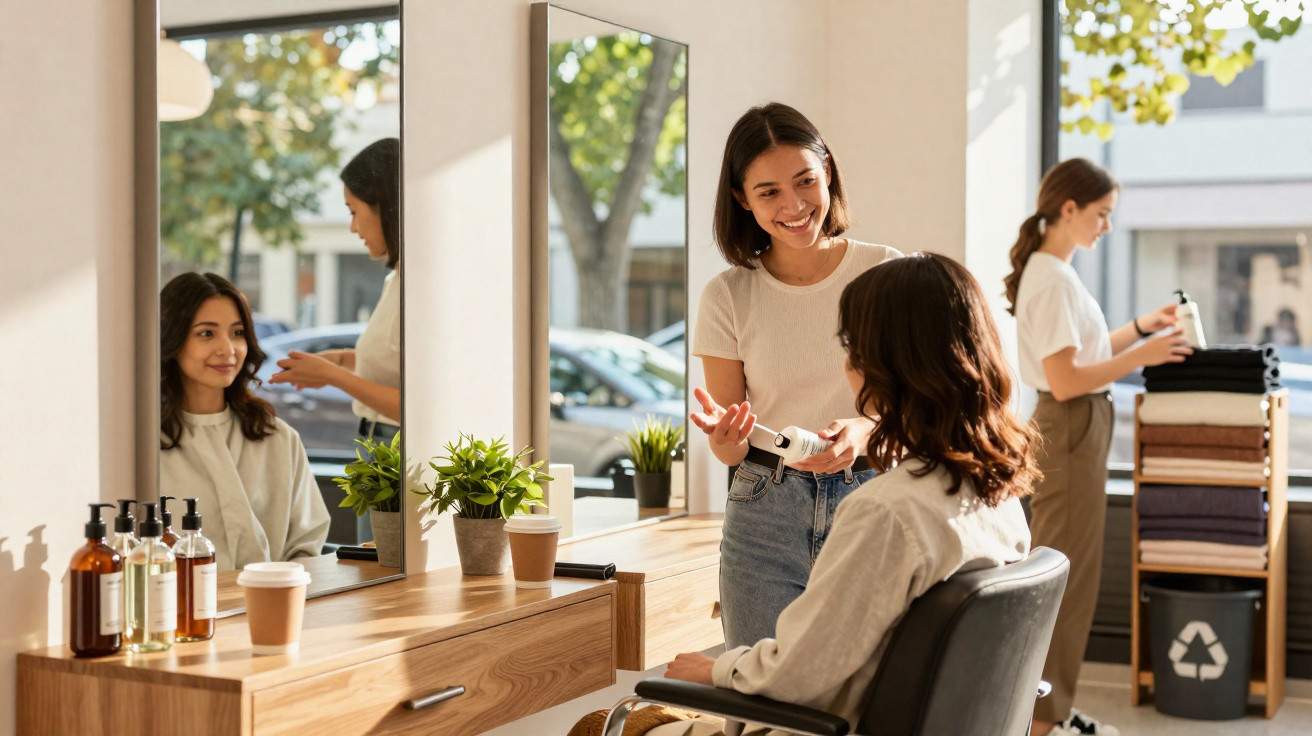
Could an ordinary haircut benefit the planet? New research indicates that the answer may be found in the everyday exchanges taking place in hair salons.
Researchers have found that hairdressers may shape the way people view climate change and sustainability. Warm conversations during an appointment could prompt people to make small, environmentally beneficial changes to their day-to-day lives.
A research group from the University of Bath Centre for Climate Change and Social Transformations (CAST), working with other universities, investigated this unexpected possibility.
Their results suggest that hair salons offer more than beauty treatments. They can also serve as trusted community spaces where important conversations about climate change can start.
How salons build trust
Hair salons foster a distinctive connection between hairdressers and their clients.
Many clients return to the same salon for years, often discussing personal matters openly while having their hair cut or styled. This deep trust means salons can provide an easy, reassuring setting for fresh ideas and conversations.
“Hairdressers build trust over months and years. That kind of relationship is gold when it comes to discussing climate change. We found salons to be unique spaces where clients feel safe, relaxed, and open to new ideas,” said Dr. Sam Hampton.
In this comfortable setting, discussions about ordinary routines can arise naturally. A conversation about hair care may lead into one about water usage, energy consumption or environmentally friendly products.
Studying salon conversations
To examine the role salons can play, the researchers interviewed 30 salon owners and directors.
Those interviews enabled the team to establish how frequently hairdressers talk to clients about environmental issues and what prompts these discussions.
The team also trialled an inventive approach in 25 sustainable salons around the United Kingdom. They put small notices, known as “Mirror Talkers”, onto salon mirrors.
The notices featured straightforward eco tips connected with hair care. Their wording was intended to encourage hairdressers and clients alike to begin talking about sustainability.
This minor intervention produced unexpected outcomes. Many clients started reflecting on their own choices in routine activities, including washing their hair and selecting personal-care products.
Hair habits affect the planet
Professor Denise Baden of the University of Southampton said people often have the wrong idea about what makes a product environmentally friendly.
While packaging can appear recyclable or eco-friendly, an item’s greatest environmental impact may sometimes result from its everyday use.
“Most of us think a ‘green’ product is one with recyclable packaging, but the carbon footprint of shampoo is mostly in the hot water used, so simple messages such as ‘most of us use too much shampoo and shampoo too often’ can prompt conversations about how shampooing less and at lower temperatures saves time, money, energy, water and is better for your skin and hair condition,” noted Professor Baden.
Everyday conversations inspire change
The study found that sustainability conversations already occur naturally in numerous salons. Discussions about hair care can often expand into topics including plastic consumption, food decisions, transport and household energy use.
The Mirror Talkers trial also delivered clear findings. Around 73 percent of salon clients said that salon conversations had made them think about altering their hair-care routines.
Some clients began using eco-friendly products, cut their use of hot water or took up other environmentally friendly practices.
The researchers referred to hairdressers as “everyday influencers.” Rather than being social-media celebrities, hairdressers develop genuine relationships with people in their local communities. This ongoing contact allows them to encourage change through uncomplicated conversations.
Salons share eco values
Certain salons already place sustainability at the centre of their work. B Hairdressing in Bath is one such example. It uses vegan and ethical products and promotes conversations about environmentally friendly ways of living.
Harriet Barber of B Hairdressing outlined the salon’s philosophy.
“We believe beauty should never cost the earth – our salon is proudly vegan, eco-friendly, and stocked with ethical products,” she said.
“Clients come to us for more than great hair; they connect with our values and the conversations we have around sustainability, green living, and even growing your own veg – it’s more than a salon, it’s a like-minded community.”
These salons demonstrate how beauty services and environmental awareness can be brought together by businesses.
Hairdressers can influence climate
Dr. Briony Latter from Cardiff University said society frequently fails to recognise the influence held by everyday professionals. When influence is discussed, public attention generally turns to celebrities and other high-profile people.
Yet people trusted in everyday life may at times make a greater difference. “We’re used to thinking of people in the public eye, such as celebrities, as influencers,” said Dr. Latter.
“But what about the people you actually talk to on a regular basis who know you and who you trust with your appearance and sometimes more personal aspects of your life? Hairdressers have an untapped ability to weave climate change into everyday conversations and actions.”
The concept underlines the impact that simple talks can have in familiar environments.
Hairdressers support climate action
There are more than 61,000 hair and beauty businesses in the United Kingdom, contributing around £5.1 billion to the economy. Researchers consider this extensive network could have an important part to play in raising climate awareness.
The study proposes adding sustainability training to hairdressing courses and apprenticeships. Nationwide initiatives, including Mirror Talkers, could likewise stimulate more conversations about eco-friendly habits.
“If we’re serious about building a public movement for climate action, then it’s time to invest in these unsung influencers because real change starts in everyday conversations, not just in Westminster,” said Dr. Hampton.





Comments
No comments yet. Be the first to comment!
Leave a Comment