
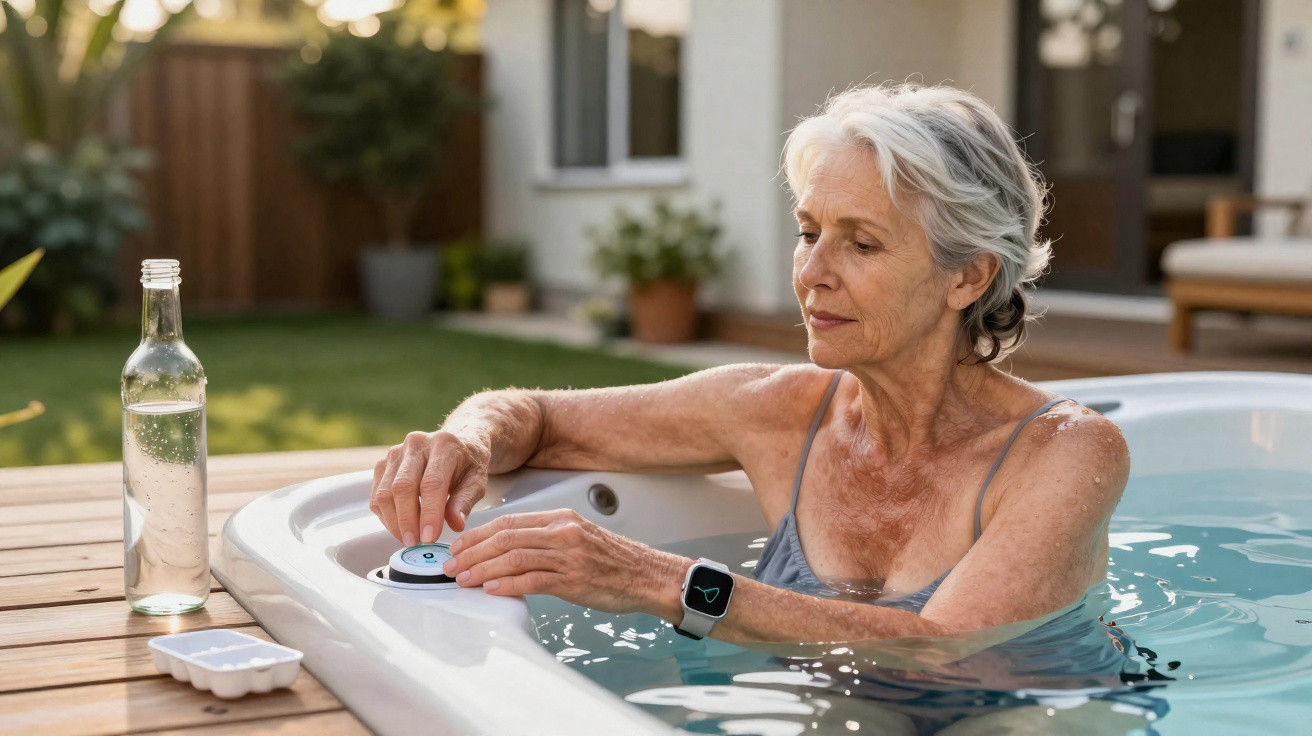
On a cold Sunday evening towards the end of autumn, Marie, 72, tested the gleaming new hot tub on her terrace with one toe. Steam rose into the night, the control panel showed 40°C (104°F), and her grandchildren applauded as they encouraged her to get in. For a moment, she paused: her heart had been beating a little fast, her medication was waiting on the kitchen counter, and the salesman had assured her that “you’ll feel 20 years younger in here.” She eased herself into the water and felt the heat settle over her like a weighty blanket. Within ten minutes, she was light-headed. Even the stars overhead seemed slightly out of focus.
She found herself asking whether “relaxation” was really meant to feel like this.
Something about the experience felt wrong.
Why 40°C (104°F) is more than a number after 70
For someone aged 30, a hot tub set to 40°C (104°F) may feel like an indulgence after a demanding week. At 70, however, the same temperature can have very different effects. Ageing changes the way blood vessels, the heart and the nervous system respond to heat. What was once a harmless treat may become a physical stress test.
As the body attempts to cool down, blood pressure may fall and the heart can begin to beat faster. These processes are invisible; you may simply notice dizziness or unusual tiredness. That is where the danger can lie.
The message repeatedly emphasised by specialists is straightforward: water hotter than 40°C (104°F) increases these risks.
In the United States, a number of consumer-safety bodies have warned about excessively hot spa water, particularly for older people. They refer to incidents of people fainting, falling as they leave the tub, and even developing heart-related complications after extended exposure to very hot water. These are not sensational stories or viral headlines, but quiet events that rarely reach the news.
One cardiologist I spoke with put it plainly: an ageing heart is already working harder while at rest. Immersing it in very hot water asks it to work harder still. For some older adults, particularly those with hypertension, arrhythmias or certain prescriptions, that extra strain can be too great.
Glossy brochures show silver-haired couples smiling over champagne. They do not show the flashing ambulance lights.
The underlying science is relatively simple. Hot water widens blood vessels, potentially lowering blood pressure and making the heart beat more quickly to make up for it. At 70, that compensatory response is slower and less effective. Add dehydration, alcohol or ordinary end-of-day exhaustion, and the balance can tip further.
Above 40°C (104°F), the body finds it harder to keep its core temperature at a safe level, especially during a long soak. The body’s internal thermostat, already less accurate with age, may fail to respond properly. Nausea, confusion or an unusual sense of being “off” for hours afterwards can follow.
A spa may be marketed as a fountain of youth, but it can also quietly reveal the frailties that come with age.
How to enjoy a spa at 70 without worrying your cardiologist
There is positive news: reaching 70 does not mean abandoning the idea of having a spa at home. It simply means treating the temperature control as a health consideration rather than a plaything. Most specialists advise older people to keep water at 37–38°C for regular use, with an occasional brief soak at 39°C if their doctor is happy for them to do so.
One useful guideline is this: if the water feels nearly unbearable when you first step in, it is too hot. Lower the setting, wait several minutes and only then enter the tub. Move gradually-sit on the edge first, then lower yourself into the water slowly.
A basic kitchen timer placed nearby is often more valuable than any high-end spa accessory.
A frequent error is deciding to remain in for “just five more minutes”. Most people know the feeling: the water is wonderfully soothing and the body’s warning signs seem inconvenient. Yet those signals matter. For older adults, 10–15 minutes is generally sufficient, particularly when first establishing a routine.
Combining hot water with alcohol or a heavy meal is another potential pitfall. Dilated blood vessels, digestion and a glass of wine can form a risky combination for an older body. It is much safer to hydrate lightly with water or herbal tea before and after using the spa. Leaving the tub slowly also matters: hold the side securely, sit on the rim for a minute, then stand up fully. This can help prevent the abrupt blood-pressure drops that lead to falls.
Realistically, nobody follows every precaution perfectly every day. Even doing so most of the time can greatly reduce the risk.
The emotional element is often overlooked: purchasing a spa at 70 is not simply about bubbles, but about comfort, dignity and the right to enjoy oneself. Children may be anxious and doctors may issue warnings, but the person who wants the spa does not want to be treated as though they are made of porcelain.
“Heat is not the enemy,” explains Dr. Laura Benson, a geriatrician. “The problem comes from duration, intensity, and context. A warm spa at a moderate temperature can help with joint pain and sleep. The same spa at 104°F for 30 minutes, after wine and with heart medication on board, can become dangerous. The line is thin, but it’s visible if you know where to look.”
- Set your own limit: select a maximum temperature of 37–38°C and a maximum session length of 10–15 minutes.
- Speak to your doctor before purchasing a spa if you have heart disease, diabetes or low blood pressure.
- Fit a non-slip mat, grab rail and effective lighting around the tub to reduce the chance of falling.
- Use the spa earlier in the evening, allowing your body time to cool down and stabilise before sleeping.
- Let somebody know when you are getting in, especially if you live alone, and keep a phone close by.
Between pleasure and risk: finding your own temperature of life
Purchasing a spa at 70 is often part of a private agreement with yourself. You recognise that your body has changed, while refusing to let life consist solely of restrictions and cautions. You may want warmth around aching joints, stars above you and perhaps grandchildren laughing nearby. That is not a medical undertaking; it is a life undertaking.
The 40°C (104°F) limit drawn by experts is not intended to ruin the pleasure. It is there to help that enjoyment last. Many older people find that cooler water, shorter sessions and a more considered approach make the ritual more enjoyable: less exhaustion, fewer headaches and better sleep afterwards.
The important question is not “Can I have a spa at my age?” but “What sort of spa ritual do I want at this point in my life?” There is no single right response. There is only your response.
| Key point | Detail | Value for the reader |
|---|---|---|
| Safe temperature range | Keep spa water at roughly 37–38°C, and rarely above 39°C, especially if you have heart or blood-pressure concerns. | Lowers the likelihood of fainting, cardiac strain and overheating while maintaining comfort. |
| Session duration | Restrict each session to 10–15 minutes, taking breaks and entering and leaving gradually. | Helps prevent sudden falls in blood pressure and dizziness when leaving the tub. |
| Environment & habits | Avoid alcohol, heavy meals and using the spa alone at very high temperatures. | Supports a safer wellbeing routine that relatives and doctors can feel more confident about. |
FAQ:
- Can I use a spa at 70 if I have heart problems? Often yes, but only after speaking with your cardiologist. They may advise lower temperatures, shorter sessions, or even a heart rate limit for safe use.
- Why is 104°F considered a risky threshold? At and above 104°F, the body struggles more to regulate core temperature. Blood pressure can drop, heart rate can increase, and for older adults these changes are harder to compensate.
- Are “cooler” spas still good for joint pain? Yes. Many seniors experience real relief from arthritis and muscle tension at 98–100°F, without needing the extreme heat that raises cardiovascular risk.
- How many times per week can a senior safely use a spa? For most healthy older adults, several short sessions per week are acceptable, as long as they hydrate, avoid alcohol, and don’t stay in too long. Listening to fatigue levels the next day is a good indicator.
- What features should I look for when buying a spa at 70? Prioritize easy access steps, sturdy handrails, non-slip flooring, a precise digital thermostat, comfortable seating height, and clear lighting. Luxury jets matter less than safety and temperature control.

Comments
No comments yet. Be the first to comment!
Leave a Comment