
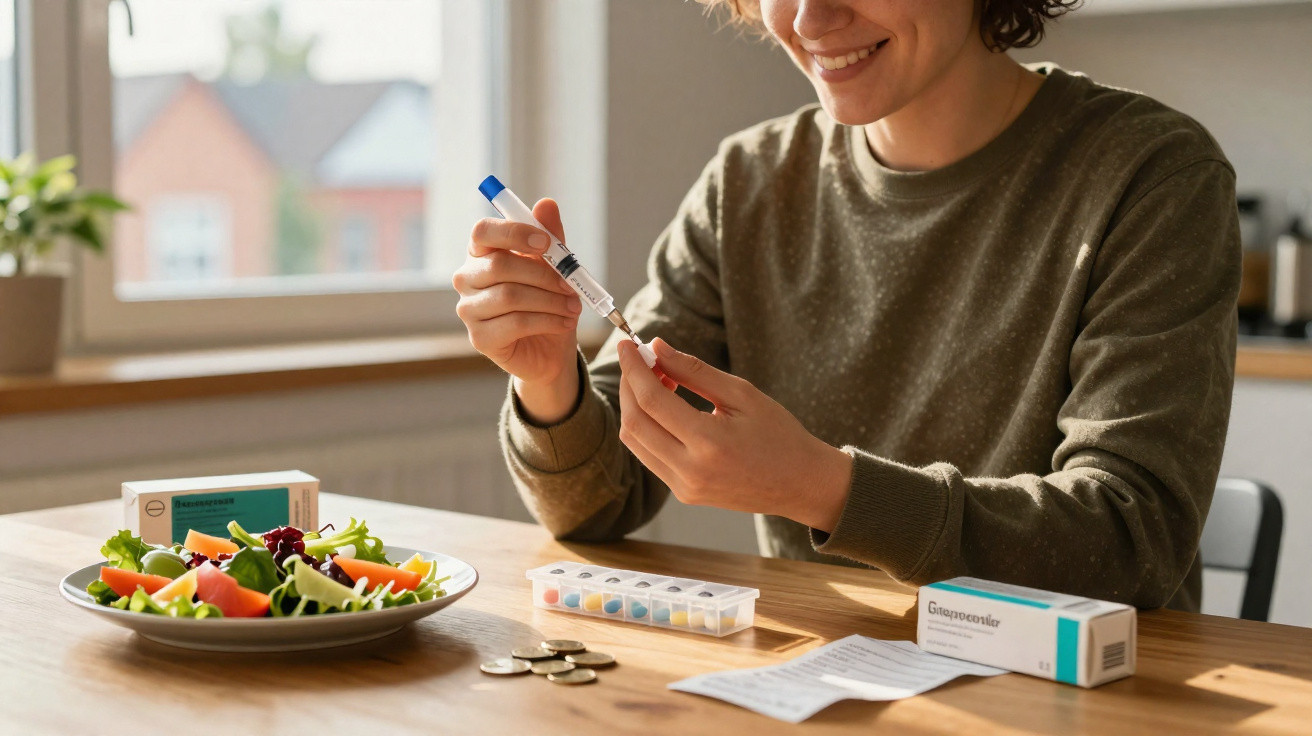
A diabetes and weight-loss medicine that has recently made headlines worldwide is on the verge of major change. Key patents are expiring in several highly populated countries, generic versions are ready to enter the market, and prices there could fall by almost a factor of ten. For people in Germany, Austria and Switzerland, however, this shift remains a distant prospect for now.
Semaglutide to become cheaper for up to 40 per cent of humanity
At the centre of this development is the active ingredient semaglutide, sold under brand names including Ozempic for diabetes and Wegovy for obesity. It lowers blood glucose, reduces feelings of hunger and has helped many people with severe obesity lose substantial amounts of weight. Until now, the Danish pharmaceutical group Novo Nordisk has controlled the market with costly originator medicines, protected by a dense network of patents.
That protection is now beginning to weaken. Crucial patents have expired in India and China, countries which together account for almost 40 per cent of the global population. Manufacturers based there are now permitted to make and sell their own semaglutide medicines.
“In India and China, generic semaglutide could fall to around $15 per month – a fraction of today’s price in the US.”
Current estimates suggest that monthly costs in these countries could drop to the equivalent of just over a dozen dollars. In the US, the same active ingredient can cost several hundred dollars a month. The contrast illustrates how strongly patents and national healthcare systems determine access to modern medicines.
New competitors enter the market
The expiry of patents is not confined to Asia. In Canada, semaglutide protection expired at the beginning of 2026. Health authorities are currently assessing several applications for copycat medicines, including submissions from established generic-drug manufacturers such as Sandoz, Teva and Apotex.
Brazil is in a similar position. Patent protection there ended in March 2026, and more than a dozen applications for generic versions were filed within a short period. A global parallel market is therefore emerging rapidly, with numerous suppliers competing for shares of a highly lucrative segment.
- India and China: patents have expired and local manufacturers are starting production
- Canada: several generic applications are under regulatory review
- Brazil: more than 17 registered enquiries for copycat products
- Global trend: prices falling in countries where patents have expired
Every additional country in which patent protection ends increases the pressure on Novo Nordisk. The company not only risks losing market share in those markets; it must also prepare for pressure from low-cost exporting countries, for example through parallel imports or international price comparisons that give national health insurers arguments for tough discount negotiations.
Wealthy countries continue to pay premium prices
For Europe, the US and many other industrialised nations, little will change in the short term. Core patents there remain in force until the early 2030s. As long as those rights apply, no generic supplier may introduce its own semaglutide products.
As a result, patients in these countries will continue to face high prices if they want to use modern anti-obesity or diabetes medicines. Health insurers are under growing pressure as demand rises sharply. More and more people with obesity are seeking pharmaceutical support after diets, exercise programmes and behavioural therapies have not delivered results.
“While billions of people will soon gain affordable access, insured patients in many wealthy countries will continue to pay premium prices – or go without altogether.”
The divide between countries with early access to generics and traditional high-price markets is therefore likely to widen markedly over the coming years. Health experts are already warning of a “two-tier therapy” system for obesity and type 2 diabetes.
The particular situation in France and Europe
France demonstrates how complex the European position is. Ozempic is approved there as a diabetes medicine and is partly reimbursed by the statutory health insurance system. Since 2025, however, stricter rules have been in place to limit use solely for weight reduction without a diabetes diagnosis.
Wegovy, the version officially developed for obesity, is available in France, but patients must pay the cost themselves. Depending on the dosage, it costs around €200 to €300 per month. That is scarcely affordable for people on low incomes or without additional private insurance.
Across Europe, genuine semaglutide generics are unlikely before 2031 or 2032. Until then, Novo Nordisk will remain the dominant supplier, even as negotiations on discount agreements and reimbursement models take place in parallel. Health insurers have limited room for manoeuvre while competition is absent.
What lies behind the semaglutide hype
Semaglutide belongs to the GLP-1 analogue class. These medicines mimic a naturally occurring hormone that regulates blood glucose and strengthens the feeling of fullness. Food is processed more slowly by the body, appetite declines and cravings become less frequent.
Many patients lose 10 to 15 per cent of their starting weight with the treatment, while even greater effects have been reported for some. There are also positive effects on blood glucose, blood pressure and, in some cases, cardiovascular risk. For people with severe obesity and type 2 diabetes, it can be a game changer.
The downside is that the injection must be administered regularly for months or years. If treatment is stopped, the weight often returns. Side effects can also occur, most commonly nausea and digestive problems, or, in rare cases, more serious pancreatic complications.
What a global price collapse could change
If prices in countries such as India, China, Canada or Brazil really fall to a fraction of their previous level, entirely new treatment programmes could emerge there. Public health services would have greater scope to embed semaglutide more firmly in obesity and diabetes guidelines – and not only for wealthy people.
Obesity is no longer merely a “disease of affluence” in the West. Numbers are rising rapidly, particularly in emerging countries, as diets, lifestyles and working conditions change dramatically. Affordable access to effective medicines could prevent many related illnesses there: heart attacks, strokes, joint deterioration and certain cancers are closely linked to severe excess weight.
“Affordable semaglutide can reduce healthcare costs in the long term – provided it is used responsibly and does not become a lifestyle product.”
Open questions for Germany, Austria and Switzerland
For German-speaking countries, the key issue is how governments and health insurers will respond to the growing inequality. If medical tourism to countries with cheap generics increases, safety concerns could arise. Product quality, cold-chain handling and the risk of counterfeits all matter when medicines are ordered online from abroad.
At the same time, pressure is mounting to establish clear rules: who should have a GLP-1 therapy paid for? Only people with pronounced obesity and serious related conditions? Or also people who are only slightly overweight and wish to reduce their risk early? Without transparent criteria, doctors and health insurers can quickly find themselves in a grey area.
What patients should consider now
Anyone in Germany, Austria or Switzerland considering semaglutide should bear several points in mind:
- Always discuss treatment with a specialist doctor rather than relying solely on social-media experiences.
- Use medicines only from licensed pharmacies or official sources of supply.
- Plan for long-term costs, as the injection will usually be needed on an ongoing basis.
- Address diet, exercise and stress management alongside treatment – the injection does not replace lifestyle changes.
The global development of semaglutide shows how deeply patents, politics and economics shape access to modern medicine. While a new chapter in obesity treatment is beginning in some regions, it remains unclear when patients in German-speaking countries will benefit from the falling prices – or whether they will have to keep paying whatever the market demands for another decade.






Comments
No comments yet. Be the first to comment!
Leave a Comment