
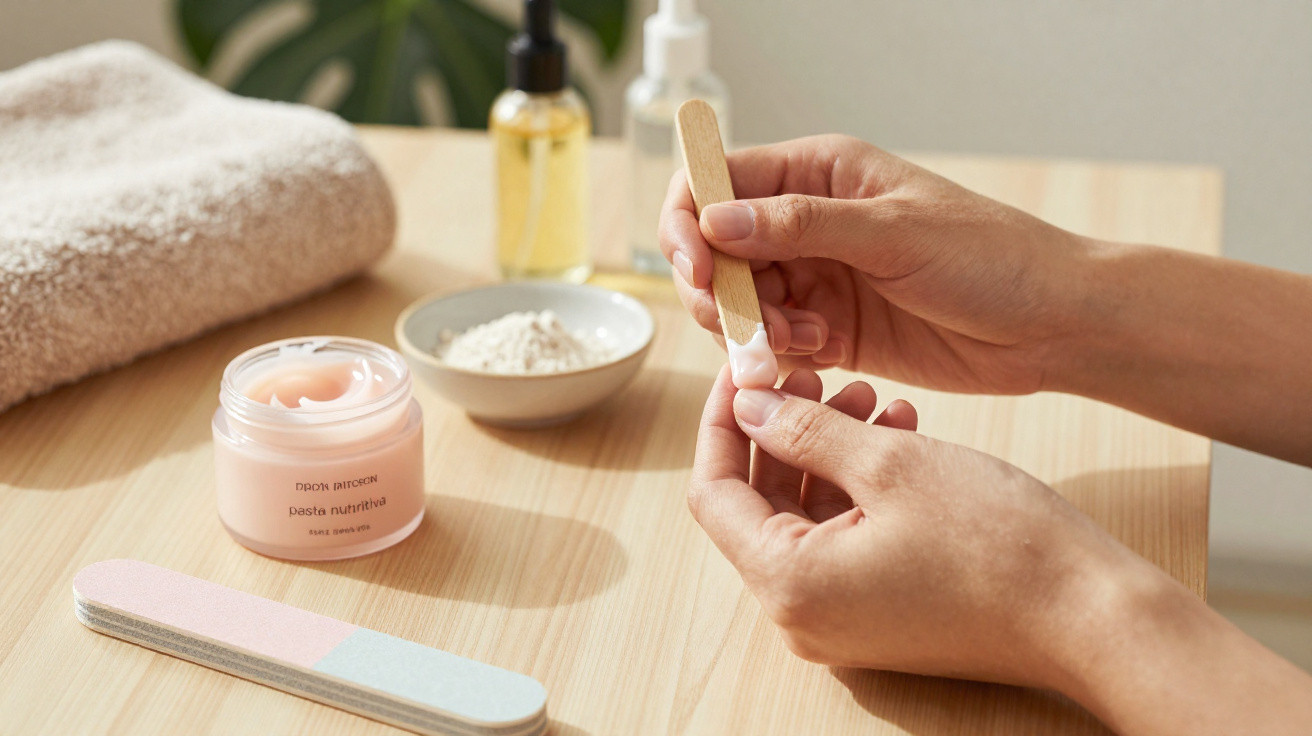
More and more salons are removing gel appointments from their diaries and replacing them with an understated yet highly sought-after treatment: the Japanese manicure. It promises naturally glossy nails, less breakage and hands that look as though they always have a subtle rosy filter applied - all without artificial nails.
What the Japanese manicure really involves
The Japanese manicure is not a new nail fad, but a traditional care ritual that has been used in Japan for decades. It was originally created for brittle, thin nails that had become heavily stressed by frequent polish use, chemicals or demanding manual work.
“The focus is not on appearance, but on regenerating the natural nail - the shine is a welcome side effect.”
Rather than building up layers of plastic and adhesive, this treatment works directly with the nail plate. Its purpose is to strengthen the nail from within, smooth its surface and create a soft, pearlescent sheen. Anyone who likes the familiar “glossy nail trend” gets a considerably healthier take on it here.
How a Japanese manicure is carried out step by step
In a salon, the treatment generally follows a clear process that can be divided into two or three main stages.
1. Preparing the natural nail
First, any remaining polish is removed, the nails are filed into shape and the cuticles are carefully pushed back. The key point is that filing is kept as gentle as possible, often using fine glass or emery boards, so the nail plate is not damaged.
- No aggressive roughening as used for gel
- No electric files that leave deep grooves
- The emphasis is on a clean, smooth surface
2. Massaging in the nutrient paste
The real highlight is a rich paste, which typically contains:
- Beeswax to seal and condition the nail
- Keratin, the nail’s natural structural protein
- Minerals such as silicon, often from marine sources
- Vitamins that nourish the nail plate
This paste is worked into the dry nail using a special polishing pad. The friction produces a little warmth, helping the ingredients penetrate the upper layer of the nail more effectively. The process feels more like a massage than a conventional manicure.
3. Protective powder for shine and durability
A fine powder is used in the second stage. It too is polished into the nail, sealing the nutrients within the nail plate. Polishing creates the signature shine, which does not merely sit on top of the nail but becomes part of its surface.
“The result is a delicate rosy mother-of-pearl glow - like ‘your nails, only better’.”
There is no lamp drying, curing process or chemical smell. Hands can be used straight after the treatment, with no risk of dents in still-soft gel or polish.
Why the Japanese manicure is so sought after in 2026
The Japanese manicure fits perfectly with the current beauty movement: less coating, more care. Many people who have relied on gel, acrylic or BIAB for years are beginning to notice how much their nails have suffered - grooves, peeling and soft nail tips.
This is exactly where the method comes in:
- Avoiding harsh substances: No strong solvents and no curing lamps.
- Regeneration instead of concealment: The nail plate is reinforced rather than simply covered up.
- A natural finish: Ideal for anyone who wants to look polished without appearing overly done.
The treatment is especially popular with people who have sensitive skin, are pregnant or breastfeeding, or have jobs in which noticeable nails are not permitted but well-kept hands are still important.
Differences between gel, BIAB and traditional polish
Many people wonder whether a shiny nail is simply another form of polish. The differences are greater than they might seem.
| Treatment | What happens on the nail? | Durability | Impact on the nail |
|---|---|---|---|
| Gel / BIAB | A plastic layer is applied and cured under UV light | 2–4 weeks, depending on growth | High impact, especially from removal and solvents |
| Traditional polish | A thin coloured layer remains on the surface | 3–7 days | Medium, depending on remover and frequency of use |
| Japanese manicure | Nutrients are worked in, with no added layer | 2–3 weeks of shine, depending on care | Low, as it avoids harsh chemicals |
While gel and BIAB turn the natural nail into something of a base for plastics, the Japanese approach fortifies the nail itself. With each appointment, it becomes more stable rather than thinner.
Who is the Japanese manicure suitable for?
This treatment works with a surprisingly wide range of lifestyles. It is particularly beneficial for:
- People with brittle, splitting nails
- Anyone currently transitioning away from gel or acrylic
- Professionals in healthcare, laboratories or kitchens, where artificial nails are prohibited
- Minimalists who want tidy but understated nails
- Active people who need durable, short nails
Those who love striking nail art, neon shades or long claws may find this method less satisfying. The Japanese manicure is all about a simple, clean finish. Small details, such as a fine micro-French tip or a “glazed” effect, can still be incorporated, provided the natural nail remains the focus.
How long does the effect last and how often is an appointment worthwhile?
The shine generally remains visible for two to three weeks, and sometimes longer depending on everyday wear. As the nail plate grows forwards, the nail gradually starts to look more matte again - without chipping. Rather than coming away abruptly, the look changes gently over time.
Many salons suggest booking another appointment roughly every three to four weeks. People whose hands face particularly heavy use, for example through frequent handwashing or cleaning products, may choose shorter intervals.
Japanese manicure at home: is it possible?
Home-use kits are available containing paste, powder and polishing tools. Most people will not quite achieve a salon-standard result, mainly because the technique used to massage in and polish the products is crucial.
Anyone who still wants to try it should bear the following points in mind:
- Use gentle nail files rather than coarse grits
- Do not cut the cuticles; only push them back carefully
- Avoid polishing too aggressively, or the nail may become thin
- Choose high-quality ingredients without questionable additives
For severely weakened nails, an initial salon visit is worthwhile to create a more stable foundation. Home-care kits can then be used for maintenance afterwards.
Risks, limitations and what many people overlook
The Japanese manicure is considered very gentle, but no treatment is completely without risk. Anyone prone to thin nails should avoid overly frequent or forceful polishing, so that the keratin layer is not worn down further. Reputable salons take a careful approach and tailor the intensity accordingly.
There is another consideration: anyone wanting vivid colour immediately may sometimes be disappointed. The finish is deliberately subtle, more “spa hands” than “Instagram nails”. For many, that is precisely its appeal, but it will not suit everyone.
Why the Japanese manicure trend is here to stay - and how it is changing other beauty habits
The Japanese manicure’s growing popularity points to a broader shift: beauty treatments are increasingly expected to combine care with aesthetics. Instead of masking what is suffering underneath every four weeks, the aim is to build up the underlying structures so they look better on their own.
Similar changes can be seen in skincare, haircare and make-up trends: skin tints instead of full coverage, bonding treatments instead of aggressive bleaching. Hands are often underestimated, even though fingernails reveal a great deal about how much strain a body experiences in daily life.
Anyone hoping to strengthen their nails over the long term can combine the Japanese manicure with straightforward daily habits: wear gloves for cleaning, use hand cream and nail oil regularly, and avoid continual use of strong nail-polish remover. As part of this overall approach, the treatment has its greatest effect - making natural nails in spring 2026 an understated yet highly visible statement of health.





Comments
No comments yet. Be the first to comment!
Leave a Comment