
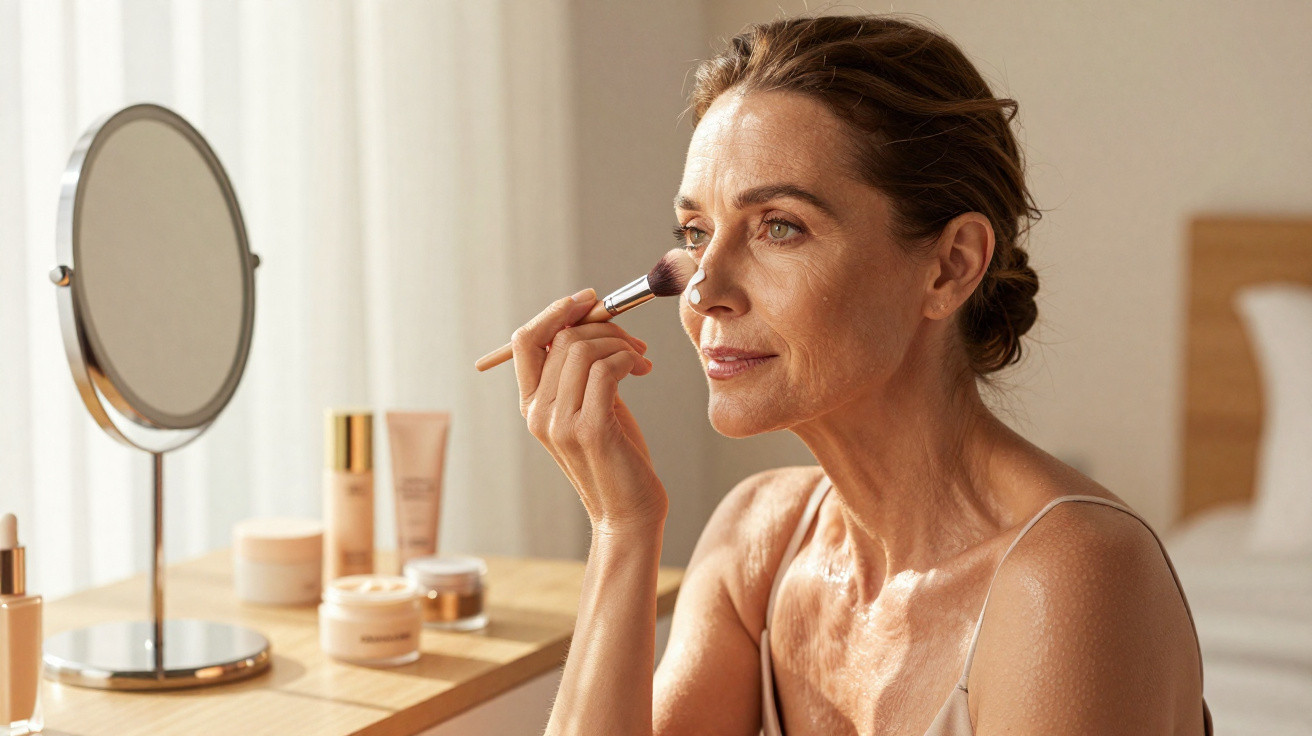
After the age of 40, many people begin to notice that the way they used to apply make-up to their nose no longer delivers the same effect. The skin undergoes natural changes, including reduced firmness and a change in texture, so preparation, product textures and the way each layer is blended need greater care. The priority is a soft result that enhances the features without changing the shape of the nose.
What changes in nose make-up after 40?
Mature skin often becomes thinner, with less collagen and natural oil, meaning that overly dry foundations and concealers can draw attention to pores and small marks. At this stage, lightweight, flexible formulas usually work best, providing a natural-looking finish without feeling heavy or settling into lines.
Cream, liquid or stick textures, blended thoroughly, help to create subtle, even shadows. It is also worth checking how the product wears throughout the day and touching up specific areas when needed, rather than building up several layers all at once.
How should products and textures be chosen for a mature nose?
Too much shine and very matte products can highlight uneven texture, so balance is key. Soft, almost satin highlighters and contours just one or two shades deeper than the skin create a delicate contrast that blends naturally into the rest of the face.
A few steps can make the finish more even and comfortable:
- Moisturise the nose area well and use a lightweight primer to soften the appearance of pores.
- Apply a light- to medium-coverage foundation in a thin layer, just to even out the skin tone.
- Use a small amount of concealer on minor blemishes, preventing build-up around the sides of the nose.
- Choose cream or liquid contour products rather than very dry, heavily defined powders.
How can you contour the nose after 40 without a heavy finish?
Once the skin has been prepared, contour should remain subtle, using narrow lines close to the bridge of the nose and never making them too wide. Blend the product with a small brush or damp sponge using gentle movements until no edges are visible, keeping it harmonious with the blusher, eye make-up and lips.
To add light, apply a narrow stripe of subtle highlighter down the centre of the nose and blend it well, avoiding concentrated points of shine. This gives the nose definition without bringing fine lines and pores into focus, even in photographs or under stronger lighting.
How can nose make-up be adapted for different occasions?
For everyday wear, work settings or time outdoors, a softer approach is usually best: lightweight foundation, discreet contour and minimal highlighter. For evening events, photographs or filming, the intensity can be increased slightly, always paying attention to the transitions so that the contrast does not become too strong.
Watching how the skin responds in each situation makes it easier to adapt the technique: on hot days, it can help to set key areas with a small amount of loose powder, while air-conditioned environments may call for creamier products. In this way, nose make-up works with the skin’s maturity and remains naturally integrated with the overall look.






Comments
No comments yet. Be the first to comment!
Leave a Comment