
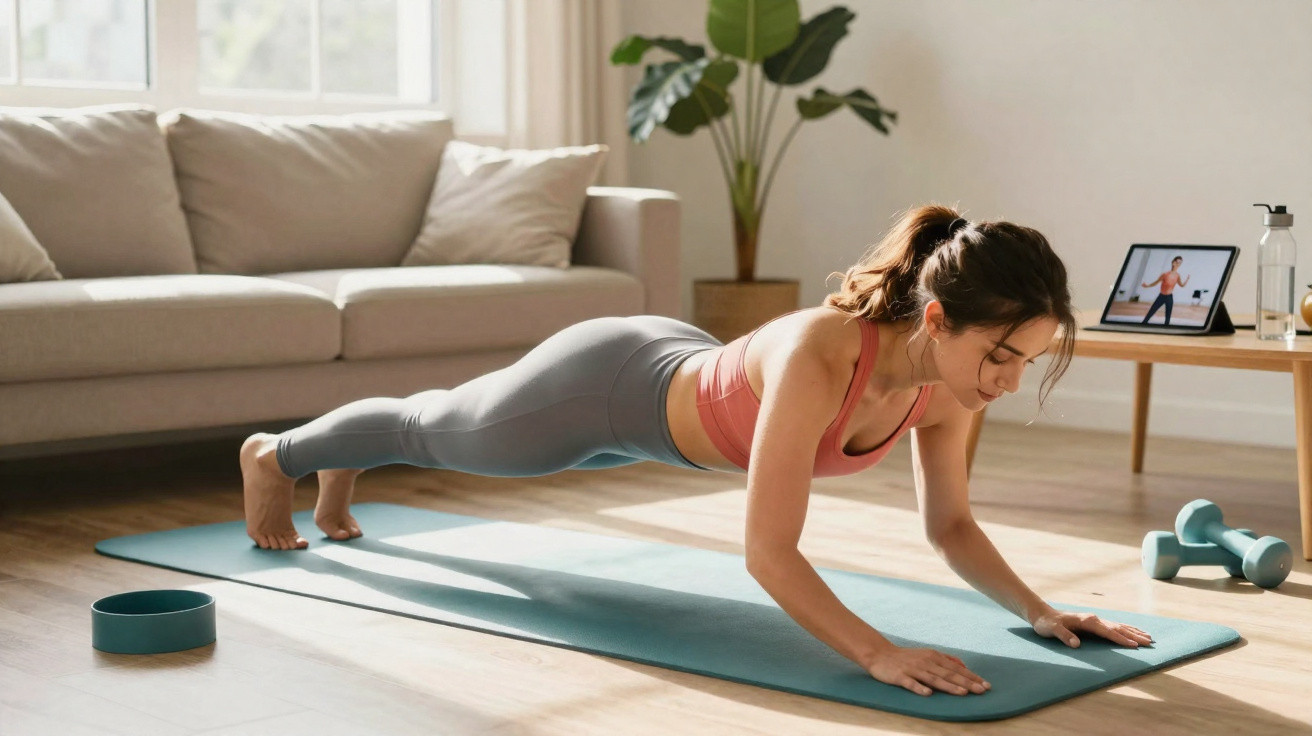
Recurring lower-back pain, trouble maintaining posture and a feeling of instability may be connected to muscles that are barely visible in the mirror. The deep core acts rather like a natural belt around the torso, helping to manage the spine and pelvis. Three straightforward exercises can target this area without any equipment.
What is the deep core?
The deep core comprises muscles positioned beneath the more superficial abdominal muscles, including the transverse abdominis, internal obliques and pelvic-floor structures. They are continually involved in stabilising the torso, even during seemingly basic tasks such as walking, sitting or lifting an object.
These muscles do more than make the abdomen feel firmer. Their role is linked to body control and spinal support, particularly when the body must withstand movement, changes in direction or loads. Building strength in this area can therefore complement a routine designed to improve posture and stability.
Why does strengthening these muscles matter?
When the deep core works effectively, it can help control the pelvis and distribute forces reaching the spine more efficiently during everyday movement. This support may improve torso stability and make actions such as walking, squatting, carrying objects and exercising easier to control.
Strengthening work may also form part of programmes for people experiencing lower-back discomfort, but it should not be viewed as a stand-alone solution. Back pain has a range of causes, and persistent or severe symptoms, or symptoms accompanied by functional limitations, require assessment by a healthcare professional.
What are the 3 exercises for training the deep core?
The most useful movements for this area do not necessarily require high repetition counts. Control, breathing and the ability to keep the torso stable are generally more important. Leg raises, the RKC plank and glute bridge marching challenge the abdominals in different ways and can all be performed without equipment.
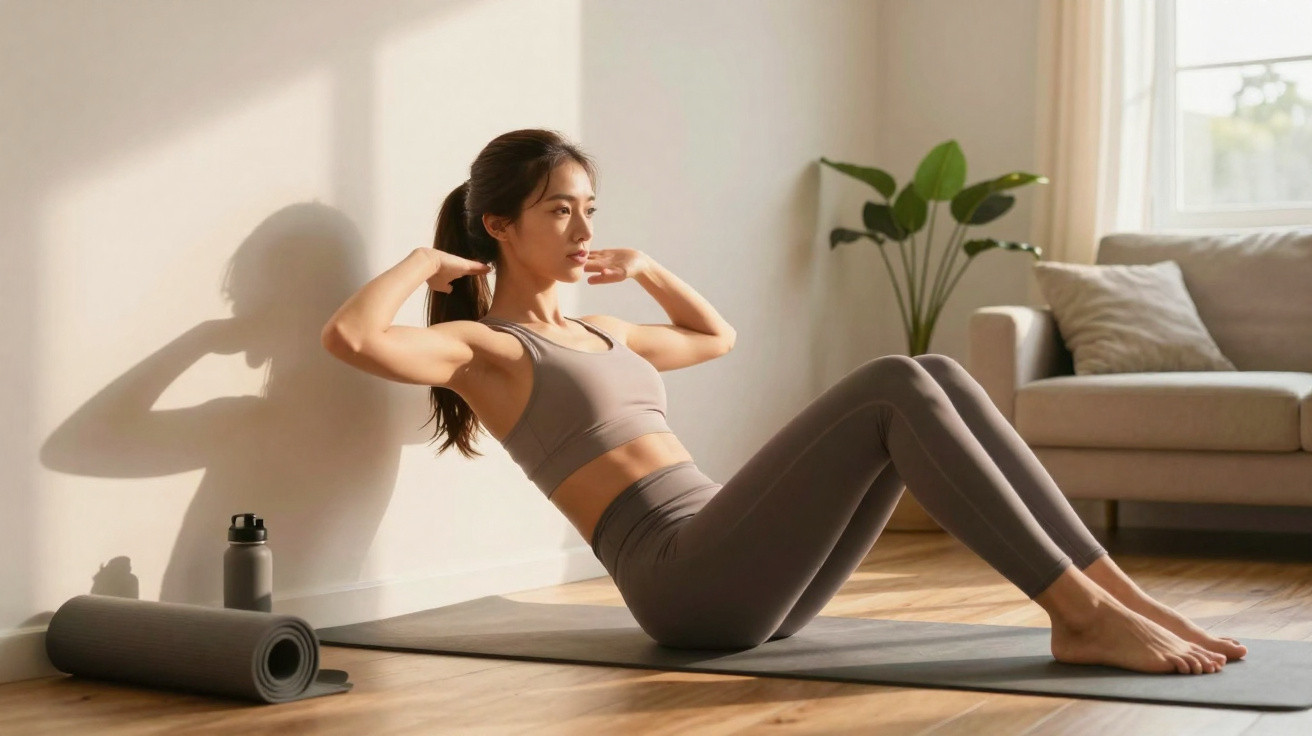
- Leg raises require abdominal control to move the limbs while maintaining appropriate positioning in the lower back.
- The RKC plank deliberately increases full-body tension and places an intense demand on the torso’s stabilising ability.
- Glute bridge marching combines glute activation with pelvic control as one leg is lifted away from its support.
The key is to perform every movement slowly and deliberately. If the lower back begins to arch excessively, the pelvis falls out of alignment or you hold your breath, the intensity may be too high. Reducing the range of movement or the duration is usually more beneficial than persisting with poorly executed repetitions.
Watch the video shared by the YouTube channel Dr. Rodrigo Lopes – Physiotherapist, which offers tips on simple exercises to strengthen the core at home.
What precautions can make training safer?
Correct technique should take priority over volume. The American Council on Exercise highlights principles such as retaining control throughout the movement, breathing during exertion and increasing difficulty gradually. These measures help people build strength without turning an exercise into a series of postural compensations.
It is also essential to respect your current fitness level. Beginners can start with easier versions and short holding periods. Anyone with ongoing pain, a history of injuries or specific limitations should seek professional guidance before changing their routine or beginning more demanding exercises.
How can these exercises become a habit?
Strengthening the deep core does not require endless sessions. A short, regular routine performed with careful attention to technique can complement walking, weight training and other physical activities. Rather than seeking maximum intensity in a single workout, it is more important to create the conditions to repeat the movements well over the weeks.
Consistency and control matter more than rushing. Introduce the exercises progressively, pay attention to how your body responds and do not dismiss persistent pain. Starting now with a few well-executed minutes can be the first step towards a more stable torso and a safer movement routine.




Comments
No comments yet. Be the first to comment!
Leave a Comment