
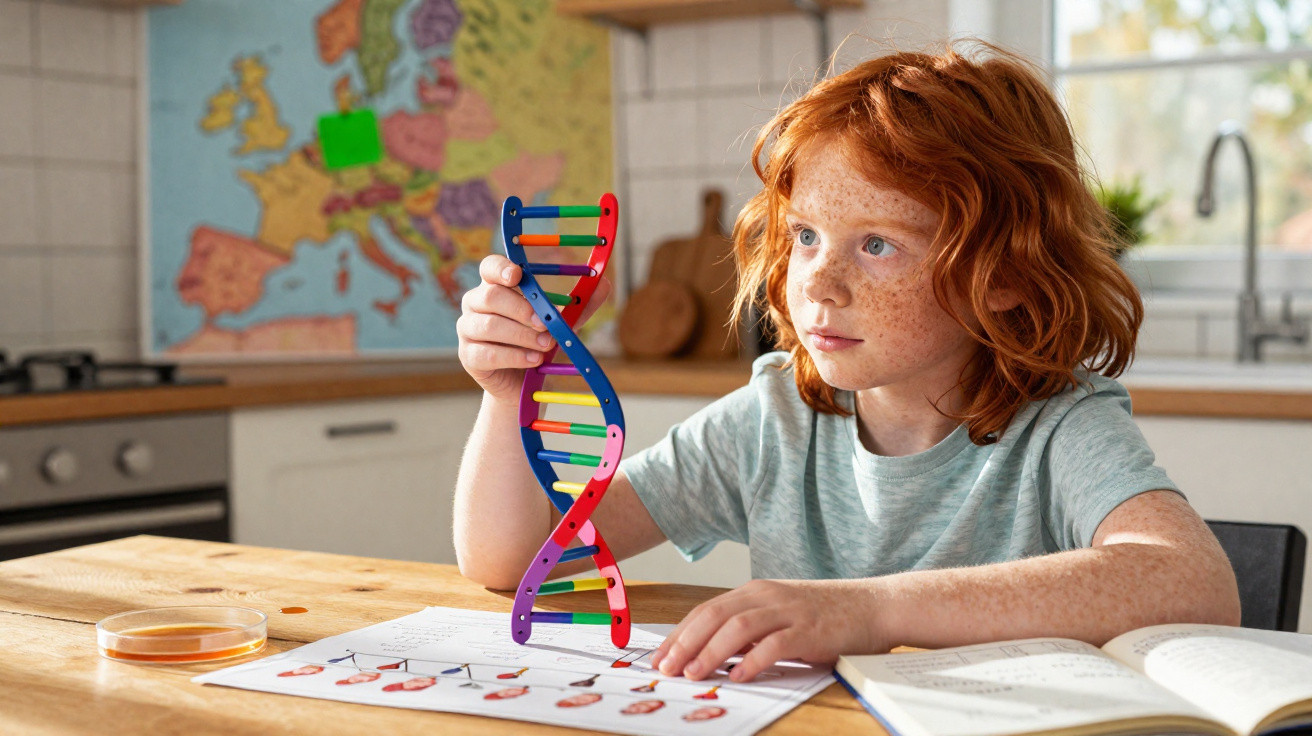
Rumours often claim that red-haired people could gradually vanish from the global population because they are exceptionally rare. Population genetics, however, completely disproves this notion by showing that genetic variants can continue to be passed quietly from one generation to the next.
Are red-haired people genuinely at risk of extinction?
The belief that red hair will disappear stems from the fact that only a small proportion of humanity displays this physical trait. Although the phenotype occurs at a low frequency, the alleles behind it remain part of families’ biological inheritance.
As a result, people without red hair can carry the necessary genetic traits without visibly expressing them during their lives. This hidden pattern of transmission ensures that these genes retain a presence in populations across the world.
Why are red hair and blue eyes so rare?
The combination of red hair and light-coloured eyes requires recessive genes from both parents, making this genetic pairing… Read more
What role do recessive MC1R gene variants play?
Hair pigmentation is directly influenced by changes in the MC1R gene, which guides pigment production in the human body. When someone inherits two altered copies, their body favours the production of phaeomelanin rather than conventional dark melanin.
Because this is a recessive inheritance pattern, a person must receive variants from both parents to have reddish hair. If they inherit only one modified copy, they are an unaffected carrier of this alteration within their offspring.
Below is a video from the SciShow YouTube channel that explores the points discussed in this subject in greater depth:
How does phaeomelanin pigmentation work in the body?
Phaeomelanin is the substance that gives hair and body hair their reddish and yellowish tones. This molecule has a chemical structure that differs from eumelanin, which also changes cellular sensitivity to daily solar radiation.
In addition to hair colour, the concentration of this pigment directly affects skin tone and the development of freckles. This biological characteristic requires ongoing care against damage caused by excessive exposure to ultraviolet light rays.
Essential Red Hair Genetics Kit
Pillars of the recessive trait
Explore the fundamental genetic elements that ensure the preservation of this rare shade:
- Specific changes in the MC1R gene determine the synthesis of light pigments;
- Recessive inheritance allows alleles to remain hidden through successive generations;
- Predominant phaeomelanin production produces the natural reddish shade.
Why is the red-haired phenotype more common in Scotland and Ireland?
Countries such as Scotland and Ireland have the highest proportions of red-haired people in the world because of the geographical and historical isolation of their populations. In these places, the high prevalence of people carrying the altered gene has supported the continued emergence of this distinctive trait among their inhabitants.
Even in areas where it is less common, these genes move over time through marriages between distinct populations. Migration has therefore spread the hereditary factors needed to keep the characteristic active across different continents of the Earth.
Several factors help explain why certain geographical areas have a higher concentration of people with this hair characteristic:
- The historical isolation of populations in northern European regions;
- A high proportion of people carrying recessive variants;
- Partnerships between people who share the same biological factors.
What ensures the future survival of red hair?
For a genetic trait to disappear entirely, every one of its variants would need to be removed from the human genetic pool. Since millions of people without red hair carry this allele in their DNA, reddish hair will continue reappearing in future generations.
Alarmist rumours about the extinction of red-haired people therefore have no scientific basis in modern biology. The unpredictable combination of recessive genes ensures that this natural beauty will continue to enrich the biological diversity of our species for a long period.






Comments
No comments yet. Be the first to comment!
Leave a Comment